The origin of the ethnic Iranian peoples/Persian …
Years: 861BCE - 850BCE
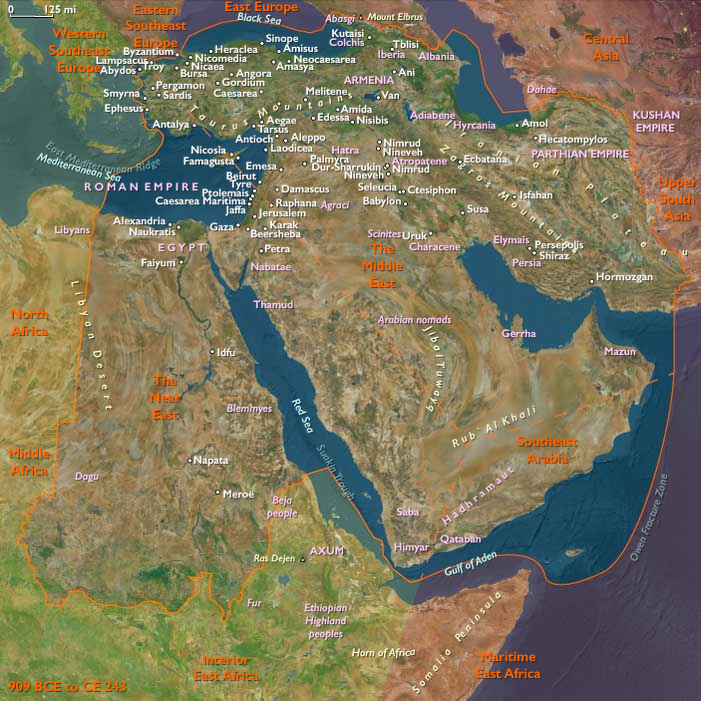
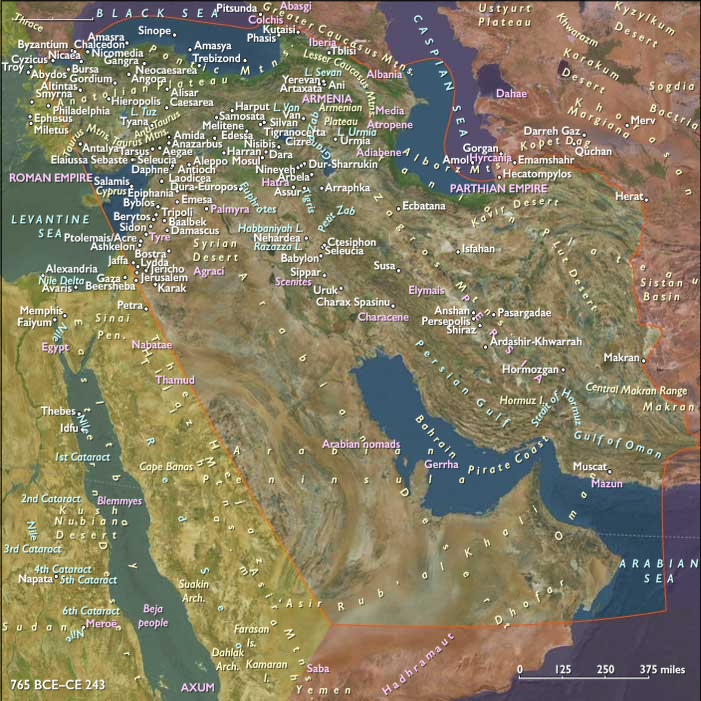
The origin of the ethnic Iranian peoples/Persian peoples are traced to the Ancient Iranian peoples, who were part of the ancient Indo-Iranians and themselves part of the greater Indo-European linguistic family.
The Ancient Iranian peoples had arrived in parts of the Iranian plateau circa 1000 BCE.
Important Iranic tribes such as Old Persians, Medes, Parthians, Bactrians, Scythians, and the Avesta people will use the name Arya (Iranian), which was a collective definition, denoting peoples who were aware of belonging to a generally common ethnic stock, speaking very closely related languages, and mainly sharing a religious tradition that centers on the worship of Ahura Mazda.
The Old Persians, who are one of these ethnic Iranian groups, were originally nomadic, pastoral people in the western Iranian plateau and by 850 BCE are calling themselves the Parsa and their constantly shifting territory Parsua for the most part localized around Persis (Pars), bounded on the west by the Tigris river and on the south by the Persian Gulf.
The first known written record of the term Persian is from Assyrian inscriptions of the ninth century BCE, which mention both Parsuash and Parsua.
Locations
People
Groups
Topics
- Younger Subboreal Period
- Iron Age, Near and Middle East
- Assyrian Wars of c. 909-c. 746 BCE
- Iron Age Cold Epoch
Commodoties
Subjects
- Commerce
- Language
- Sculpture
- Painting and Drawing
- Environment
- Labor and Service
- Fashion
- Decorative arts
- Style
- Conflict
- Faith
- Government
- Technology
Regions
Subregions
Related Events
Filter results
Showing 10 events out of 78 total
Northern North America (1540 – 1683 CE)
Enduring Indigenous Worlds and the First Colonial Frontiers
Geography & Environmental Framework
From the Pacific fjords of Alaska and British Columbia to the forests, lakes, and coasts of the Atlantic and Gulf, Northern North America encompassed enormous ecological diversity: glaciated mountains, salmon rivers, oak savannas, prairies, hardwood woodlands, tundra, and the boreal shield.
The Little Ice Age shaped all three subregions. Glaciers advanced along Pacific ranges; Hudson Bay and Greenland froze longer each winter; drought pulses and hurricanes alternated across the Gulf and interior plains. Communities adapted through preservation, trade, and migration, creating resilient social ecologies that endured well before sustained European settlement.
Northwestern North America: Enduring Indigenous Worlds, First Distant Glimpses
Across the Pacific Northwest and sub-Arctic, dense forests, rivers, and coasts sustained prosperous Indigenous nations.
Coastal Tlingit, Haida, Tsimshian, Nuu-chah-nulth, and Coast Salish peoples harvested salmon, halibut, whales, and shellfish from plankhouse villages and celebrated potlatch feasts that redistributed wealth and affirmed law. Interior and plateau groups followed seasonal rounds of hunting, fishing, and root gathering, meeting for great trade fairs at Celilo Falls and other river nodes.
Cedar canoes, totemic art, and carved masks expressed lineage and spirit power. Despite glacial advance and fluctuating salmon runs, storage, trade, and ceremony maintained abundance.
By 1683, the Pacific North had not yet seen sustained European intrusion—Spanish and Russian expeditions lay still ahead—leaving a self-governing world of maritime and riverine civilizations poised at the threshold of contact.
Northeastern North America: Fishermen, Colonists, and Resilient Woodland Worlds
From Florida’s estuaries to Greenland’s fjords, woodland, prairie, and coastal peoples adapted to cooling climates and expanding Atlantic fisheries.
Iroquoian and Algonquian farmers maintained maize-bean-squash agriculture alongside hunting and fishing; in the far north, Inuit extended seal hunting over newly thickened sea-ice. Rivers and lakes served as highways binding interior nations to the first European colonies.
By the early 1600s, French Acadia and Quebec, Dutch New Netherland, English New England and Chesapeake, and Spanish Florida had taken root. Furs, fish, and forests tied Indigenous and European economies together, while epidemics and warfare began to reshape demographics.
The Iroquois Confederacy rose as a major political power; missionaries, traders, and settlers built fragile alliances and rivalries.
By 1683, a multicultural mosaic extended from cod banks to Great Lakes forests—an Atlantic frontier still overwhelmingly Indigenous in its interior but irrevocably drawn into global circuits.
Gulf and Western North America: Spanish Entradas and Enduring Societies
South and west of the Mississippi, diverse Indigenous polities dominated vast landscapes.
Pueblo farmers of the Rio Grande maintained irrigated fields and kivas; Navajo and Apache expanded herding and raiding economies; California’s coastal and island tribes prospered on acorns, fisheries, and trade networks.
Spanish expeditions under de Soto and Coronado probed but never mastered the interior. Missions and forts appeared in Florida and New Mexico, yet survival depended on Indigenous alliances. The horse—introduced by Spaniards—was transforming mobility across the plains.
By 1683, the Gulf and West remained largely autonomous: European outposts clung to coasts and valleys, while Native confederacies, pueblos, and nomadic nations adapted horses, firearms, and trade to their advantage.
Cultural and Ecological Themes
Across the northern continent, art and ceremony anchored identity:
-
Totemic carving and potlatch law on the Pacific;
-
Wampum diplomacy and council fires in the Great Lakes and St. Lawrence;
-
Kachina dances and Green Corn rites in the Southwest and Southeast.
Environmental adaptation was everywhere sophisticated—salmon and seal preservation in the Northwest, maize granaries in the East, irrigation and acorn storage in the arid West. Climatic stress during the Little Ice Age spurred innovation rather than collapse.
Transition (to 1683 CE)
By 1683, Northern North America was a continent of enduring Indigenous sovereignties threaded with the first strands of European empire. Spanish forts, French missions, English farms, and Dutch ports dotted its edges, while vast interiors remained guided by Native diplomacy, ecology, and exchange. The Little Ice Age’s rigors had tested but not broken subsistence systems.
The next age would see intensified colonization, new alliances, and epidemic shocks—but also the continuity of Native landscapes, languages, and cosmologies that had already sustained the North for millennia.

Northeastern North America (1540–1683 CE): Fishermen, Colonists, and Resilient Woodland Worlds
Geographic & Environmental Context
The subregion of Northeastern North America includes the Atlantic seaboard from Jacksonville, Florida to St. John’s, Newfoundland; Greenland; the Midwest; the Great Lakes; and all Canadian provinces eastward to the Saskatchewan–Alberta line. Anchors include the Great Lakes basin, the St. Lawrence River, the Appalachian piedmont, Hudson Bay, and the Greenland ice sheet. This vast zone combined fertile coastal plains, hardwood and conifer forests, interior prairies, boreal shield country, and Arctic tundra.
Climate & Environmental Shifts
This age fell within the Little Ice Age. Colder winters shortened growing seasons in the Great Lakes and New England; snow and ice cover expanded across Hudson Bay. Greenland saw longer sea-ice seasons, shaping Inuit lifeways and deterring Norse reoccupation. Atlantic storms battered coastlines, while fisheries in Newfoundland and the Gulf of St. Lawrence thrived in cooler, nutrient-rich waters. Droughts occasionally stressed maize cultivation at the southern and western margins of Iroquoian territories.
Subsistence & Settlement
-
Woodland societies: Iroquoian and Algonquian peoples continued farming maize, beans, and squash, but also intensified hunting and fishing to buffer climatic stress. Palisaded villages and longhouses remained common.
-
Great Lakes and Midwest: Horticulturalists cultivated maize in fertile valleys, while mobile Algonquian groups exploited seasonal fisheries and wild rice.
-
Subarctic and Shield: Hunters pursued caribou, moose, and fur-bearing animals; canoes and snowshoes sustained mobility.
-
Greenland Inuit: Adapted to harsher cold with dog sleds, toggling harpoons, and seal-hunting on extended ice.
-
European colonists: By the early 1600s, Spanish Florida (St. Augustine, 1565), French Acadia and Quebec (1604–1608), Dutch New Netherland (1620s), English New England (Plymouth 1620, Massachusetts Bay 1630), and Chesapeake (Jamestown 1607) established lasting footholds. These relied on maize, European grains, livestock, and cod fisheries.
Technology & Material Culture
Indigenous technologies—canoes, bows, fishing weirs, pottery, longhouses, and wampum belts—remained essential. Europeans introduced iron axes, muskets, sailing ships, plows, and domesticated animals. Wooden forts, churches, and early towns rose along the seaboard. Inuit retained umiaks, sledges, and bone/ivory craft. The fur trade transformed material culture, linking Indigenous trapping to European markets for beaver pelts, exchanged for textiles, kettles, knives, and guns.
Movement & Interaction Corridors
-
Rivers and lakes: Canoe highways (St. Lawrence, Great Lakes, Hudson, Connecticut, Mississippi headwaters) tied Native villages to European posts.
-
Atlantic coast: Fisheries at Newfoundland and New England drew fleets from France, Spain, Portugal, and England.
-
Colonial trade: European settlements funneled furs, fish, and timber to Europe; Africans began to be brought in as enslaved labor in southern colonies.
-
Greenland Inuit corridors: Maintained links across Baffin Island and Labrador by umiak and dog sled.
Cultural & Symbolic Expressions
Cultural diversity deepened:
-
Iroquois Confederacy (Haudenosaunee): Consolidated in the 16th century, embodying political unity through council fires and wampum.
-
Algonquian groups: Maintained animist traditions; shamans mediated hunting rituals.
-
Inuit: Celebrated seal festivals and practiced shamanic journeys, adapting cosmology to expanded ice.
-
European colonists: Established Catholic missions (French, Spanish) and Protestant congregations (English, Dutch), embedding churches and schools in frontier towns. Cultural exchanges produced hybrid foodways, dress, and spiritual practices.
Environmental Adaptation & Resilience
Indigenous communities adapted by diversifying diets, forging new alliances, and integrating European goods into traditional systems. Colonists adapted to unfamiliar climates with Indigenous aid—learning maize cultivation, fur-hunting skills, and coastal navigation. European livestock, logging, and agriculture reshaped ecosystems, while Indigenous burning and land use persisted in many areas. Inuit resilience relied on flexible subsistence across seals, fish, and whales.
Transition
By 1683 CE, Northeastern North America was transformed into a multi-cultural frontier.Indigenous nations remained dominant across vast interiors, but European colonies clustered along coasts, fisheries, and river mouths. The fur trade, cod fleets, and plantation outposts tied the region into the Atlantic world. Climatic stress from the Little Ice Age continued, but resilience came through adaptation, exchange, and hybridization. The stage was set for intensified conflict, trade, and settlement in the coming centuries.
Cash crops include tobacco, rice and wheat.
Extraction industries develop in furs, fishing and lumber.
Manufacturers produce rum and ships, and Americans are producing one-seventh of the world's iron supply by the late colonial period.
Cities eventually dot the coast to support local economies and serve as trade hubs.
English colonists are supplemented by waves of Scots-Irish and other groups.
Freed indentured servants push further west as coastal land grows more expensive.
The Portuguese begin to lose their claims on the New World as the French, English and Dutch start to colonize North America.
Roger Williams, a theologian, independent preacher, and linguist, had in 1636 founded a colony on land gifted by the Narragansett sachem Canonicus.
Fleeing from religious persecution in the Massachusetts Bay Colony, Williams had agreed with his fellow settlers on an egalitarian constitution providing for majority rule "in civil things" and liberty of conscience.
He had named the colony Providence Plantation, in recognition of agriculture as the basis of its economy and believing that God had brought him and his followers there.
Williams had named the other islands in the Narragansett Bay after virtues: Patience Island, Prudence Island and Hope Island.
The Baptist leader Anne Hutchinson had purchased land on Aquidneck Island from the Native Americans in 1637, settling in Pocasset, now known as Portsmouth, Rhode Island.
With her had come her husband, William Coddington and John Clarke, among others.
Other neighboring settlements of refugees had followed, which all form a loose alliance.
They had sought recognition together as an English colony in 1643, in response to threats to their independence.
The revolutionary Long Parliament in London had in March 1644 granted a charter.
The colonists had refused to have a governor, but set up an elected "president" and council.
The second of the plantation colonies on the mainland (following Anne Hutchinson’s 1638 colony of Portsmouth and the 1639 colony of Newport founded by Coddington and Clarke; both on Aquidneck or Rhode Island) was Samuel Gorton’s Shawomet Purchase of 1642 from the Narragansetts.
As Gorton had settled at Shawomet, the Massachusetts authorities had laid claim to his territory and acted by force to enforce their claim.
After considerable difficulties with the Massachusetts Bay General Court, Gorton had traveled to London to enlist the sympathies of Robert Rich, the Second Earl of Warwick, Lord Admiral and head of the Parliamentary Commission on Plantation Affairs (responsible for managing the overseas plantation colonies).
Gorton had returned to his colony in 1648 with a letter from Rich, ordering Massachusetts to cease molesting him and his people.
In gratitude, Gorton had renamed Shawomet Plantation to Warwick Plantation.
The separate plantation colonies in the Narragansett Bay region are very progressive for their time, passing laws abolishing witchcraft trials, imprisonment for debt, most capital punishment, and on March 18, 1652, chattel slavery of both blacks and whites.
Most religious groups are welcomed, with only some restrictions on Catholicism.
William Coddington had in 1651 obtained a separate charter from England setting up the so-called Coddington Commission, which had made Coddington life governor of the islands of Rhode Island and Connecticut in a federation with Connecticut Colony and Massachusetts Bay Colony.
Protest, open rebellion and a further petition to Oliver Cromwell in London, lead to the reinstatement in 1653 of the original charter.
A group of Jews fleeing Brazil and denied the right to stay in New Amsterdam are in 1658 allowed to settle in Newport.
The Newport congregation, now referred to as Congregation Jeshuat Israel, is the second oldest Jewish congregation in the United States (and meets today in the oldest standing synagogue in the United States, Touro Synagogue).
A series of laws known as the English Navigation Acts, beginning in 1651, are from the outset a factor in the Anglo-Dutch Wars. (They are later to be one of several sources of resentment in the American colonies against Great Britain, fueling the flames of the American Revolutionary War.)
On the restoration of Charles II, the 1651 Act, like other legislation of the Commonwealth period, had been declared void, having been passed by 'usurping powers'.
Parliament therefore passes new legislation, generally referred to collectively as the "Navigation Acts", which (with some amendments) are to remain in force for nearly two centuries.
The number of Indian seamen employed on British ships has become so great that Parliament tries to restrict this by the Navigation Act of 1660, which adds a twist to Oliver Cromwell's act, prohibiting all foreign ships from trade between England and its colonies and restricting that trade to English-built and English-owned vessels with an English captain and a crew that is seventy-five percent English.
A matter of national security, the Act is an attempt to prevent the transport of "enumerated" products not produced by the mother country, such as tobacco, cotton, and sugar, or any product of the American colonies to any port outside England, Ireland, or her possessions.
The introduction of the legislation, passed under the economic theory of mercantilism under which wealth is to be increased by restricting trade to colonies rather than with free trade, causes Britain's shipping industry to develop in isolation but has the advantage to English shippers of severely limiting the ability of Dutch ships to participate in the carrying trade to England.
The Navigation Acts, by reserving British colonial trade to British shipping, may have significantly assisted in the growth of London as a major entrepôt for American colonial wares at the expense of Dutch cities.
Colonel Edward Whalley and Colonel William Goffe, two of the judges who had signed the death warrant of Charles I of England, had fled to New Haven to seek refuge from the king's forces.
John Davenport had arranged for these "Regicides" to hide in the West Rock hills northwest of the town.
A third judge, John Dixwell, joined the other regicides at a later time.
An uneasy competition rules New Haven’s relations with the Connecticut River settlements centered on Hartford.
The colony had published a complete legal code in 1656, but the law remained very much church-centered.
A major difference between the New Haven and Connecticut colonies is that the Connecticut Colony permits other churches to operate on the basis of "sober dissent" while the New Haven Colony only permits the Puritan church to exist.
Following the issuance of a royal charter to Connecticut in 1662, the colony absorbs the colony of New Haven in 1664, fixing the number of the United Colonies of New England at four: ...
...Connecticut, ...
...Rhode Island, ...
Years: 861BCE - 850BCE
Locations
People
Groups
Topics
- Younger Subboreal Period
- Iron Age, Near and Middle East
- Assyrian Wars of c. 909-c. 746 BCE
- Iron Age Cold Epoch
Commodoties
Subjects
- Commerce
- Language
- Sculpture
- Painting and Drawing
- Environment
- Labor and Service
- Fashion
- Decorative arts
- Style
- Conflict
- Faith
- Government
- Technology