
The principle of universal manhood suffrage is …
Years: 1848 - 1848
March
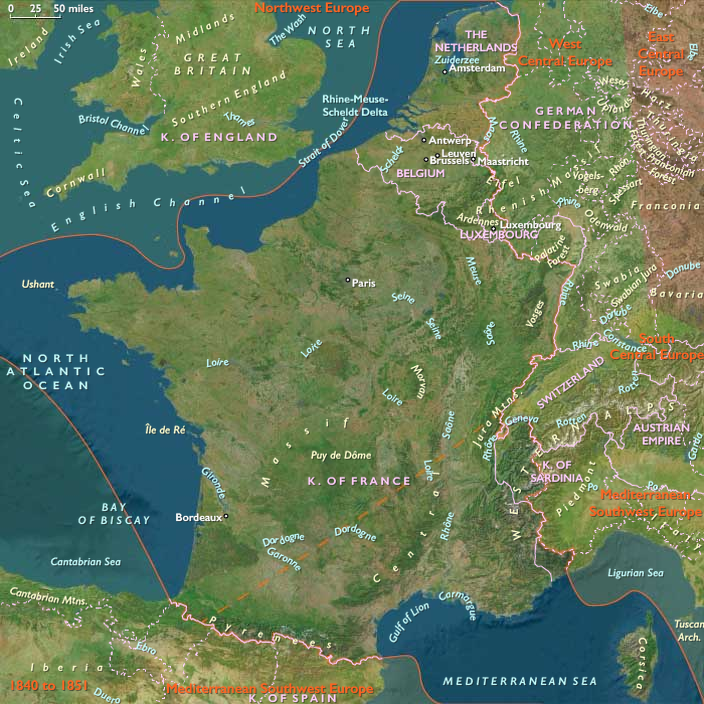
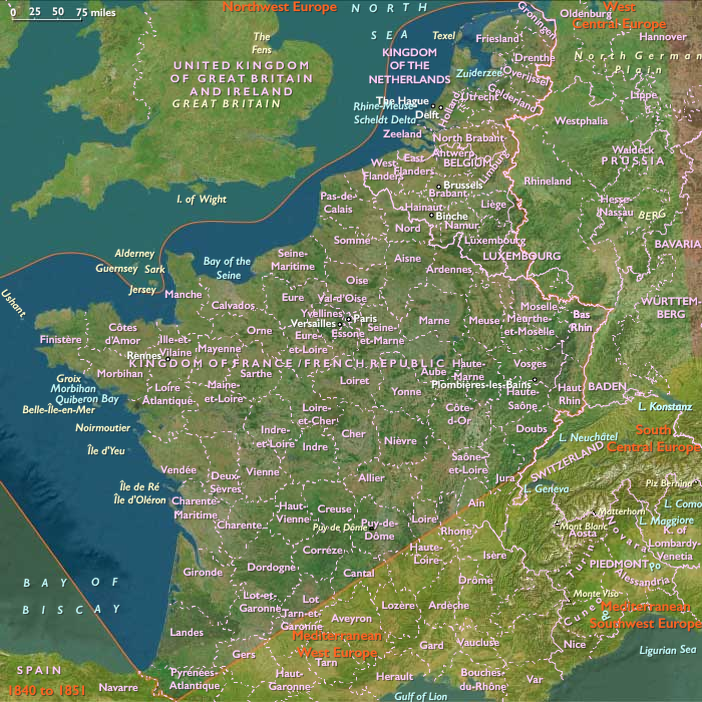
The principle of universal manhood suffrage is proclaimed in Paris on March 2—an almost unprecedented experiment and one that increases the electorate at a stroke from two hundred thousand to nine million.
In matters of foreign policy, on the other hand, Foreign Minister Lamartine resists radical demands.
The radicals are eager for an ideological crusade on behalf of all peoples who thirst for freedom: Poles, Italians, Hungarians, and Germans have launched their own revolutions and need help.
Lamartine prefers to confine himself to lip-service support, since he is aware that an armed crusade would quickly inspire an anti-French coalition of the major powers.
The propertied classes, who were at first startled, pretended to accept the new circumstances, but they are unable to tolerate the fact that the working class possesses arms with which to defend themselves.
Paris has become a hotbed of political activism; dozens of clubs and scores of newspapers have sprung up.
Severe tension develops between moderates and radicals both within and outside the government.
On March 17, alarmed workers organize a vast demonstration, which is moved into moderate paths by Louis Blanc, but it does not succeed in quieting the middle class's fear of the “specter of communism”.
Within a month of the revolution, the initial mood of brotherhood and goodwill has been largely dissipated.
Locations
People
Groups
- Germans
- Poles (West Slavs)
- Italians (Latins)
- France, constitutional monarchy of
- France, Second Republic of
Topics
Subjects
Regions
Subregions
Related Events
Showing 10 events out of 16793 total
Years: 1848 - 1848
March
Locations
People
Groups
- Germans
- Poles (West Slavs)
- Italians (Latins)
- France, constitutional monarchy of
- France, Second Republic of
Topics
Subjects
Regions
Subregions