
Filters:
The Suppression of the Druids in Roman …
Years: 40 - 51
The Suppression of the Druids in Roman Gaul (1st Century CE)
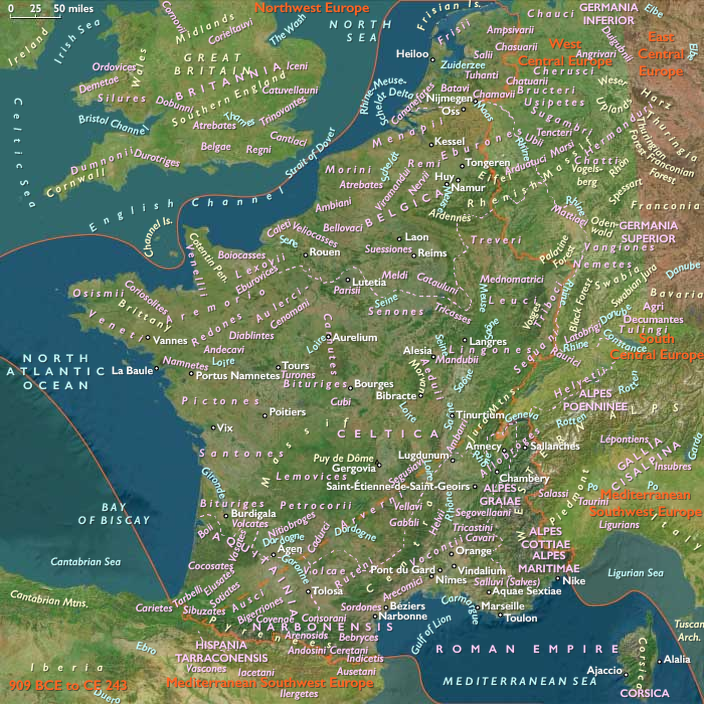
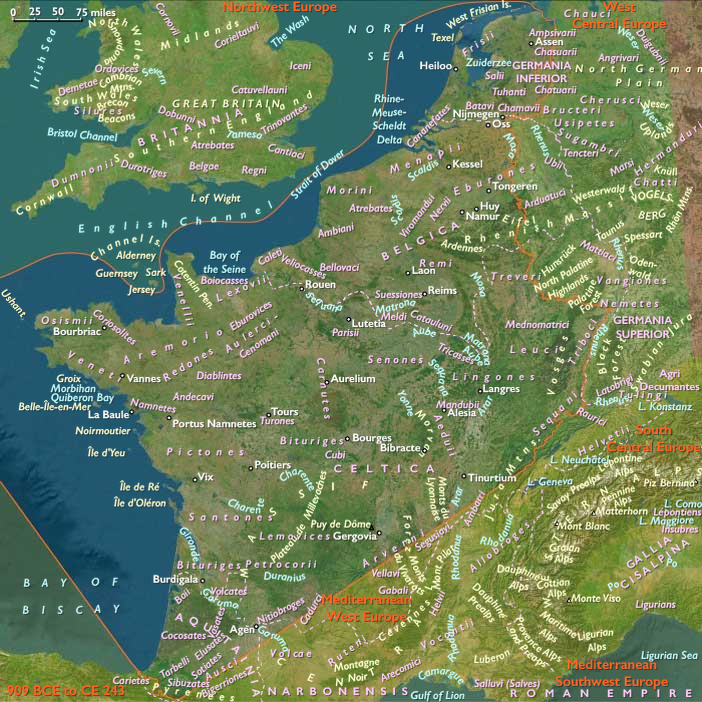
After the Roman conquest of Gaul (58–51 BCE), led by Julius Caesar, the Gallic tribal chiefdoms were annexed into the Roman Empire. Following the establishment of Roman rule, efforts were made to eliminate the druids, the religious, legal, and intellectual elite of Celtic society.
Roman Measures Against Druidism
According to Roman sources, various emperors enacted laws to eradicate druidism in Gaul, perceiving it as a threat to Roman authority and assimilation efforts.
1. Augustus (27 BCE – 14 CE)
- The first recorded legal restriction against druids came under Emperor Augustus, who:
- Banned Roman citizens from practicing druidism, attempting to separate the elite from indigenous traditions.
- Targeted druids as symbols of resistance, as they were influential in Gallic governance and resistance efforts.
2. Tiberius (14–37 CE)
- According to Pliny the Elder (writing in the 70s CE), Emperor Tiberius took stronger action, enacting laws that banned druids, soothsayers, and healers.
- Pliny applauded the move, believing that it helped eliminate human sacrifice in Gaul, a practice often associated (perhaps inaccurately) with druidic rituals.
3. Claudius (41–54 CE)
- Suetonius, writing in the 2nd century CE, credited Emperor Claudius with passing the most decisive law, which:
- Completely outlawed druidic religious practices in Gaul.
- Led to the active persecution of druids, likely involving executions and destruction of sacred sites.
Motivations for the Suppression of Druids
- The Romans viewed the druids as a political and ideological threat, as they:
- Were key figures in Gallic resistance movements.
- Served as religious leaders, legal authorities, and advisors to tribal chieftains.
- Maintained a distinct cultural identity, resisting Romanization.
- Their influence contradicted Roman efforts to integrate Gaul into the empire, necessitating their elimination from public life.
The Last Strongholds of Druidism
- While druidism declined in Gaul, it persisted in Britain and Ireland, where Roman control was weaker.
- The final Roman action against druids came in 61 CE, when the governor Suetonius Paulinus led a brutal campaign against the druidic stronghold on the island of Mona (Anglesey, Wales).
Legacy of the Roman Campaign Against the Druids
- The suppression of druidism contributed to the cultural transformation of Gaul, replacing Celtic traditions with Roman law, administration, and religion.
- While the Romans destroyed much of the druids' influence, elements of Celtic spirituality survived, merging with later Gallo-Roman religious practices.
- The druids' historical role, largely recorded by Roman authors, remains shrouded in bias, as no written records from the druids themselves survive.
The campaign against the druids was a critical part of Roman efforts to consolidate power in Gaul, ensuring that resistance was crushed and local populations fully integrated into the empire.
People
Groups
Topics
- Classical antiquity
- Roman colonization
- Pre-Roman Iron Age of Northern Europe
- Roman Age Optimum
- Pax Romana
Commodoties
Subjects
- Commerce
- Environment
- Labor and Service
- Decorative arts
- Style
- Conflict
- Faith
- Government
- Custom and Law
- Technology
Regions
Subregions
Related Events
Showing 10 events out of 13 total
Years: 40 - 51
People
Groups
Topics
- Classical antiquity
- Roman colonization
- Pre-Roman Iron Age of Northern Europe
- Roman Age Optimum
- Pax Romana
Commodoties
Subjects
- Commerce
- Environment
- Labor and Service
- Decorative arts
- Style
- Conflict
- Faith
- Government
- Custom and Law
- Technology
Regions
Subregions