
The Bell Beaker Culture and Its Evolution …
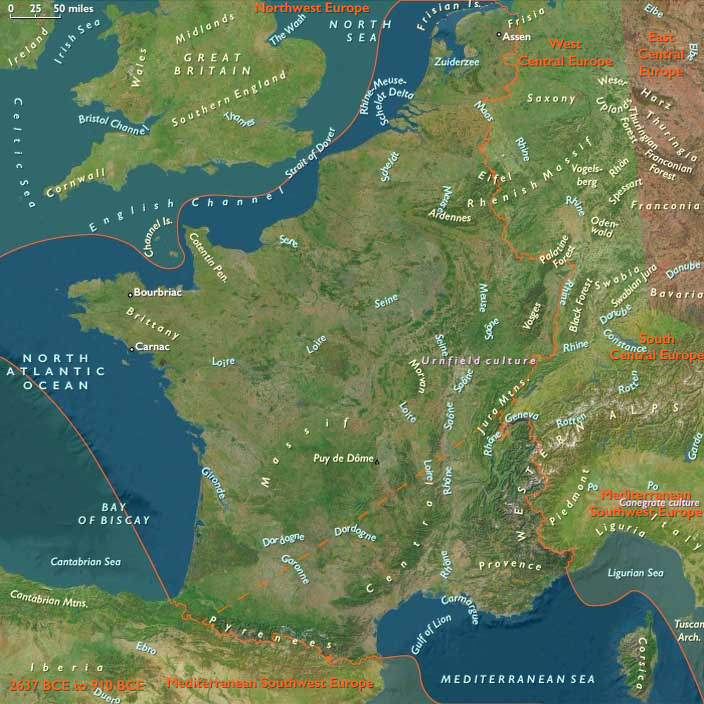
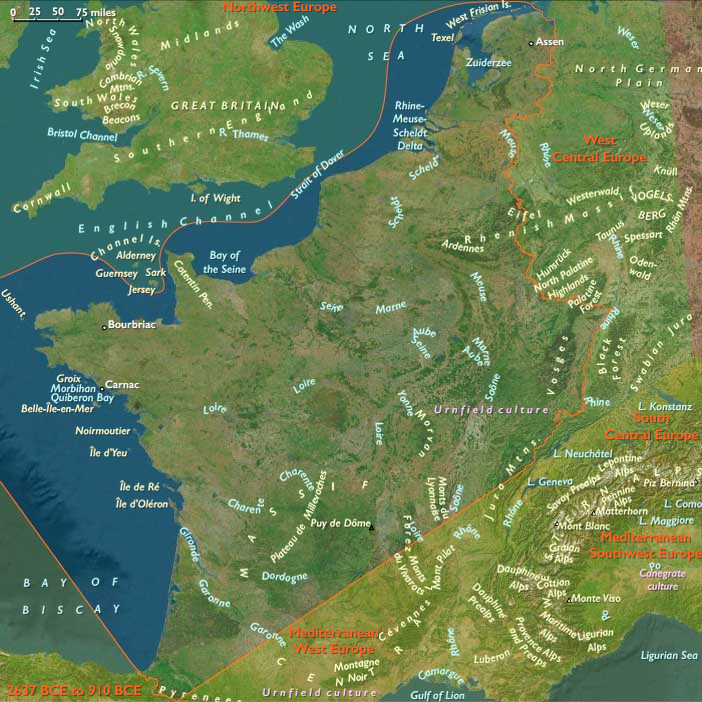
Years: 2637BCE - 910BCE
The Bell Beaker Culture and Its Evolution in the Low Countries (2700–800 BCE)
The Bell Beaker culture (c. 2700–2100 BCE) emerged as a widespread archaeological phenomenon across Western and Central Europe, with proposed origins in the Iberian Peninsula, the Netherlands, and Central Europe. The Bell Beaker people are credited with introducing metalwork in copper, gold, and later bronze, establishing long-distance trade networks previously unseen in the region.
Metalwork and Trade Networks
- The introduction of copper artifacts in the Netherlands reflects international trade, as copper does not naturally occur in Dutch soil.
- The many rare bronze objects found in Drenthe suggest that the region may have been a Bronze Age trading center between 2000 and 800 BCE, linking the Low Countries with Central and Northern Europe.
Cultural Evolution: From Bell Beaker to Elp and Hilversum Cultures
The Bell Beaker culture in the Netherlands developed locally into the Barbed-Wire Beaker culture (2100–1800 BCE), which in turn led to the emergence of the Elp culture (c. 1800–800 BCE) in the north and the Hilversum culture (1800–800 BCE) in the south.
Elp Culture (c. 1800–800 BCE)
- The early phase of the Elp culture (1800–1200 BCE) is marked by the construction of tumuli (burial mounds), closely linked to similar burial traditions in northern Germany and Scandinavia, and associated with the Tumulus culture of Central Europe.
- The later phase (1200–800 BCE) shifts to cremation burials, with ashes placed in urns and buried in fields, aligning with the traditions of the Urnfield culture.
Hilversum Culture (c. 1800–800 BCE)
- The Hilversum culture, dominant in the southern Netherlands, retained cultural links to Britain, continuing connections that had been established during the Barbed-Wire Beaker phase.
- The culture is characterized by distinct pottery styles and burial customs that differentiate it from the northern Elp culture.
Significance of These Cultural Developments
- The Bell Beaker culture’s expansion of metallurgy and trade laid the foundation for the Bronze Age economy in Northwestern Europe.
- The tumuli and cremation burial practices reflect evolving social structures and mortuary traditions, showing links to wider European trends.
- The Hilversum culture’s ties to Britain suggest ongoing cross-Channel interactions, influencing cultural exchange between the Low Countries and the British Isles.
These transitions mark a complex cultural evolution in the Netherlands from the Bronze Age Bell Beaker traditions to the regional identities of the later prehistoric period, setting the stage for the Iron Age societies that would follow.
Locations
Groups
Topics
Commodoties
Subjects
Regions
Subregions
Years: 2637BCE - 910BCE
Locations
Groups
Topics
Commodoties
Subjects
Regions
Subregions