
The so-called Venus of Lespugue, a statuette …
Years: 23373BCE - 21646BCE
The so-called Venus of Lespugue, a statuette of a nude female figure of the Gravettian is discovered in 1922 by René de Saint-Périer (1877-1950) in the Rideaux cave of Lespugue (Haute-Garonne) in the foothills of the Pyrenees.
Dated to between twenty-six thousand and twenty-four thousand years ago, the figure is approximately six inches (one hundred and fifty millimeters) tall.
Carved from tusk ivory, it was damaged during excavation.
Of all the steatopygous Venus figurines discovered from the upper Paleolithic, the Venus of Lespugue, if the reconstruction is sound, appears to display the most exaggerated female secondary sexual characteristics, especially the extremely large, pendulous breasts.
According to textile expert Elizabeth Wayland Barber, the statue displays the earliest representation found of spun thread, as the carving shows a skirt hanging from below the hips, made of twisted fibers, frayed at the end.
The Venus of Lespugue resides in France, at the Musée de l'Homme.
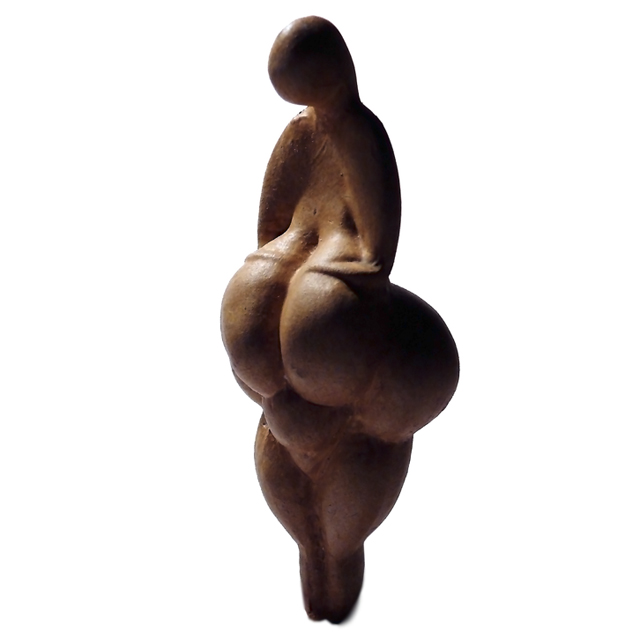
Replica of the Venus of Lespugue, carved from tusk ivory (Gravettian, Upper Paleolithic); France, Musée de L'Homme, Paris. Photo taken May 2006 by José-Manuel Benito.
Locations
Groups
Topics
Commodoties
Subjects
- Commerce
- Sculpture
- Environment
- Labor and Service
- Conflict
- Faith
- Government
- Technology
- Anthropology
- Archaeology
Regions
Subregions
Related Events
Showing 10 events out of 69467 total
Years: 23373BCE - 21646BCE
Replica of the Venus of Lespugue, carved from tusk ivory (Gravettian, Upper Paleolithic); France, Musée de L'Homme, Paris. Photo taken May 2006 by José-Manuel Benito.
Locations
Groups
Topics
Commodoties
Subjects
- Commerce
- Sculpture
- Environment
- Labor and Service
- Conflict
- Faith
- Government
- Technology
- Anthropology
- Archaeology
Regions
Subregions