
Filters:
The St. Elizabeth’s Flood of 1404: A …
Years: 1404 - 1404
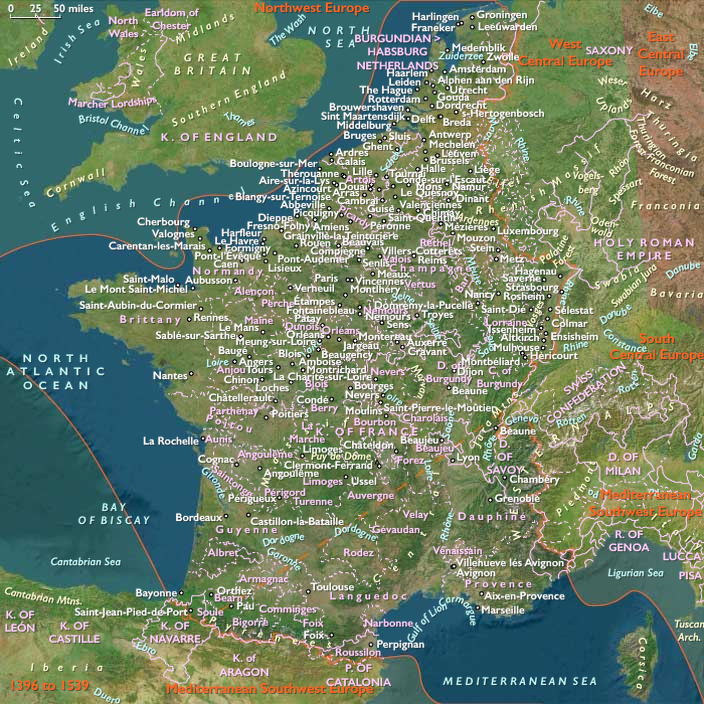
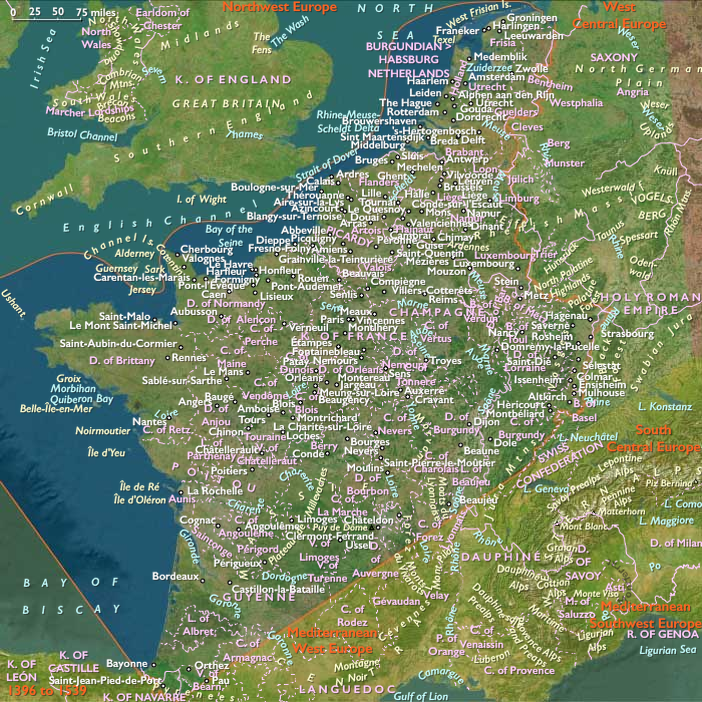
The St. Elizabeth’s Flood of 1404: A Catastrophic Inundation in Flanders, Zeeland, and Holland
On November 19, 1404, the St. Elizabeth’s Flood (Sint Elisabethsvloed) struck the coastal regions of Flanders, Zeeland, and Holland, causing widespread destruction. Named after St. Elizabeth, whose feast day falls on the same date, the flood devastated newly settled areas, wiping out entire parishes and villages.
I. Background: The 1375 Flood and the Formation of the Zuudzee
- Twenty-nine years earlier, on October 8, 1375, a massive flood had already reshaped the coastline of Flanders and Zeeland.
- This earlier event created the "Zuudzee", a new inland sea that submerged former land areas.
- Over time, settlers had reclaimed parts of the Zuudzee, establishing new parishes and villages.
- However, the 1404 flood destroyed these settlements once again, mirroring the devastation of 1375.
II. Impact of the 1404 Flood
- Newly settled areas in the Zuudzee were obliterated, forcing survivors to abandon resettlement efforts.
- Previously untouched areas, including the small towns of IJzendijke and Hugevliet, were completely engulfed and destroyed.
- In the County of Flanders, all coastal islands in the mouth of the Westerschelde were washed away, permanently altering the region’s coastline and geography.
III. John the Fearless’ Response: The Graaf Jansdijk
- In the aftermath of the calamity, John the Fearless, Duke of Burgundy (Jan zonder Vrees), took action to prevent future floods.
- He ordered the linking of all existing dikes into a single, continuous defensive structure, running north to south along the Flemish coast.
- This engineering effort resulted in the creation of the "Graaf Jansdijk" (Count John’s Dike), which helped shape the modern, straight Belgian coastline.
- The Graaf Jansdijk remains a testament to medieval flood management efforts, marking one of the earliest large-scale flood defense systems in the Low Countries.
IV. Long-Term Consequences
- The 1404 flood reinforced the necessity of large-scale water management, influencing later Dutch and Flemish engineering projects.
- John the Fearless’ initiative laid the groundwork for future dike-building strategies, which would become a hallmark of Dutch and Flemish flood control.
- The loss of land and settlements led to shifts in population and economic hardship, particularly for coastal communities reliant on agriculture and trade.
The St. Elizabeth’s Flood of 1404 was a defining natural disaster in the history of the Low Countries, reshaping the coastline, destroying settlements, and prompting one of the earliest large-scale flood prevention projects under John the Fearless’ rule.
Locations
People
Groups
Subjects
Regions
Subregions
Years: 1404 - 1404
Locations
People
Groups
Subjects
Regions
Subregions