
The Taíno culture, which had begun to …
Years: 1509 - 1509
The Taíno culture, which had begun to developed on Jamaica around 1200, had brought from South America a system of raising yuca known as "conuco."
To add nutrients to the soil, the Taíno burn local bushes and trees and heap the ash into large mounds, into which they then plant yuca cuttings.
Most Taíno live in large circular buildings (bohios), constructed with wooden poles, woven straw, and palm leaves.
The Taino speak an Arawakan language and do not have writing.
Some of the words used by them, such as barbacoa ("barbecue"), hamaca ("hammock"), kanoa ("canoe"), tabaco ("tobacco"), yuca, batata ("sweet potato"), and juracán ("hurricane"), will be incorporated into Spanish and English.
The Taíno are historically enemies of the neighboring Carib tribes, another group with origins in South America, who lived principally in the Lesser Antilles but had also colonized Jamaica.
For much of the fifteenth century, the Taíno tribe was being driven to the northeast in the Caribbean (out of what is now South America) because of raids by the Carib.
The Spanish Empire begins its official governance of Jamaica in 1509, with formal occupation of the island by conquistador Juan de Esquivel and his men.
Esquivel had accompanied Columbus in his second trip to the Americas in 1493 and participated in the invasion of Hispaniola.
A decade later, Friar Bartolomé de las Casas wrote Spanish authorities about Esquivel's conduct during the Higüey massacre of 1503.
The first Spanish settlement is founded in 1509 near St Ann's Bay and named Seville.
Locations
People
Groups
- Kalinago (Amerind tribe)
- Taíno
- Santo Domingo, Captaincy General of
- Santiago, Colony of (Spanish Jamaica)
- Spain, Habsburg Kingdom of
- Cuba (Spanish Colony)
Topics
Commodoties
Subjects
Regions
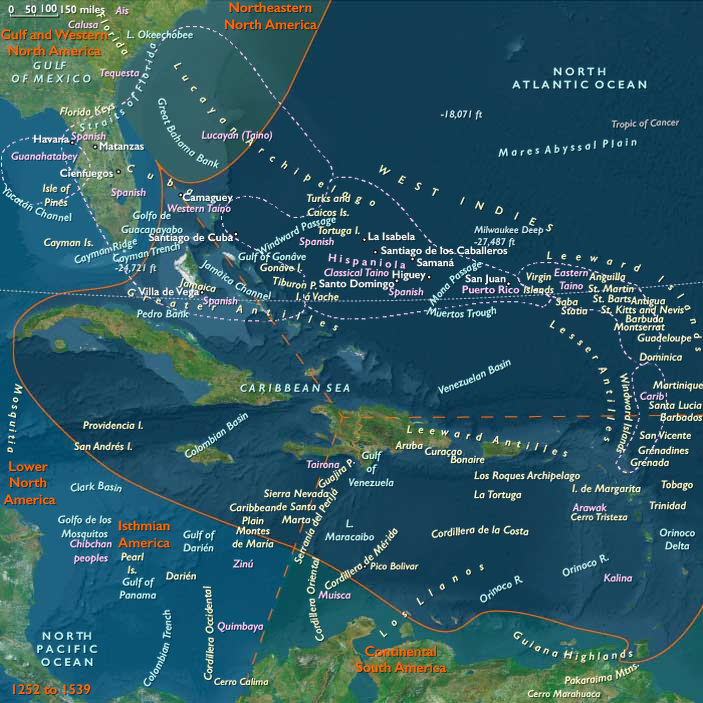
Subregions
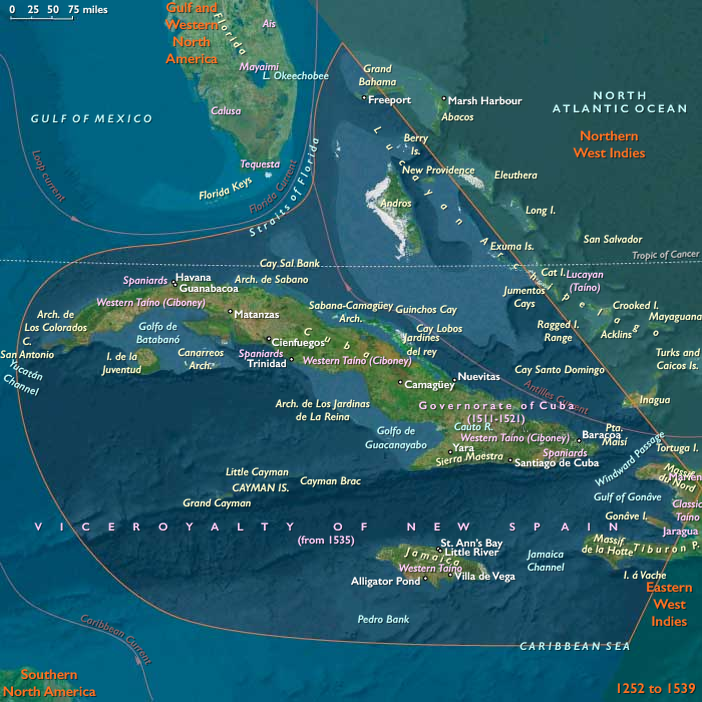
Related Events
Showing 10 events out of 39404 total
Years: 1509 - 1509
Locations
People
Groups
- Kalinago (Amerind tribe)
- Taíno
- Santo Domingo, Captaincy General of
- Santiago, Colony of (Spanish Jamaica)
- Spain, Habsburg Kingdom of
- Cuba (Spanish Colony)
Topics
Commodoties
Subjects
Regions
Subregions