
The use of brass has spread during …
Years: 333BCE - 322BCE
The use of brass has spread during the later part of first millennium BCE across a wide geographical area from Britain and Spain in the west to Iran, and India in the east.
This seems to have been encouraged by exports and influence from the Middle East and eastern Mediterranean where deliberate production of brass from metallic copper and zinc ores had been introduced.
The fourth century BCE writer Theopompus, quoted by Strabo, describes how heating earth from Andeira in Turkey produced "droplets of false silver", probably metallic zinc, which could be used to turn copper into oreichalkos.
Theopompus, born on Chios, seems to have spent some time in his early youth at Athens, along with his father, who had been exiled on account of his Laconian sympathies.
Here he had become a pupil of Isocrates, and rapidly made great progress in rhetoric; we are told that Isocrates used to say that Ephorus required the spur but Theopompus the bit (Cicero, Brutus, 204).
He appears to have at first composed epideictic speeches, in which he attained to such proficiency that in 352‑351 he gained the prize of oratory given by Artemisia II of Caria in honor of her husband, although Isocrates was himself among the competitors.
It is said to have been the advice of his teacher that finally determined his career as an historian—a career for which he was peculiarly qualified owing to his abundant patrimony and his wide knowledge of men and places.
Through the influence of Alexander, he is permitted to return to Chios about 333, and figures for some time as one of the leaders of the aristocratic party in his native town.
After Alexander's death he is again expelled, and takes refuge with Ptolemy in Egypt, where he appears to have met with a somewhat cold reception.
The date of his death is unknown.
The works of Theopompus are chiefly historical, and are much quoted by later writers.
They include an Epitome of Herodotus's History (Whether this work is actually his is debated, the Hellenics, the History of Philip, and several panegyrics and hortatory addresses, the chief of which is the Letter to Alexander.
Locations
People
Groups
Topics
- Iron Age Europe
- Iron Age Cold Epoch
- Classical antiquity
- Alexander the Great, Wars of
- Diadochi, Wars of the
Commodoties
Subjects
Regions
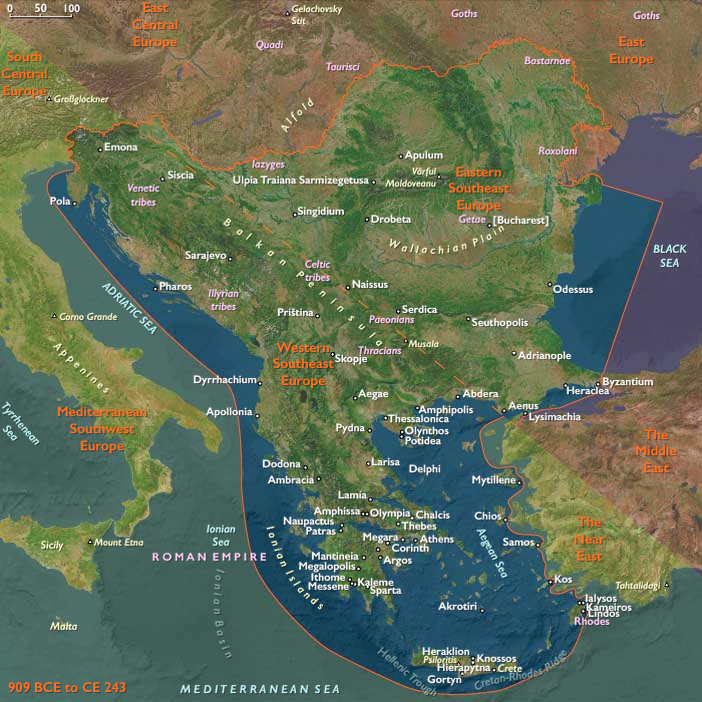
Subregions
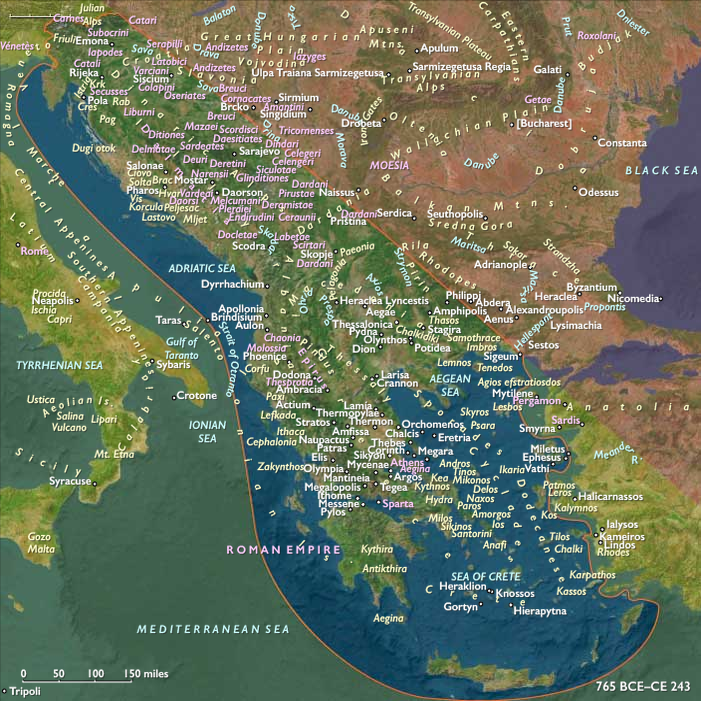
Years: 333BCE - 322BCE
Locations
People
Groups
Topics
- Iron Age Europe
- Iron Age Cold Epoch
- Classical antiquity
- Alexander the Great, Wars of
- Diadochi, Wars of the
Commodoties
Subjects
Regions
Subregions