
The Yanghai Tombs, a vast ancient cemetery …
Years: 765BCE - 622BCE
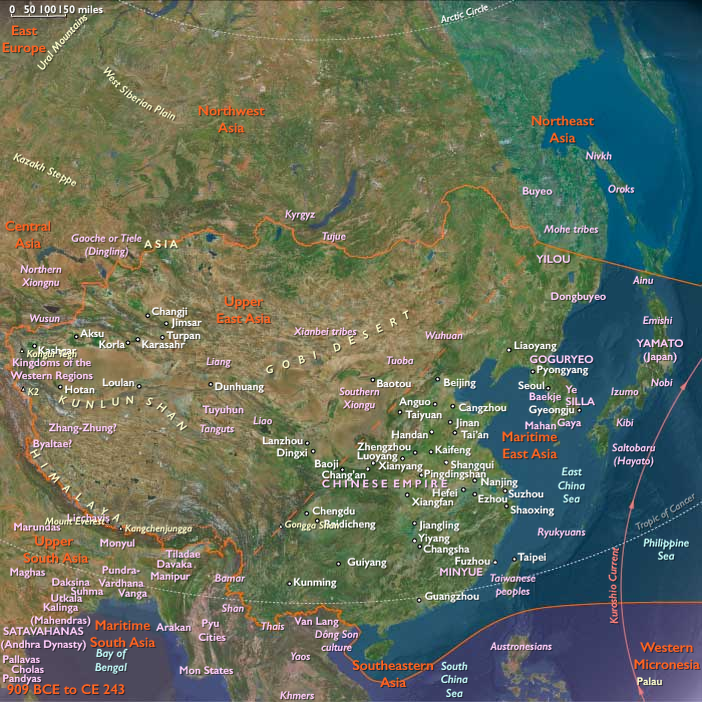
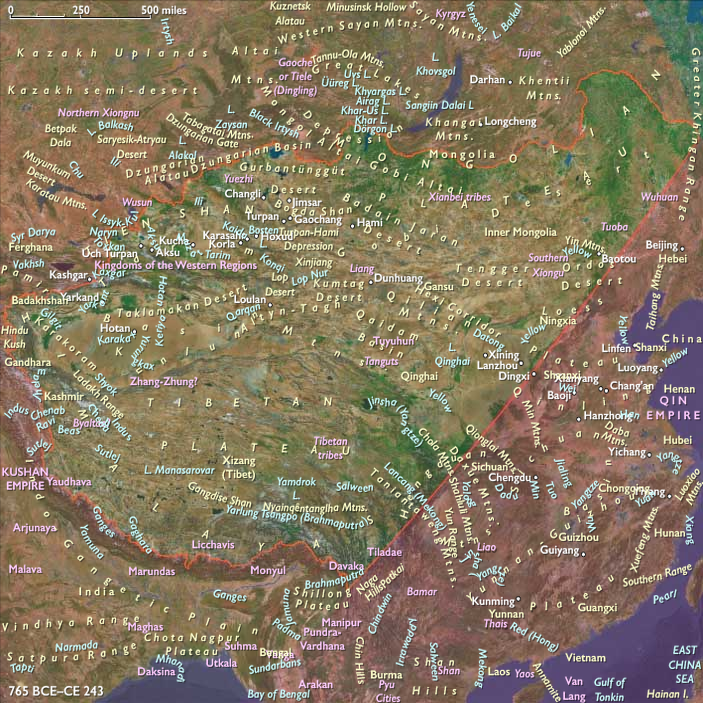
The Yanghai Tombs, a vast ancient cemetery (fifty-four thousand square miles) situated in the Turpan district of the Xinjiang Uyghur Autonomous Region of the People's Republic of China, have revealed the twenty-seven hundred-year-old grave of a shaman.
He is thought to have belonged to the Gushi culture recorded in the area centuries later in the Hanshu, Chapter 96B.
Near the head and foot of the shaman was a large leather basket and wooden bowl filled with seven hundred and eighty-nine gram of cannabis, superbly preserved by climatic and burial conditions.
An international team demonstrated that this material contained tetrahydrocannabinol, the psychoactive component of cannabis.
The cannabis was presumably employed by this culture as a medicinal or psychoactive agent, or an aid to divination.
This is the oldest documentation of cannabis as a pharmacologically active agent.
The cache of cannabis is about twenty-seven hundred years old and was clearly "cultivated for psychoactive purposes," rather than as fiber for clothing or as food, says a research paper in the Journal of Experimental Botany.
The seven hundred and eighty-nine grams of dried cannabis was buried alongside a light-haired, blue-eyed Caucasian man, likely a shaman of the Gushi culture, near Turpan in northwestern China.
The extremely dry conditions and alkaline soil acted as preservatives, allowing a team of scientists to carefully analyze the stash, which still looked green though it had lost its distinctive odor.
This shaman was Caucasoid, and was well over six feet tall.
He may belong to, or was related to the Yuezhi people or Tocharians known to have lived in the region.
Locations
Groups
Topics
Commodoties
Subjects
Regions
Subregions
Years: 765BCE - 622BCE
Locations
Groups
Topics
Commodoties
Subjects
Regions
Subregions