
Filters:
The Establishment of Artois as a Territorial …
Years: 1180 - 1191
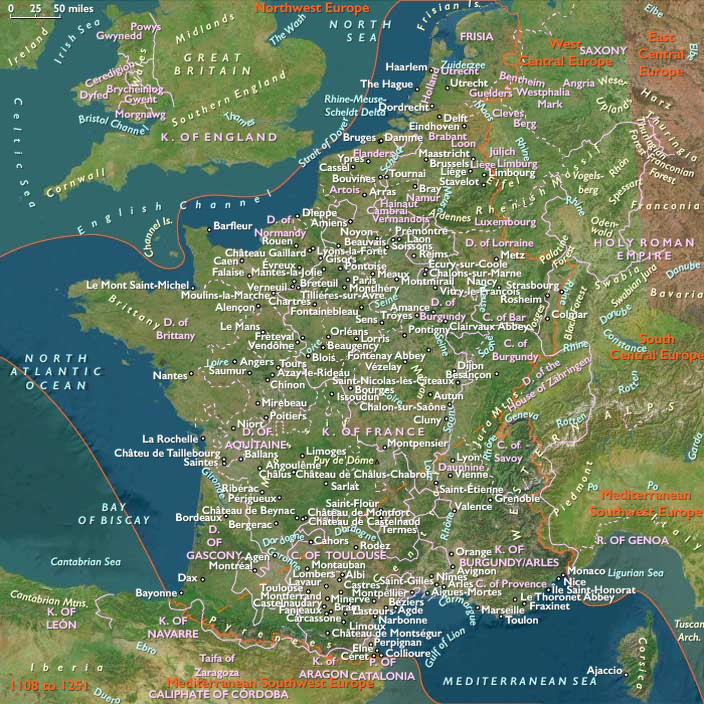
The Establishment of Artois as a Territorial Principality (1180 CE)
Artois, originally a Carolingian lordship (comitatus) in West Francia, has a history tracing back to Roman and early medieval times. It was once part of the Roman provinces of Belgica and Germania Inferior, inhabited first by Celtic tribes and later by Germanic peoples as the Roman Empire declined.
Early History and Integration into Flanders
- The lordship of Artois was established by Counts Odalric and Ecfrid.
- From 898 onward, it was gradually absorbed into the County of Flanders by Count Baldwin II, a process completed under his son, Count Arnulf I.
- As part of Flanders, Artois became a strategic region due to its wealth, fertile lands, and important trade routes.
The Creation of Artois as a Separate Principality (1180)
- In 1180, Philip of Alsace, Count of Flanders, granted Artois as a dowry to his niece, Isabelle of Hainaut, upon her marriage to King Philip II of France.
- This effectively divided Flanders, creating a new territorial principality of Artois, now under Capetian influence.
- This division weakened Flemish control over northern France while strengthening the French monarchy, further shifting the balance of power in the region.
Significance of the 1180 Division
- Artois became a Capetian possession, marking the beginning of France’s territorial expansion into former Flemish lands.
- It remained a strategically valuable region, later playing a key role in Capetian-Plantagenet conflicts and the Hundred Years’ War.
- The marriage of Isabelle of Hainaut to Philip II not only secured French claims to Artois but also reinforced the Capetian dynasty’s growing dominance in France.
The creation of Artois as a separate principality in 1180 was a pivotal moment in medieval French history, marking a shift in power from Flanders to the Capetian monarchy, a pattern that would continue over the following centuries.
People
Groups
Subjects
Regions
Subregions

Years: 1180 - 1191
People
Groups
Subjects
Regions
Subregions