
The Flemish Succession Crisis and the Rise …
Years: 1128 - 1128
July
The Flemish Succession Crisis and the Rise of Thierry of Alsace (1127–1128 CE)
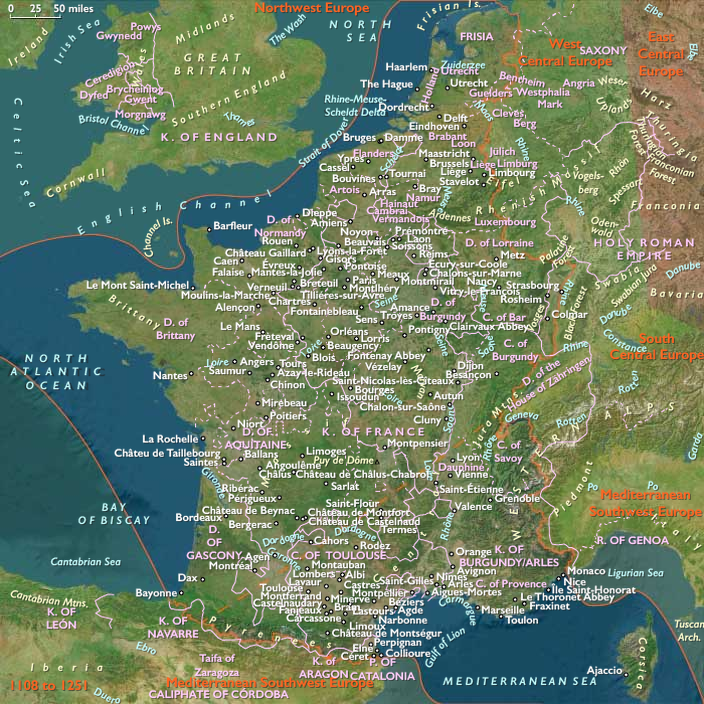
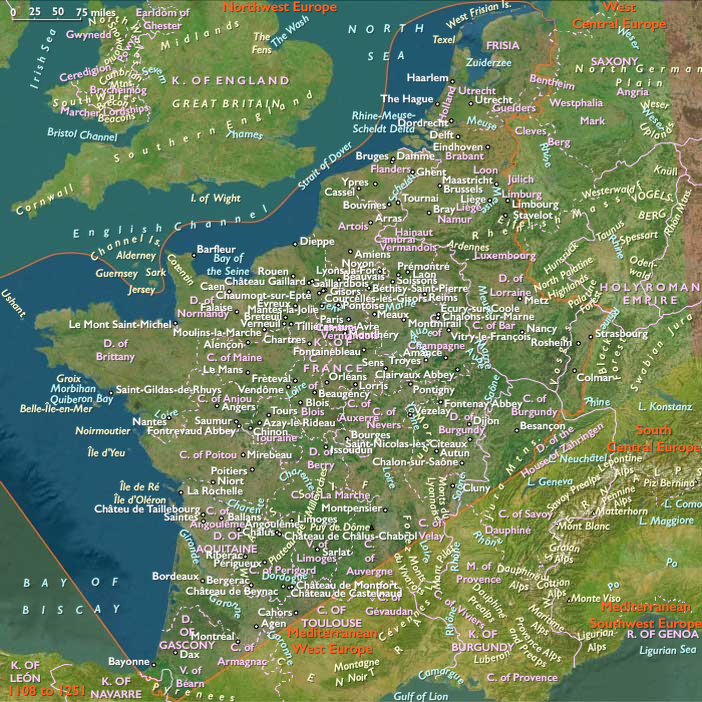
Following the assassination of Count Charles the Good in 1127, Thierry of Alsace laid claim to the County of Flanders as the grandson of Robert I of Flanders. However, his rival William Clito, the son of Robert Curthose and grandson of William the Conqueror, was installed as Count of Flanders with the backing of King Louis VI of France.
Despite William Clito’s Capetian support, his rule quickly became unpopular, as his policies threatened the autonomy of Flanders. By the end of 1127, major Flemish cities, including Bruges, Ghent, Lille, and Saint-Omer, had declared their support for Thierry, escalating the conflict into a full-fledged succession war.
Early Battles and Thierry’s Struggles (1127–1128)
- Thierry’s support came primarily from the Imperial faction in Flanders, aligning himself with Emperor Lothair II rather than the Capetians.
- Upon arriving in Flanders, Thierry immediately engaged William Clito in battle, seeking to secure control over the contested county.
- In retaliation, Louis VI of France had Thierry excommunicated by Archbishop Raymond of Martigné of Reims, branding him a rebel against Capetian rule.
- Louis VI then personally besieged Lille, attempting to crush Thierry’s rebellion, but was forced to withdrawwhen King Henry I of England, William’s uncle, switched his support to Thierry.
Despite these victories, Thierry suffered major defeats at Tielt and Oostkamp, forcing him to retreat to Bruges, his main stronghold. When Bruges also became untenable, he fled to Aalst, where he was soon besieged by William Clito, Godfrey I of Leuven, and Louis VI.
The Sudden Death of William Clito (July 27, 1128)
- With Aalst on the verge of capture, Thierry’s prospects seemed bleak, and it appeared that Capetian control over Flanders was imminent.
- However, William Clito suddenly died on July 27, 1128, reportedly from a wound sustained during the siege.
- His unexpected death left Thierry as the only remaining viable claimant to the county.
Thierry of Alsace Becomes Count of Flanders
With William Clito gone, Capetian ambitions in Flanders collapsed. Thierry was able to secure control over the county, establishing his rule as Count of Flanders and ending the Capetian-backed resistance.
Significance of the Flemish Succession War
- Thierry’s victory reinforced Flemish autonomy, ensuring that Flanders remained independent from direct Capetian rule.
- Louis VI’s attempt to expand Capetian influence into Flanders had failed, marking a setback for Capetian ambitions in northern France.
- Henry I of England’s intervention proved decisive, further demonstrating the ongoing Anglo-French rivalry over influence in Flanders and Normandy.
- Thierry’s long reign (1128–1168) would see Flanders emerge as a powerful economic and political force in medieval Europe, playing a crucial role in the trade networks of the North Sea and the Low Countries.
The Flemish succession crisis (1127–1128) had transformed into a broader struggle between Capetian France and Imperial-supported Flemish independence, ultimately ensuring Flanders remained free of direct French rule for decades to come.
Locations
People
Groups
- Flemish people
- Flanders, County of
- France, (Capetian) Kingdom of
- Lorraine (Lothier), Lower, (second) Duchy of
Commodoties
Subjects
Regions
Subregions
Years: 1128 - 1128
July
Locations
People
Groups
- Flemish people
- Flanders, County of
- France, (Capetian) Kingdom of
- Lorraine (Lothier), Lower, (second) Duchy of
Commodoties
Subjects
Regions
Subregions