
Filters:
Tigranes II of Armenia, under whom the …
Years: 66BCE - 66BCE
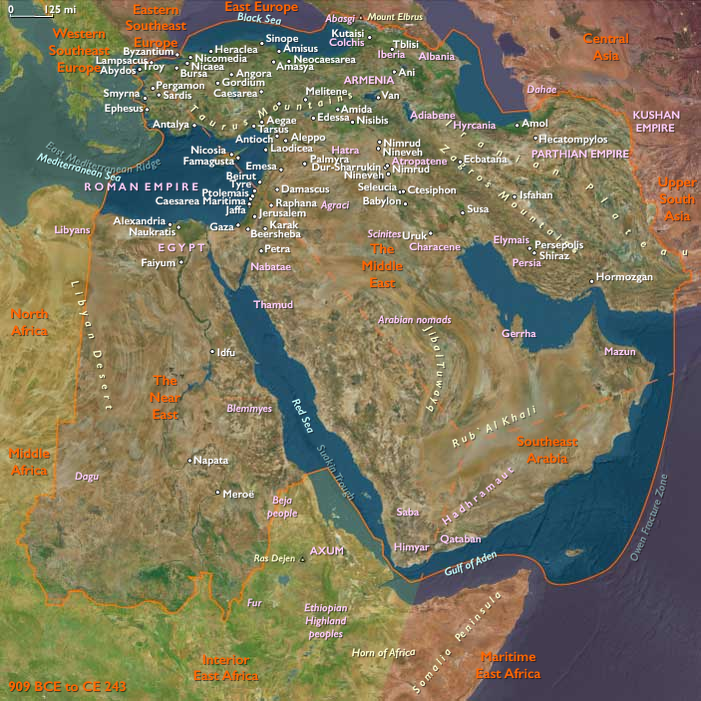
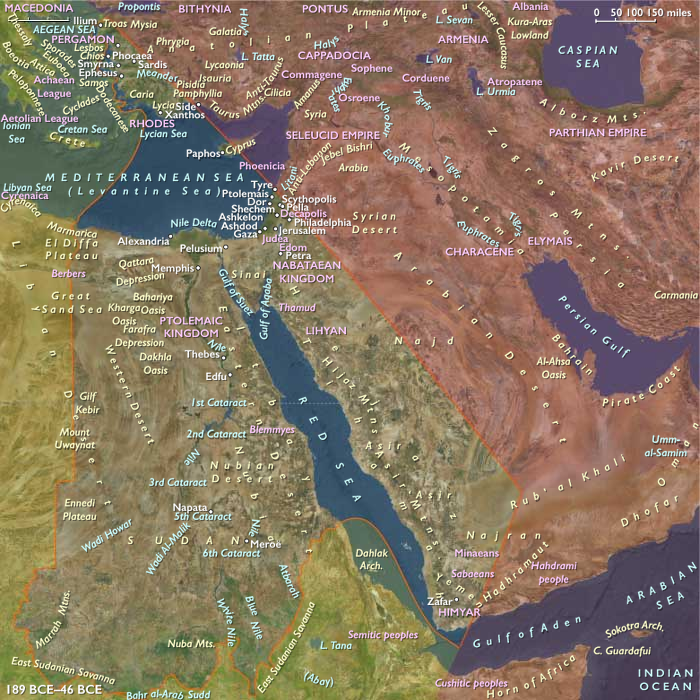
Tigranes II of Armenia, under whom the country has become the strongest state in the Roman East, has penetrated as far south as Ptolemais (modern 'Akko, Israel), but in 66 BCE the Roman general Pompey finally defeats him.
Pompey receives him graciously and gives him back his kingdom in exchange for Syria and other southern conquests.
Locations
People
Groups
Topics
- Classical antiquity
- Roman Republic, Crisis of the
- Mithridatic War, Third
- Roman-Armenian War of 72-66 BCE
Commodoties
Subjects
Regions
Subregions
Related Events
Showing 9 events out of 9 total
Years: 66BCE - 66BCE
Locations
People
Groups
Topics
- Classical antiquity
- Roman Republic, Crisis of the
- Mithridatic War, Third
- Roman-Armenian War of 72-66 BCE
Commodoties
Subjects
Regions
Subregions