
Traces of human settlements have been found …
Years: 710 - 710
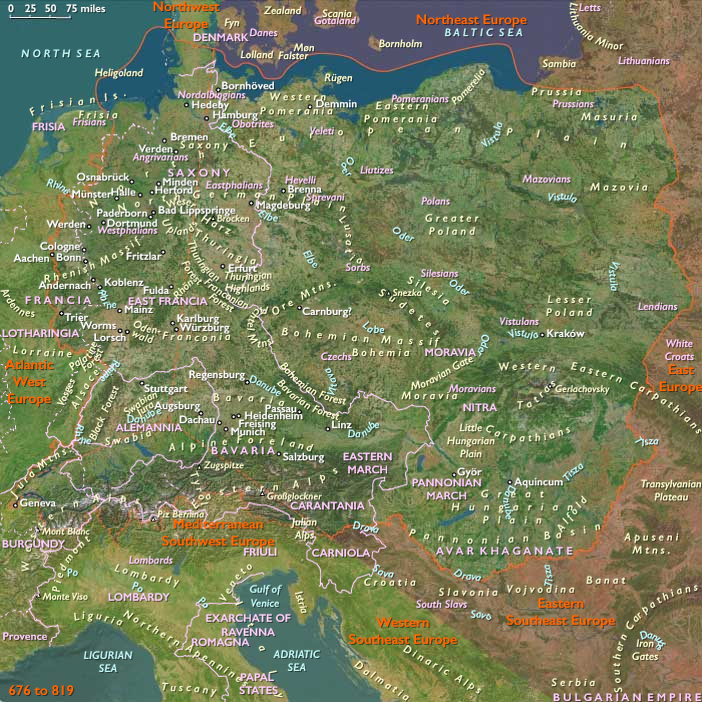
Traces of human settlements have been found in the area of Salzburg dating to the Neolithic Age.
The first settlements at Salzburg were apparently begun by the Celts around the fifth century BCE.
The separate settlements had been merged into one city by the Roman Empire around 15 BCE.
At this time, the city was called Juvavum and was awarded the status of a Roman municipium in CE 45.
Juvavum developed into an important town of the Roman province of Noricum.
After the collapse of the Norican frontier, Juvavum declined so sharply that by the late seventh century it had become a "near ruin".
The Life of Saint Rupert credits the eighth-century saint with the city's rebirth.
When Theodo of Bavaria asked Rupert to become bishop in about 700, Rupert had reconnoitered the river for the site of his basilica.
Rupert chose Juvavum, ordained priests, and annexed the manor Piding.
Rupert named the city "Salzburg".
He traveled to evangelize among pagans.
The name Salzburg means "Salt Castle".
It derives its name from the barges carrying salt on the Salzach River, which were subject to a toll in the eighth century, as was customary for many communities and cities on European rivers.
Rupert founds Nonnberg Abbey, a Benedictine monastery, around 710; it is the oldest women's religious house in the German-speaking world.
Its first abbess is Saint Erentrudis of Salzburg, who is either a niece or a sister of Saint Rupert.
The abbey's endowment is provided by Theodebert, Duke of Bavaria.
Locations
People
Groups
Topics
Commodoties
Subjects
Regions
Subregions
Years: 710 - 710
Locations
People
Groups
Topics
Commodoties
Subjects
Regions
Subregions