
Troops loyal to the slain imperial claimant …
Years: 196 - 196
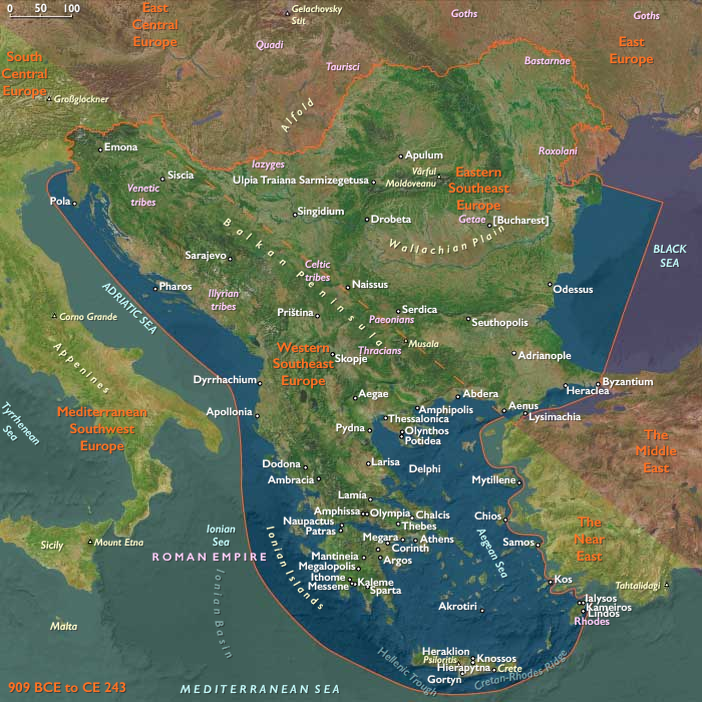
Troops loyal to the slain imperial claimant Pescennius Niger continue to occupy Byzantium, a valuable port of the Roman Empire.
Following a protracted siege, Septimius Severus, now Roman emperor, virtually destroys the city in 196, but later rebuilds it; it will quickly regain its previous prosperity.
Locations
People
Groups
Topics
Commodoties
Subjects
Regions
Subregions
Related Events
Filter results
Showing 10 events out of 60840 total
The warlord Sun Ce leads a series of military campaigns from 194 to 199 to conquer territories in the Jiangdong and Wu regions during the final years of the Eastern Han Dynasty.
The campaign concludes with victory for Sun Ce, and the conquered lands will serve as a foundation for the state of Eastern Wu during the Three Kingdoms era.
The first use of paper without writing has been excavated in China dating to the reign of Emperor Wu of Han from the second century BCE, used for purposes of wrapping or padding protection for delicate bronze mirrors.
It was also used for safety, such as the padding of poisonous 'medicine' as mentioned in the official history of the period.
Although paper used for writing becomes widespread by the third century, paper continues to be used for wrapping (and other) purposes.
The Introduction of Shafted Carts and Chariots in Europe (c. 200 CE)
By 200 CE, shafted carts and chariots, long used in China, made their first recorded appearance in Europe, marking a significant advancement in transportation technology. This development enhanced mobility, trade, and military logistics, further integrating the Eurasian world through technological exchange.
What Are Shafted Carts and Chariots?
- Unlike earlier pole-drawn carts, which had yoke systems for oxen, shafted carts and chariots used a single central shaft attached to a harness, allowing:
- Better maneuverability and stability.
- The use of horses for more efficient transport.
- Increased speed for both military and commercial use.
How Did They Reach Europe?
The transfer of this technology may have occurred through:
-
The Silk Road
- China had been using shafted chariots since at least the 6th century BCE.
- Trade and military exchanges between the Han Dynasty and Rome (via Parthia and the Kushan Empire) could have facilitated technological diffusion.
-
Roman-Parthian Interactions
- The Romans frequently clashed with the Parthians, who acted as intermediaries between China and Rome.
- Parthian use of Chinese-style cavalry techniques and chariots could have influenced Roman and European designs.
-
Migration and Warfare
- The Germanic and Sarmatian tribes along Rome’s borders were exposed to Eurasian innovations, potentially introducing shafted carts through steppe nomadic cultures.
Impact on Europe
-
Improved Transport Efficiency
- Shafted carts allowed for better weight distribution, making it easier to transport goods and suppliesover long distances.
-
Military Applications
- While chariots had declined in Roman warfare, the improved shafted harness system contributed to better cavalry mobility and logistics.
-
Economic Expansion
- The ability to move goods more efficiently helped facilitate trade between the Roman provinces and beyond.
Conclusion: A Sign of Eurasian Technological Exchange
The adoption of shafted carts and chariots in Europe by 200 CE reflects the broader exchanges of technology, culture, and ideas along Eurasian trade routes. This innovation contributed to improved transportation, military tactics, and economic integration, demonstrating how the Roman and Chinese worlds were indirectly linked through technological diffusion.
The Persecution of Christians Under Septimius Severus (202 CE)
In 202 CE, Emperor Septimius Severus (r. 193–211 CE) issued an edict intensifying the persecution of Christians throughout the Roman Empire. This decree marked one of the harshest imperial efforts to suppress the rapidly growing Christian movement, which was increasingly seen as a threat to Roman religious and social unity.
Severus’ Edict and Its Motivations
- The edict forbade conversions to Christianity and Judaism, targeting those who sought to abandon Roman religious traditions.
- It was not aimed at punishing existing Christians, but rather at preventing new adherents from joining the faith.
- The exact reasons for Severus’ persecution remain debated, but key factors likely included:
- Christianity’s rapid expansion, which challenged traditional Roman polytheism.
- The refusal of Christians to participate in state religious practices, which was seen as a sign of disloyalty to Rome.
- The political instability of the empire, as Severus may have sought to reinforce Roman identity through religious suppression.
Impact of the Persecution
- The edict led to the arrest, torture, and execution of many Christians, particularly in North Africa and Egypt, where Christianity had gained a strong following.
- Notable Christian martyrs from this period include:
- Perpetua and Felicity, two young Christian women executed in Carthage.
- Leonides of Alexandria, the father of the famous Christian theologian Origen, who was also put to death.
- Despite state-sponsored violence, Christianity continued to spread, with many Christians choosing martyrdom over apostasy, strengthening the faith’s appeal and resilience.
Legacy of Severus’ Persecution
- The persecution was not empire-wide or consistently enforced, as governors had varying degrees of commitment to the edict.
- By the end of Severus’ reign in 211 CE, the policy waned, but local persecutions persisted in some regions.
- The growth of Christianity continued, and later emperors would face even greater difficulties in suppressing the faith, leading to its eventual acceptance under Constantine in the 4th century CE.
While Severus’ persecution of Christians caused widespread suffering, it ultimately failed to halt the spread of Christianity, which would later become the dominant religion of the Roman Empire.
East Central Europe (196–207 CE): Septimius Severus and Frontier Consolidation
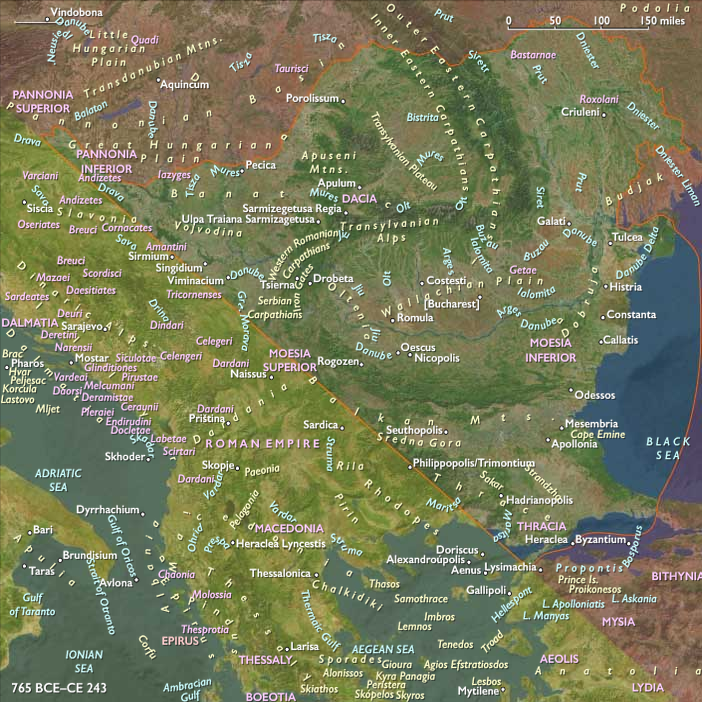
Between 196 and 207 CE, East Central Europe—covering Poland, Czechia, Slovakia, Hungary, and those portions of Germany and Austria lying east of 10°E and north of a line stretching from roughly 48.2°N at 10°E southeastward to the Austro-Slovenian border near 46.7°N, 15.4°E—experienced strengthened frontier stability and renewed economic vitality. Under Emperor Septimius Severus (193–211 CE), significant reforms were implemented to reinforce Roman military, administrative, and economic control along the Danube, stabilizing relationships with tribal confederations and promoting regional prosperity.
Political and Military Developments
Severan Frontier Policies
-
Emperor Septimius Severus enacted substantial reforms, increasing military presence and administrative efficiency along the Danube frontier provinces—Pannonia Superior, Pannonia Inferior, and Noricum.
-
Military garrisons were significantly strengthened, defensive fortifications were extensively reinforced, and provincial administration improved, ensuring secure frontier conditions.
Stable Relations with Marcomanni, Quadi, and Iazyges
-
Relations with Germanic and Sarmatian tribes, notably the Marcomanni, Quadi, and Iazyges, stabilized during this period.
-
Roman authorities continued enforcing treaties and maintained diplomatic communication, aiming to prevent renewed conflicts while cautiously supporting tribal leaders friendly to Roman interests.
Tribal Reorganization and Internal Consolidation
-
Tribes affected by earlier conflicts—especially the Marcomanni and Quadi—reorganized internally, rebuilding social structures and settlement networks, and adapting to stable diplomatic conditions with Rome.
Economic and Technological Developments
Renewed Economic Growth
-
Economic activities recovered substantially along the frontier, driven by stable Roman governance and resumed trade. Exchange of Roman manufactured goods (pottery, metalwork, glassware, textiles) for local commodities (grain, livestock, iron products, amber) flourished.
Frontier Infrastructure and Technological Improvements
-
Frontier reconstruction efforts continued, including roads, fortresses, bridges, and urban improvements, significantly enhancing infrastructure, communications, and regional economic integration.
-
Military engineering and technological advancements, stimulated by frontier demands, improved construction methods and strengthened defensive architecture.
Cultural and Artistic Developments
Revitalized Cultural Exchange
-
Cultural production and artistic expression revitalized, supported by renewed economic prosperity. Frontier communities produced refined pottery, jewelry, and metalwork, reflecting ongoing cultural exchanges between Romans and tribal societies.
Artistic Synthesis
-
Material culture during this era displayed a sophisticated blending of Roman and Germanic artistic styles, indicating resilient cultural integration following earlier disruptions.
Settlement and Urban Development
Frontier Town Reinforcement and Expansion
-
Roman frontier towns, notably Carnuntum, Vindobona, and Aquincum, were significantly expanded and fortified, evolving into robust urban centers with strengthened defenses, administrative infrastructure, and commercial districts.
Germanic and Sarmatian Settlement Stabilization
-
Tribal settlements north and east of the frontier stabilized further, adopting structured and fortified settlements adapted to long-term peaceful coexistence and trade with Roman provinces.
Social and Religious Developments
Stable Tribal Social Structures
-
Social structures among the Marcomanni, Quadi, and Iazyges further consolidated, solidifying the authority of tribal leaders who maintained peace and diplomatic relations with Rome.
Continuity in Religious Practices
-
Traditional tribal religious practices persisted, emphasizing community solidarity and protective rites. Increased stability allowed for rituals reflecting prosperity and peaceful coexistence alongside continued Roman cultural influences.
Long-Term Consequences and Historical Significance
The era from 196 to 207 CE, under Emperor Septimius Severus, significantly reinforced frontier security, administrative efficiency, and regional economic prosperity. These measures brought lasting stability to East Central Europe following decades of crisis and warfare. The consolidation of tribal and Roman frontier relations laid crucial foundations for future stability, economic integration, and cross-cultural interactions that would influence regional historical trajectories in subsequent eras.
The Evolution of Vulgar Latin in the Provinces (Late 2nd Century CE)
By the end of the second century CE, Vulgar Latin—the spoken form of Latin used by the common people—had undergone significant modification across the Roman Empire, influenced by the speech habits of subjugated peoples in the provinces. As a lingua franca, Latin adapted to regional phonetic, grammatical, and lexical influences, setting the stage for the eventual emergence of the Romance languages.
Regional Variations in Vulgar Latin
-
The Iberian Peninsula (modern Spain and Portugal):
- Native Iberian and Celtic languages influenced the pronunciation and vocabulary of Latin.
- Sibilant sounds (e.g., /s/ and /z/) were retained or intensified, impacting later Spanish and Portuguese phonetics.
-
Gaul (modern France, Belgium, and parts of Switzerland and Italy):
- Celtic substrate influences led to greater vowel modification and nasalization of sounds.
- The shift from Latin case endings to prepositions began to take shape, contributing to Old French sentence structure.
-
Dacia (modern Romania and Moldova):
- Dacian substrate effects influenced vocabulary and phonetics, contributing to the unique evolution of Romanian.
- Retention of Latin declensions was stronger than in Western Romance languages, resulting in a more synthetic grammatical structure.
Factors Contributing to Vulgar Latin's Regionalization
- Local Accent and Pronunciation Differences:
- Speakers retained phonetic patterns from their indigenous languages, altering Latin pronunciation.
- Lexical Borrowing:
- Indigenous words were absorbed into Latin, particularly for local flora, fauna, and cultural concepts.
- Grammatical Simplification:
- Over time, complex Latin grammatical structures (e.g., noun cases and verb conjugations) were simplified or replaced with prepositional phrases and analytic constructions.
Legacy: The Birth of the Romance Languages
By the 4th–5th centuries CE, these regional variations would evolve into distinct Romance dialects, eventually becoming:
- Spanish and Portuguese in Iberia.
- French and Occitan in Gaul.
- Romanian in Dacia.
- Italian and other dialects in the Italian Peninsula.
The modification of Latin by provincial speakers during the 2nd century CE laid the linguistic foundations for the Romance languages, marking a critical step in the transformation of Latin from a unified imperial language into a diverse family of vernacular tongues.
The Goths, according to one theory, maintained contact with southern Sweden during their migration.
Chernyakhov settlements tend to cluster in open ground in river valleys.
The houses include sunken-floored dwellings, surface dwellings, and stall-houses.
The largest known settlement (Budesty-Budești) is thirty-five hectares. (Heather, Peter; Matthews, John (1991), The Goths in the Fourth Century, Liverpool: Liverpool University Press, pp. 52–4.)
Chernyakhov cemeteries feature both cremation and inhumation burials; among the latter the head is to the north.
Some graves were left empty.
Grave goods often include pottery, bone combs, and iron tools, but almost never weapons.
Beginning in the middle second century, the Wielbark culture had shifted to the southeast, towards the Black Sea.
The part of the Wielbark culture that moved is the oldest portion, located west of the Vistula and still practicing Scandinavian burial traditions.
In Ukraine, they had installed themselves as the rulers of the local Zarubintsy culture, forming the new Chernyakhov Culture, which flourishes between about 200 to about 400.
The Middle East: 196–207 CE
Roman-Parthian Conflict and the Sack of Ctesiphon
Another major chapter in the ongoing Roman-Parthian Wars begins in 195 CE with Emperor Septimius Severus launching a substantial invasion into Mesopotamia, aiming to secure Rome's eastern frontier and weaken Parthian influence. Severus quickly advances, capturing the strategically vital cities of Seleucia and Babylon. In 197 CE, Roman forces decisively sack the Parthian capital of Ctesiphon, marking yet another devastating blow to Parthian prestige and power.
The ensuing warfare allows Rome to annex significant territory in northern Mesopotamia, securing control over critical cities such as Nisibis and Singara. However, this expansion proves temporary. In 202 CE, peace negotiations lead to a Roman withdrawal from most territories deep within Mesopotamia, enabling the Parthians to regain effective control over their previously held lands.
Despite the eventual restoration of Parthian authority, these conflicts severely weaken the already fragile Parthian Empire, exacerbating internal divisions and setting the stage f
Another Roman invasion of Mesopotamia had begun in 195 under Septimius Severus, who occupies Seleucia and Babylon, then sacks Ctesiphon yet again in 197.
These wars lead to the Roman acquisition of northern Mesopotamia, as far as the areas around Nisibis and Singara.
Peace is restored in 202 and Parthia regains effective control the whole of Mesopotamia.
Terra cotta sculptures, produced by the Nok culture since about 600 BCE, decline after 200.
Little is known of the original function of the pieces, but theories include ancestor portrayal, grave markers, and charms to prevent crop failure, infertility, and illness.
Also, based on the dome-shaped bases found on several figures, they could have been used as finials for the roofs of ancient structures.
