
Filters:
Two of the wives of Lakhmid king …
Years: 580 - 580
Two of the wives of Lakhmid king Al-Mundhir IV ibn al-Mundhir are known by name: the Jewish captive Salma bint al-Sa'igh, the mother of his heir Nu'man, and the Christian Mariya bint al-Harith ibn Djulhum.
Mundhir is known to have had twelve or thirteen sons.
He is succeeded in 580 by his son al-Nu'man III ibn al-Mundhir (r. 580–602), the last Lakhmid king of Hirah.
Locations
People
Groups
- Polytheism (“paganism”)
- Arab people
- Jews
- Persian Empire, Sassanid, or Sasanid
- Lakhmid kingdom of al-Hira
- Christians, Eastern (Diophysite, or “Nestorian”) (Church of the East)
- Christianity, Chalcedonian
- Ghassan, Kingdom of
- Roman Empire, Eastern: Justinian dynasty
Topics
Commodoties
Subjects
Regions
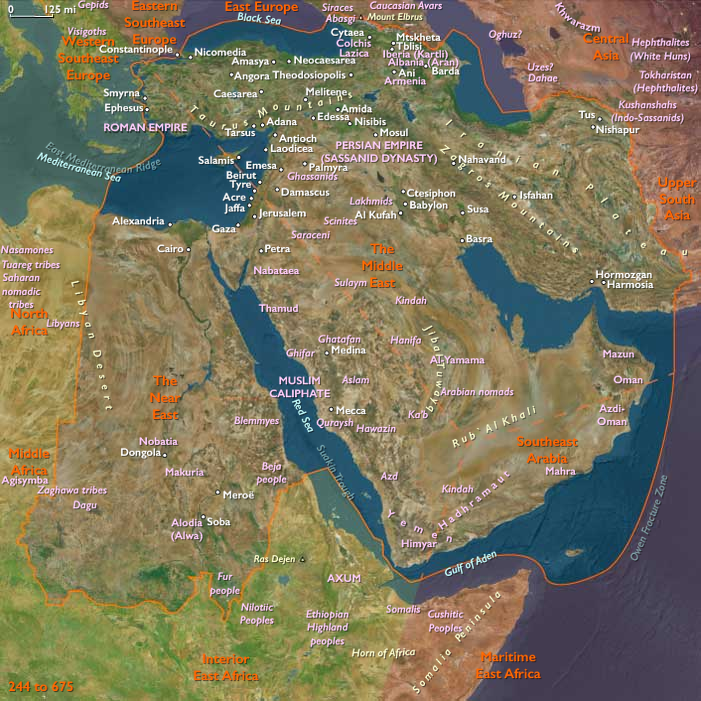
Subregions
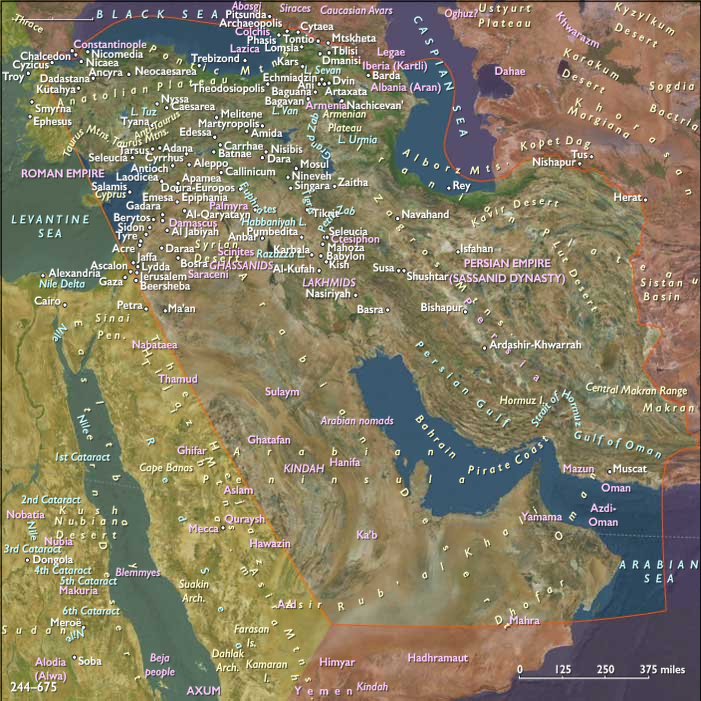
Related Events
Showing 10 events out of 35 total
Years: 580 - 580
Locations
People
Groups
- Polytheism (“paganism”)
- Arab people
- Jews
- Persian Empire, Sassanid, or Sasanid
- Lakhmid kingdom of al-Hira
- Christians, Eastern (Diophysite, or “Nestorian”) (Church of the East)
- Christianity, Chalcedonian
- Ghassan, Kingdom of
- Roman Empire, Eastern: Justinian dynasty
Topics
Commodoties
Subjects
Regions
Subregions