
Upper East Asia (7,821–6,094 BCE): …
Years: 7821BCE - 6094BCE
Upper East Asia (7,821–6,094 BCE): Early Holocene — Lakefront Hamlets & High-Pasture Hunts
Geographic and Environmental Context
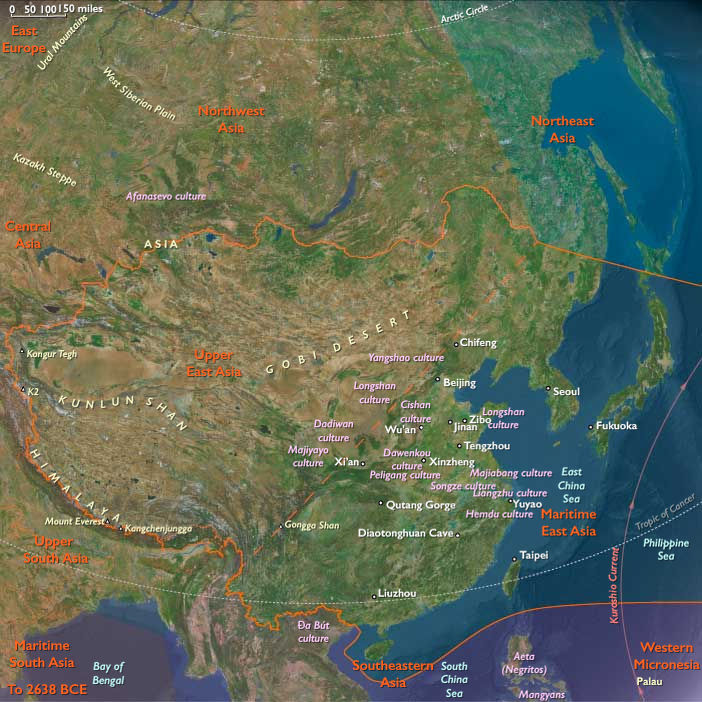
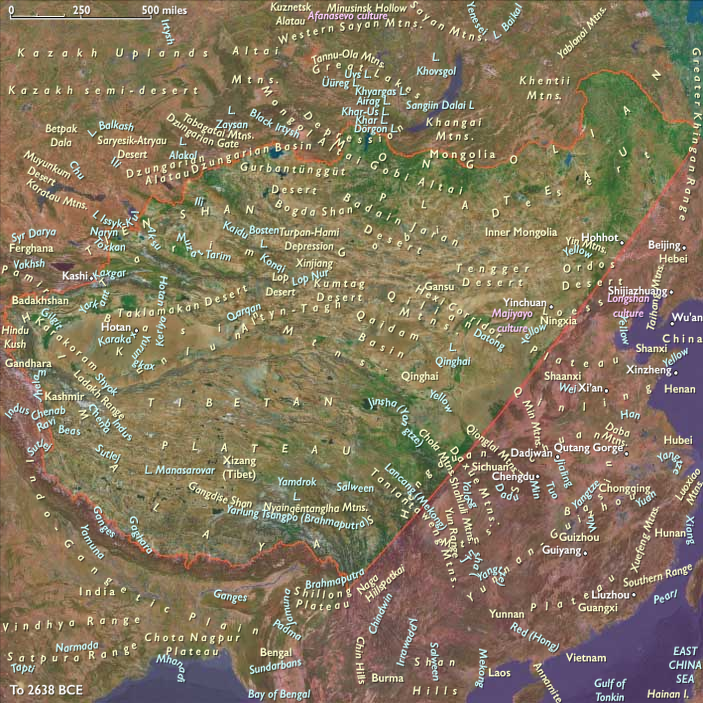
Upper East Asia includes Mongolia, Tibet, and the western highlands of China (Xinjiang, Qinghai, Gansu, Ningxia, NW Sichuan).
Anchors: Altai–Gobi margins, Ordos–Loess Loop, Tarim–Junggar basins, Qinghai–Tibet Plateau (Amdo, Kham), Qilian–Kunlun–Tianshan ranges, Hexi Corridor.
Climate
-
Holocene optimum; Qinghai, Tarim lakes high; alpine meadows verdant
Subsistence & Settlement
-
Semi-sedentary camps on lake terraces; fish, lotus-like rhizomes, antelope.
-
Plateau summer hunts (wild yak, blue sheep); winter in basin shelters.
Technology
-
Ground-stone mortars; microlithic composites; woven mats/nets.
-
Post-built dwellings on lakeshores.
Movement Corridors
-
Hexi–Loess connection; Altai–Dzungar transits; Kukunor pilgrimage/gathering.
Symbolism
-
Petroglyphs of caprids; cairn-offerings at passes; burial mounds with ochre.
Adaptation
-
Stored dried fish; mixed resource portfolios stabilized camps.
Transition
By 6,094 BCE, lakefront “villages” and plateau rounds foreshadowed pastoral–horticultural shifts.
Topics
Commodoties
Subjects
Regions
Subregions
Years: 7821BCE - 6094BCE
Topics
Commodoties
Subjects
Regions
Subregions