
Upper Egypt, known as Ta Shemau, which …
Years: 3357BCE - 3214BCE
Upper Egypt, known as Ta Shemau, which means, "the land of reeds,” is divided into twenty-two districts called nomes.
The first nome is roughly in the location of modern Aswan and the twenty-second is at modern Atfih (Aphroditopolis), just to the south of Cairo.
The main city of predynastic Upper Egypt is Nekhen (Greek Hierakonpolis), whose patron deity is the vulture goddess Nekhbet.
Hedjet is the formal name for the White Crown of pharaonic Upper Egypt.
The symbol sometimes used for the Hedjet is the vulture goddess Nekhbet shown next to the head of the cobra goddess Wadjet, the Uraeus on the Pschent.
The white crown, along with the red crown of Lower Egypt, has a long history, with each of their respective representations going back into the Predynastic Period, indicating that kingship has been the base of Egyptian society for some time.
The earliest image of the Hedjet known so far is in Northern Nubia (Ta-Seti) around the Naqada II period.
It is possible that the "White crown clan" either migrated northward and southern Egyptians adopted their regalia, or the conquering upper Egyptians took the white crown as their own as they absorbed the kingdom into the new unified state, as they later will with Lower Egypt.
Nekhbet, the tutelary goddess of Nekhebet (modern el Kab) near Hierakonpolis, is depicted as a woman, sometimes with the head of a vulture, wearing the White Crown.
The falcon god Horus of Hierakonpolis (Egyptian: Nekhen) is generally shown wearing a White Crown.
As with the Deshret (Red Crown), none of the White Crowns has survived either, and it is hence unknown how it was constructed and what materials were used.
Felt or leather have been suggested, but this is purely speculative.
The fact that no crown has ever been found, even in relatively intact tombs (such as that of king Tutankhamun) might suggest that the crown was passed from one regent to the next, much as in present day monarchies.
A famous depiction of the White Crown is on the Narmer Palette found at Hierakonpolis in which the king of the South wearing the hedjet is shown triumphing over his northern enemies.
Locations
Groups
- Egyptians
- Polytheism (“paganism”)
- Egypt (Ancient), Predynastic
- Gerzeh culture (Naqada II)
- Egypt, Lower
- Egypt, Upper
Topics
- Subboreal Period during the Neolithic Subpluvial
- Early Bronze Age I (Near and Middle East)
- Subboreal Period
Commodoties
Subjects
- Commerce
- Symbols
- Environment
- Labor and Service
- Conflict
- Faith
- Government
- Technology
- Anthropology
- Archaeology
Regions
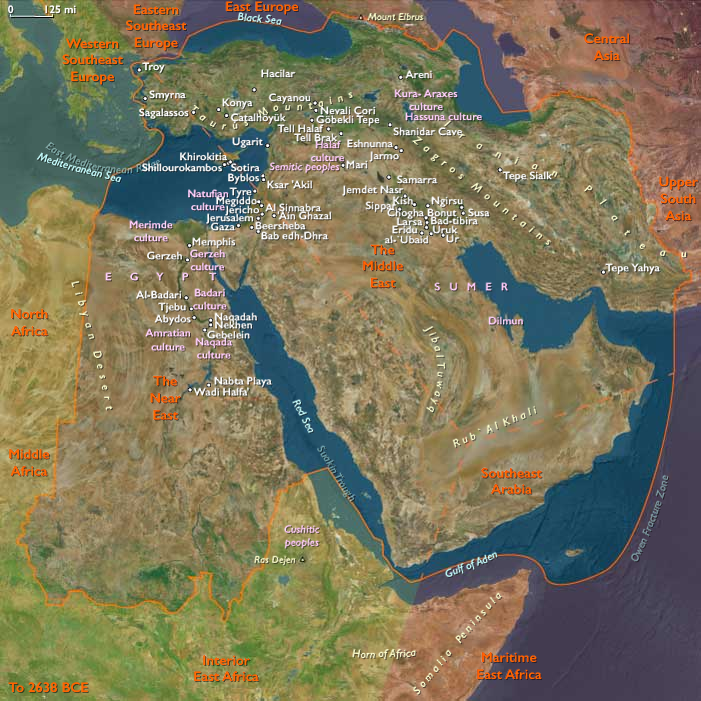
Subregions
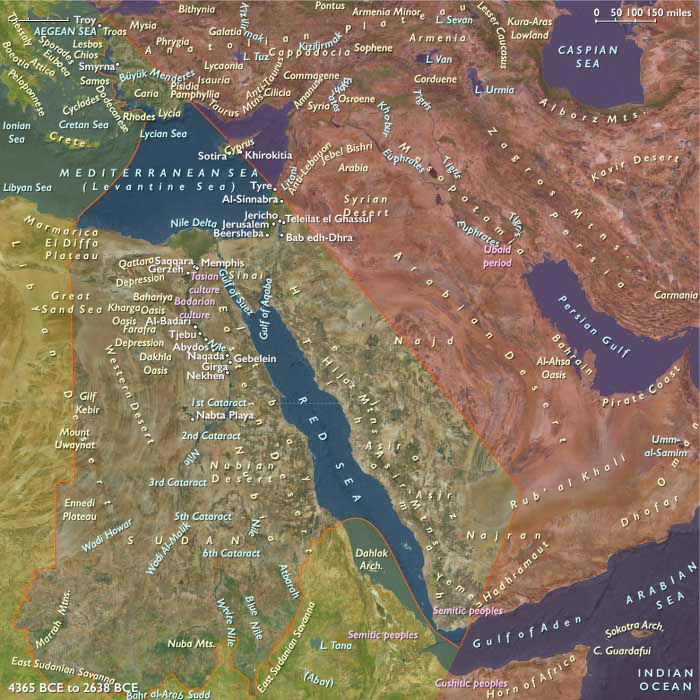
Years: 3357BCE - 3214BCE
Locations
Groups
- Egyptians
- Polytheism (“paganism”)
- Egypt (Ancient), Predynastic
- Gerzeh culture (Naqada II)
- Egypt, Lower
- Egypt, Upper
Topics
- Subboreal Period during the Neolithic Subpluvial
- Early Bronze Age I (Near and Middle East)
- Subboreal Period
Commodoties
Subjects
- Commerce
- Symbols
- Environment
- Labor and Service
- Conflict
- Faith
- Government
- Technology
- Anthropology
- Archaeology
Regions
Subregions