
Establishment of Antwerp’s Sugar Refinery and Northern …
Years: 1500 - 1500
Establishment of Antwerp’s Sugar Refinery and Northern Europe's Sugar Trade (1500)
In 1500, a significant economic shift occurs as Dutch merchants establish a major sugar refinery in Antwerp, fundamentally altering the landscape of European sugar trade. Previously, throughout the fifteenth century, Venice had maintained dominance as Europe's primary center for sugar refining and distribution, drawing upon its extensive Mediterranean and Levantine trade networks.
The Antwerp refinery represents an important development, reflecting Atlantic West Europe's growing commercial power, entrepreneurial dynamism, and shifting economic center of gravity from the Mediterranean toward the North Atlantic. Antwerp rapidly emerges as a central hub for refining and distributing sugar, strategically positioned to serve growing markets in northern Europe—especially Germany and England.
The strategic establishment of sugar refining capabilities in Antwerp signals the broader rise of the Low Countries as a commercial powerhouse, leveraging advanced financial institutions, a sophisticated merchant class, and extensive maritime networks. Moreover, this shift illustrates broader economic realignments, indicative of Europe's expanding trade routes and increasingly global commerce following early colonial expansion and Atlantic exploration.
Economic and Cultural Significance:
The growth of Antwerp’s sugar industry significantly impacts European consumption patterns, introducing sugar as a more broadly accessible commodity in northern Europe. This availability facilitates changing dietary practices and spurs an increasing demand for luxury goods among a burgeoning urban bourgeoisie.
Consequences and Legacy:
Antwerp's rise as a sugar trade and refining center marks a decisive turning point in Europe's economic history, reducing Venetian dominance and catalyzing a sustained commercial boom in the Low Countries. This shift in sugar trade dynamics prefigures broader economic transformations, positioning the Low Countries—and eventually the Dutch Republic—as critical players in Europe's rapidly expanding global trade networks throughout the early modern period.
Locations
Groups
- Venice, (Most Serene) Republic of
- Holy Roman Empire
- Netherlands, Habsburg
- England, (Tudor) Kingdom of
Commodoties
Subjects
Regions
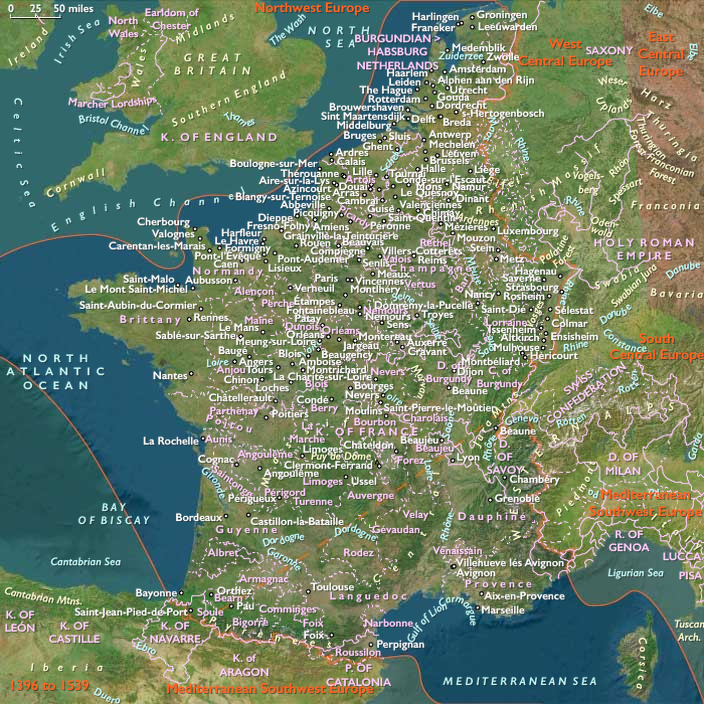
Subregions
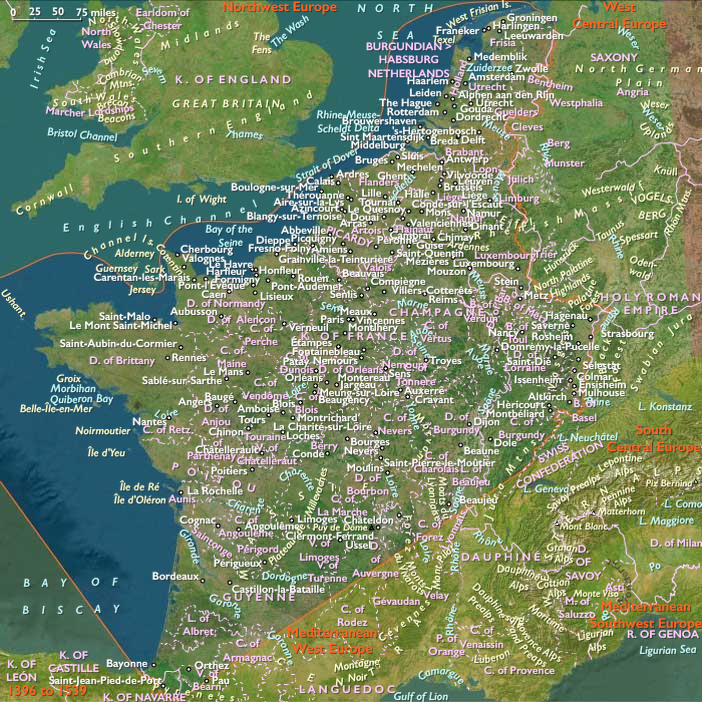
Years: 1500 - 1500
Locations
Groups
- Venice, (Most Serene) Republic of
- Holy Roman Empire
- Netherlands, Habsburg
- England, (Tudor) Kingdom of
Commodoties
Subjects
Regions
Subregions