
Victorio and his followers, numbering around two …
Years: 1879 - 1879
September
In the ensuing skirmish, Victorio's warriors kill five Buffalo Soldiers under Captain Ambrose Hooker, before mutilating and staking their bodies to the ground.
Other accounts say eight soldiers perished along with three civilians.
Forty-six to sixty-eight army horses and mules are also taken by Victorio and the victory causes other Apache bands to leave the reservations and begin fighting.
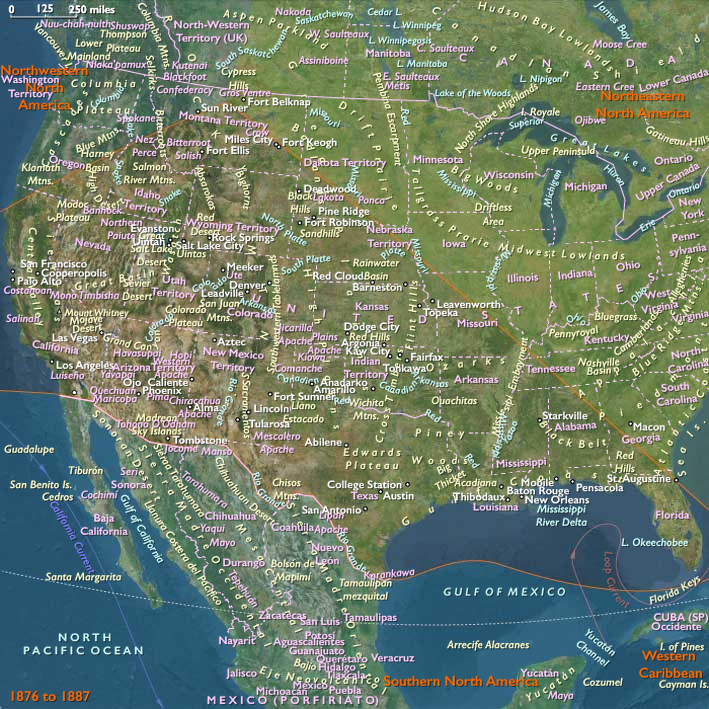
Victorio and his band had been moved to San Carlos Reservation in Arizona Territory in 1877.
He and his followers had left the reservation twice before but came back only to leave permanently in late August 1879, which started Victorio's War.
Victorio is a Chiricahua Apache who had grown up in the Chihenne band.
There is speculation that he or his band had Navajo kinship ties and was known among the Navajo as "he who checks his horse".
Victorio's sister is the famous woman warrior Lozen, or the "Dextrous Horse Thief".
In 1853, he had been considered a chief or sub chief by the United States Army and had signed a document.
In his twenties, he had ridden with Geronimo and other Apache leaders.
As was the custom, he had become the leader of a band of Chiricahuas and Mescaleros and had fought against the United States Army.
From 1870 to 1880, Victorio and his band have moved to and left at least three different reservations, some more than once, despite his band's request to live on traditional lands.
The Ojo Caliente reservation is located in their traditional territory.
Locations
People
Groups
- Apache (Na-Dené tribe)
- United States of America (US, USA) (Washington DC)
- Mexico (United Mexican States)
Topics
- Indian Wars in Upper North America
- America's “Gilded Age;” 1876 through 1887
- Apache War of 1876-83
- Victorio's War
Subjects
Regions
Subregions
Years: 1879 - 1879
September
Locations
People
Groups
- Apache (Na-Dené tribe)
- United States of America (US, USA) (Washington DC)
- Mexico (United Mexican States)
Topics
- Indian Wars in Upper North America
- America's “Gilded Age;” 1876 through 1887
- Apache War of 1876-83
- Victorio's War
Subjects
Regions
Subregions