
Middle Africa (49,293 – 28,578 BCE) …
Years: 49293BCE - 28578BCE
Middle Africa (49,293 – 28,578 BCE) Upper Pleistocene I — Rainforest Refugia, Savanna Corridors, and Lake Chad Shores
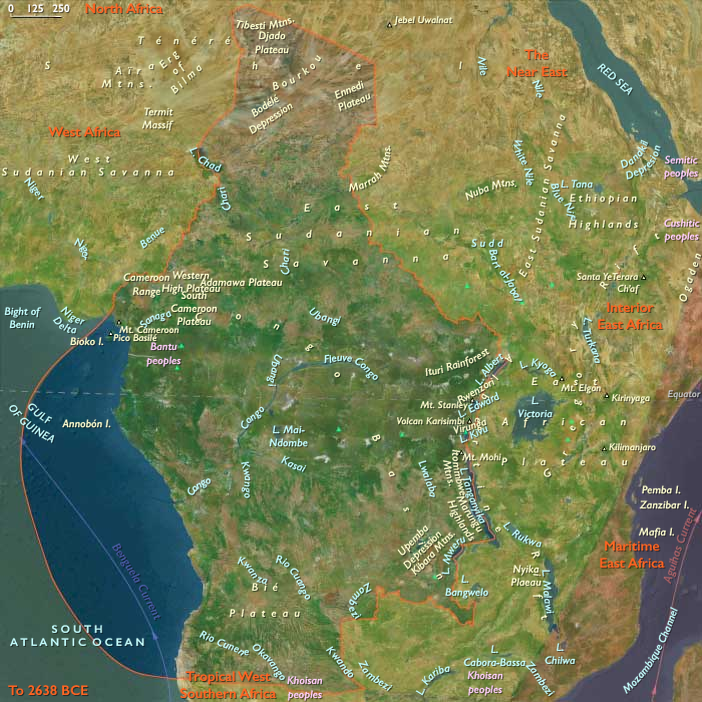
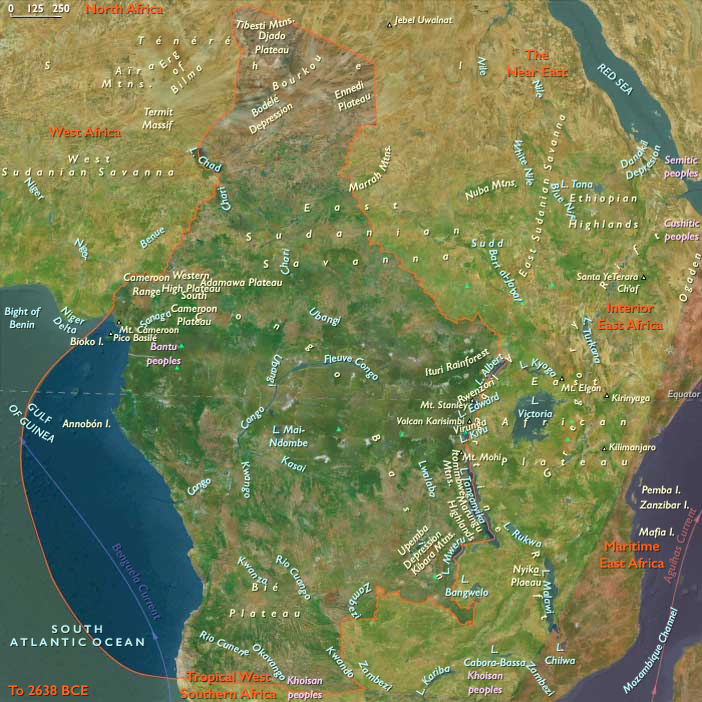
Geographic and Environmental Context
The broad equatorial–central belt of Africa including:
-
Chad and Lake Chad Basin,
-
the Central African Republic (Ubangi–Sangha region),
-
Cameroon (highlands, Adamawa Plateau, coastal plains),
-
Equatorial Guinea (islands and coast),
-
São Tomé e Príncipe,
-
Gabon,
-
the Republic of the Congo (Brazzaville),
-
the Democratic Republic of the Congo (Congo Basin, Kasai, Katanga, Ituri),
-
Angola.
Anchors: Lake Chad, Chari–Logone delta, Adamawa Plateau, Sangha–Ubangi junction, Cameroon Highlands, São Tomé e Príncipe volcanic isles, Congo River mainstem, Kasai–Katanga copperbelt, Ituri rainforest, Angolan escarpment.
-
At LGM, Congo rainforest contracted into isolated refugia along rivers and highlands.
-
Savannas and open woodland stretched through the Adamawa Plateau–Lake Chad zone.
-
Lake Chad fluctuated at reduced size but still present.
Climate & Environmental Shifts
-
Colder, drier; rainfall reduced across equator.
-
Congo Basin partly replaced by savanna corridors, enabling movement of fauna and people.
Subsistence & Settlement
-
Foragers moved between forest refugia (Ituri, Sangha–Ubangi) and savannas.
-
Fishing in Chari–Logone–Lake Chad and Congo tributaries.
-
Hunting antelope, forest hogs, primates, and savanna game.
Technology & Material Culture
-
Flake industries of quartz, chert; bone points for fishing.
-
Ostrich eggshell beads (from savanna links) show symbolic networks.
Movement & Interaction Corridors
-
Lake Chad–Sahara corridor tied to North Africa.
-
Congo River trunk routes integrated equatorial refugia.
Cultural & Symbolic Expressions
-
Ochre and beads used as personal ornaments.
-
Rock shelters in Cameroon highlands served as ritual spaces.
Environmental Adaptation & Resilience
-
Mobility between forest–savanna ecotones buffered against aridity.
Transition
By 28,578 BCE, Middle Africans were foragers straddling forest and savanna, pioneers of rainforest survival strategies.
Topics
Subjects
Regions
Subregions
Related Events
Showing 10 events out of 69706 total
Years: 49293BCE - 28578BCE
Topics
Subjects
Regions
Subregions