
Filters:
Portuguese Rebellion and the Liberation from French …
Years: 1804 - 1815
Portuguese Rebellion and the Liberation from French Occupation (1808–1809)
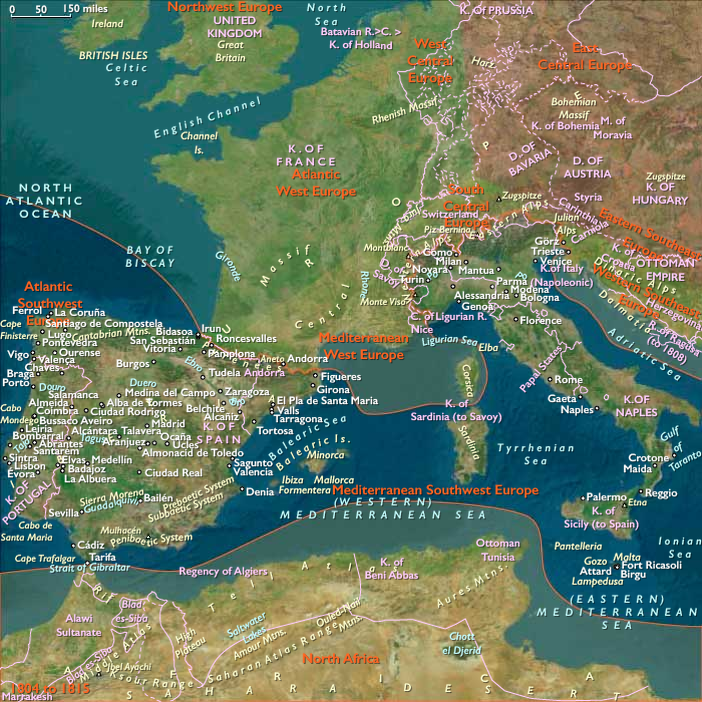
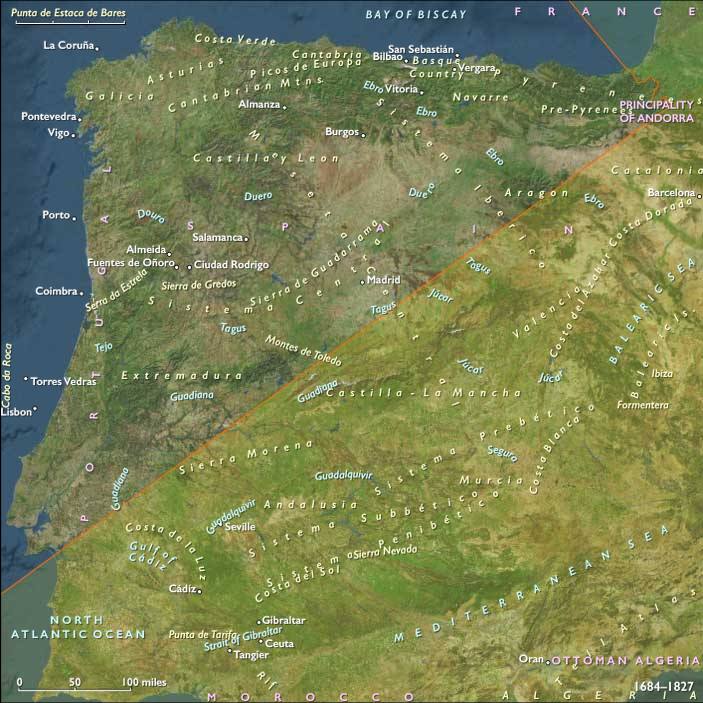
The French occupation of Portugal, imposed after Junot’s invasion in 1807, soon sparked widespread rebellion among the Portuguese population. Local provisional juntas were organized in several cities, leading to an armed resistance movement supported by the British.
The Porto Junta and the Organization of Resistance
- The junta in Porto became the leading authority among the various Portuguese resistance groups, with other local juntas pledging allegiance to it.
- With British support, the Porto junta began to assemble an army, preparing to challenge French rule.
Victory at Lourinhã and the Convention of Sintra (August 1808)
- On August 21, 1808, Portuguese and British forces decisively defeated a strong French force at Lourinhã.
- This defeat forced the French to negotiate, leading to the Convention of Sintra, signed in August 1808.
- The treaty provided for the complete evacuation of French forces under General Andoche Junot from Portugal.
- The Portuguese juntas assumed control of the government, restoring local governance in place of French rule.
Reorganizing the Portuguese Army – Beresford’s Appointment (January 1809)
- With Portugal liberated from the first French occupation, the country needed a strong military force to prevent further invasions.
- In January 1809, the prince regent João VI, still governing from Brazil, appointed British officer William Carr Beresford as marshal and commander-in-chief of the Portuguese army.
- Beresford undertook extensive military reforms, transforming the undisciplined and weakened Portuguese forces into an effective fighting force, which would later play a crucial role in defeating Napoleon’s armies in Iberia.
Conclusion – Portugal Resists French Domination
The rebellions against French rule, the victory at Lourinhã, and the intervention of British forces ensured that Portugal remained free of direct French control. However, the war was far from over, and Portugal would soon face another invasion by Napoleon’s armies in 1809, prompting further British and Portuguese military collaboration to defend the nation.
Locations
People
- Jean-Andoche Junot
- John VI of Portugal
- Manuel de Godoy, Prince of the Peace
- Maria I of Portugal
- Napoleon
- William Carr Beresford, 1st Viscount Beresford
Groups
- Portuguese people
- Portuguese Empire
- Portugal, Bragança Kingdom of
- Spain, Bourbon Kingdom of
- Britain, Kingdom of Great
- Brazil, Viceroyalty of
- French First Republic
Topics
Subjects
Regions
Subregions
Years: 1804 - 1815
Locations
People
- Jean-Andoche Junot
- John VI of Portugal
- Manuel de Godoy, Prince of the Peace
- Maria I of Portugal
- Napoleon
- William Carr Beresford, 1st Viscount Beresford
Groups
- Portuguese people
- Portuguese Empire
- Portugal, Bragança Kingdom of
- Spain, Bourbon Kingdom of
- Britain, Kingdom of Great
- Brazil, Viceroyalty of
- French First Republic
Topics
Subjects
Regions
Subregions