
Windsor Castle, originally designed to protect Norman …
Years: 1344 - 1344
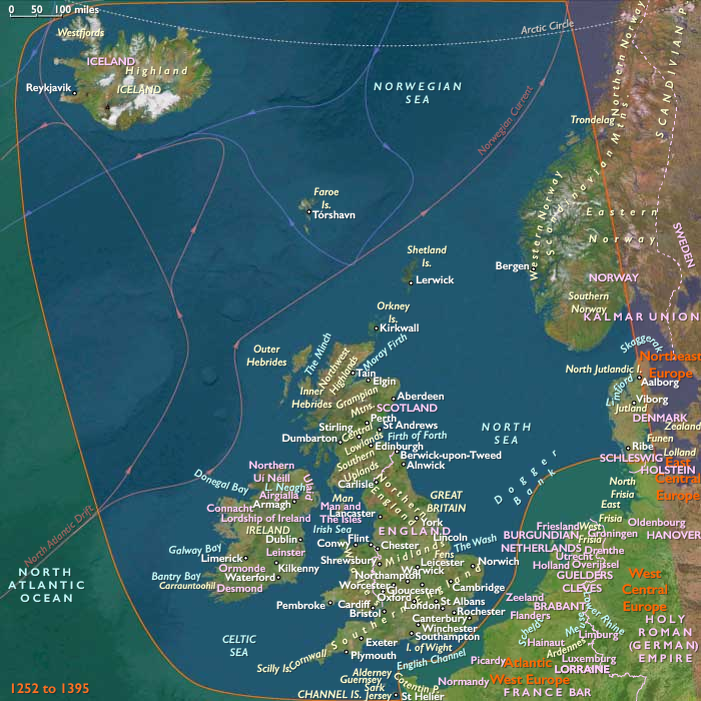
Windsor Castle, originally designed to protect Norman dominance around the outskirts of London, and to oversee a strategically important part of the River Thames, Windsor Castle, had been built as a motte and bailey, with three wards surrounding a central mound.
Gradually replaced with stone fortifications, the castle withstood a prolonged siege during the First Barons' War at the start of the thirteenth century.
Henry III had built a luxurious royal palace within the castle during the middle of the century, and Edward III goes further, rebuilding the palace to produce an even grander set of buildings in what would become "the most expensive secular building project of the entire Middle Ages in England".
Edward III was born at Windsor Castle and uses it extensively throughout his reign.
The king in 1344 announces the foundation of the new Order of the Round Table at the castle.
Edward begins to construct a new building in the castle to host this order, but it is never finished.
Chroniclers describe it as a round building, two hundred feet (sixty-one meters) across, and it is probably in the center of the Upper Ward.
Shortly afterwards, Edward abandons he new order for reasons that remain unclear, and instead establishes the Order of the Garter, again with Windsor Castle as its headquarters, complete with the attendant Poor Knights of Windsor.
The year is usually presumed to be 1348, however, the Complete Peerage, under "The Founders of the Order of the Garter", states the order was first instituted on April 23, 1344, listing each founding member as knighted in this year.
The list includes Sir Sanchet D'Abrichecourt, who died on October20, 1345.
Other dates from 1344 to 1351 have also been proposed.
As part of this process Edward decides to rebuild Windsor Castle, in particular Henry III's palace, in an attempt to construct a castle that will be symbolic of royal power and chivalry.
Eward is influenced both by the military successes of his grandfather, Edward I, and by the decline of royal authority under his father, Edward II, and aims to produce an innovative architecture.
Edward places William of Wykeham in overall charge of the rebuilding and design of the new castle and while work is ongoing Edward stayed in temporary accommodation in the Round Tower.
Edward's core design will last through the Tudor period, during which Henry VIII and Elizabeth I will make increasing use of the castle as a royal court and center for diplomatic entertainment.
Locations
People
Groups
Topics
Subjects
Regions

Subregions
Years: 1344 - 1344
Locations
People
Groups
Topics
Subjects
Regions
Subregions