Diego Columbus
Portuguese navigator and explorer
Years: 1479 - 1526
Diego Columbus (Portuguese: Diogo Colombo; Spanish: Diego Colón; also, in Italian: Diego Colombo) (1479/80-1526) is a Portuguese navigator and explorer under the Kings of Castile and Aragón.
He serves as the 2nd Admiral of the Indies, 2nd Viceroy of the Indies and 3rd Governor of the Indies as a vassal to the Kings of Castile and Aragón.
He is the eldest son of Christopher Columbus and wife Filipa Moniz Perestrelo.
He was born in Portugal, either in Porto Santo in 1479/1480, or in Lisbon in 1474.
He spends most of his adult life trying to regain the titles and privileges granted to his father for his explorations and then denied him in 1500.
He is greatly aided in this goal by his marriage to María de Toledo y Rojas, niece of the 2nd Duke of Alba, who is the cousin of King Ferdinand.
Related Events
Filter results
Showing 10 events out of 38 total
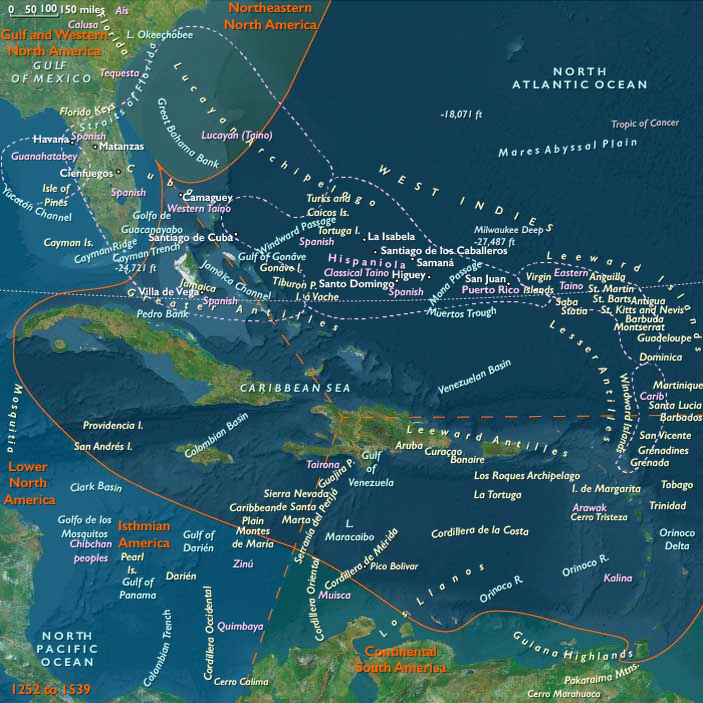
Spanish officials, desirous of increasing their labor supply as well as exploring possible new sources of wealth, also begin to look toward Cuba.
Columbus's son, Diego Columbus, who has been appointed governor of the Indies in 1508 and lives in Hispaniola, is particularly interested in extending the territory under his control.
As a preliminary step toward colonization, Nicolas de Ovando (governor of Hispaniola, 1502-9) sends an expedition headed by Sebastian de Ocampo that circumnavigates Cuba in 1508; he brings back tales of wealth and a more detailed picture of the island's fine terrain and harbors.
He induces groups of natives to lay down their weapons and work near the several new towns that he establishes throughout the island.
Among these are Baracoa, Bayamo, Trinidad, Sancti Spiritus, La Habana (hereafter, Havana), Puerto Principe, and Santiago de Cuba.
In this task, Velasquez is decisively aided by the work of Bartolome de Las Casas.
The Dominican friar precede the Spaniards into native villages on many occasions and succeeds in persuading the indigenous peoples to cooperate with the conquistadors.
Las Casas, however, is horrified by the massacre of the natives and becomes an outspoken critic of the conquest of Cuba.
He writes extensively, condemning the Spaniards' cruelty and claiming that the natives are rational and free and therefore entitled to retain their lands.
The choice finally falls on Diego Velazquez de Cuellar (governor of Hispaniola, 1511—21), Ovando's lieutenant and one of the wealthiest Spaniards in Hispaniola.
Although not as heroic or daring as later conquistadors such as Francisco Pizarro, conqueror of Peru, or as cunning as Hernán Cortés, conqueror of Mexico, Velazquez has achieved a reputation for courage and sagacity because of his role in subduing native caciques in Hispaniola.
From the start, Velazquez faces an outraged and hostile native population.
Led by Hatuey, a fugitive chieftain from Hispaniola, the natives of eastern Cuba resolve to resist the Spanish onslaught.
It is a futile gesture, for the peaceful Tainos lack the military skills and weapons to face the better armed and trained Spaniards.
Spanish horses and hounds, both unknown in Cuba, play a decisive role in terrorizing the indigenous peoples, who soon surrender or flee into the mountains to escape the wrath of the conquistadors.
Hatuey himself is captured, tried as a heretic and a rebel, and burned at the stake.
Christopher Columbus and His Rejected Proposal in Portugal (1484)
By 1484, Christopher Columbus had already developed his vision of a westward route to Asia, based on a combination of legendary voyages, geographical misconceptions, and new cosmographical ideas. However, when he sought funding from King John II of Portugal, he was rejected.
Columbus’s Early Influences and Miscalculations
- Having settled in Portugal, Columbus was exposed to the navigational expertise of the Portuguese, including their exploration of the Atlantic islands (Madeira and the Azores) and West Africa.
- He studied maps, charts, and books, acquiring:
- Marco Polo’s exaggerated account of Japan’s location (Cipangu), placing it only 1,500 miles (2,400 km) east of China.
- Ptolemy’s miscalculations, which underestimated the Earth's circumference while overestimating the size of Eurasia.
- Paolo dal Pozzo Toscanelli’s theories, which encouraged westward voyages as a shortcut to Asia's riches.
- Columbus believed Japan lay only 3,000 miles (4,800 km) west of Portugal, a vast underestimation—in reality, the distance to Asia was much greater, and the Americas lay in between.
Seeking Support from King John II of Portugal (1484)
- In 1484, Columbus presented his plan to King John II of Portugal, hoping to secure:
- Financial backing.
- A fleet to test his theory.
- Royal patronage for exclusive trade rights with Asia.
- However, John II rejected Columbus’s proposal, for several reasons:
- Portugal already had a proven eastward route around Africa to reach the Indian Ocean trade network.
- The king’s advisors also underestimated the distance, believing the voyage to be impossible with existing ships.
- Portuguese priorities were focused on Africa, with Bartolomeu Dias soon rounding the Cape of Good Hope (1488), proving the viability of an eastern route to India.
- Portugal had its own experts working on a westward route, secretly sending a test expedition (which was unsuccessful).
Columbus’s Next Moves: Seeking Spanish Support
- After his rejection in Portugal, Columbus turned to Spain, presenting his proposal to Queen Isabella and King Ferdinand.
- The Spanish initially dismissed his plan, but after the fall of Granada in 1492, they reconsidered and agreed to sponsor his voyage.
- This led to Columbus’s first transatlantic expedition in 1492, ultimately resulting in the European discovery of the Americas.
Legacy of Portugal’s Decision
- Portugal’s rejection of Columbus allowed Spain to claim the New World, giving them vast colonial wealth.
- However, Portugal’s focus on Africa and the Indian Ocean ensured they became Europe’s first true global maritime power, with Vasco da Gama reaching India in 1498.
- The Treaty of Tordesillas (1494) later divided the newly discovered lands between Spain and Portugal, securing Portuguese control over Brazil and the East Indies trade routes.
Portugal’s decision not to fund Columbus’s voyage was strategic rather than short-sighted, as their eastward exploration yielded immense wealth, rivaling Spain’s New World empire.
Christopher Columbus had taken his son Diego and gone in 1485 to Spain, where has spent the past six years in an effort to enlist the support of Isabella I of Castile.
He had been received at court, where he had been given a small annuity, and had quickly gained both friends and enemies.
After continually lobbying at the Spanish court and two years of negotiations, he finally has success in January 1492.
Ferdinand and Isabella have just conquered Granada, the last Muslim stronghold on the Iberian Peninsula, and they receive Columbus in Córdoba, in the Alcázar castle.
Isabella turns Columbus down on the advice of her confessor, and he is leaving town by mule in despair, when Ferdinand intervenes.
Isabella then sends a royal guard to fetch him, and Ferdinand will later claim credit for being "the principal cause why those islands were discovered".
Eastern West Indies (1503–1515 CE): Conquest, Colonization, and Resistance
Early Spanish Colonization and Expansion
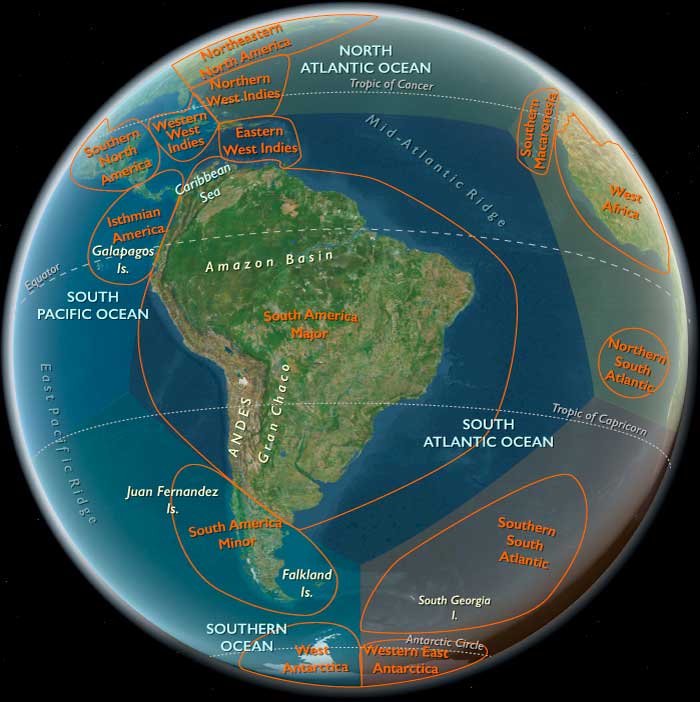
By the early sixteenth century, Spanish explorers rapidly consolidated their hold on the Eastern West Indies, encompassing present-day Haiti, the Dominican Republic, Puerto Rico, and extending explorations toward the mainland territories of Florida, the Yucatán Peninsula, and Honduras. Jamaica was formally colonized in 1509, followed by Trinidad in 1510. These settlements solidified Spain's dominance over the Greater Antilles, although the fiercely resistant Kalinago (Caribs) maintained their stronghold on the Lesser Antilles, successfully repelling European penetration well into subsequent centuries.
Demographic Catastrophe and Forced Labor
The indigenous peoples of the Caribbean, particularly the Taíno and Guanahatabey, experienced catastrophic population declines due to epidemics of smallpox, measles, malaria, and dysentery introduced by Europeans and enslaved Africans. The harsh conditions of Spanish forced labor systems further compounded these losses, reducing thriving native communities to a fraction of their original numbers.
By 1510, the systematic importation of enslaved West Africans began, fundamentally reshaping the Caribbean's demographic and cultural landscape. These early imports set a precedent for the expansive slave trade that would later dominate the region.
Economic Developments: Sugar and Gold
The Spanish, seeking profitable commodities, turned increasingly to sugar production. By around 1515, Spanish monks reportedly offered loans in gold to colonists willing to establish sugar mills, marking the nascent stages of a sugar-based plantation economy. This shift would profoundly impact the region's economic trajectory, laying groundwork for sugar's eventual dominance in Caribbean commerce.
Governance and Administration
Christopher Columbus's son, Diego Columbus, assumed the governorship of Santo Domingo in 1509, ushering in a turbulent period marked by increasing administrative centralization and royal oversight. Diego's ambitious authority alarmed the Spanish crown, prompting the establishment of the audiencia in 1511, a tribunal designed to check gubernatorial power.
Initially composed of three judges, the audiencia's jurisdiction covered the entirety of the West Indies, evolving rapidly into the Royal Audiencia of Santo Domingo (Audiencia Real de Santo Domingo) by 1524. This expanded institution held administrative, legislative, and consultative authority, exerting direct Spanish royal influence across the Caribbean, Central America's Atlantic coast, Mexico, and northern South America.
Key Developments (1503–1515 CE)
-
1509: Formal colonization of Jamaica and the appointment of Diego Columbus as governor of Santo Domingo.
-
1510: Colonization of Trinidad and initiation of systematic importation of enslaved Africans.
-
1511: Establishment of the audiencia in Santo Domingo to oversee colonial governance.
-
Circa 1515: Early encouragement of sugar cultivation through loans offered by Spanish monastic institutions.
Long-Term Implications
This period significantly shaped the Caribbean’s demographic, economic, and political landscape. The introduction of enslaved African labor and the establishment of sugar as a primary economic driver laid the foundations for centuries of plantation agriculture. The profound population loss among indigenous communities drastically altered the region’s cultural fabric, paving the way for a diverse, multicultural society marked by ongoing tensions between colonial interests, indigenous resilience, and African heritage.
Significant changes are taking place in the politics and government of the Spanish West Indies even as Ponce de León is settling the island of San Juan.
On July 10, 1509, Diego Colón, the son of Christopher Columbus, had arrived in Hispaniola as acting Viceroy, replacing Nicolás de Ovando.
For several years, Diego Colón had been waging a legal battle over his rights to inherit the titles and privileges granted to his father.
The Crown regrets the sweeping powers that had been granted to Columbus and his heirs and seeks to establish more direct control in the New World.
In spite of the Crown's opposition, Colón had prevailed in court and Ferdinand had been required to appoint him Viceroy.
Although the courts had ordered that Ponce de León should remain in office, Colón had circumvented this directive on October 28, 1509 by appointing Juan Ceron chief justice and Miguel Diaz chief constable of the island, effectively overriding the authority of the governor.
This situation prevails until March 2, 1510 when Ferdinand issues orders reaffirming Ponce de León's position as governor.
Ponce de León then has Ceron and Diaz arrested and sent back to Spain.
Bartolomé de las Casas was born in Seville in 1484, on November 11.
His father, Pedro de las Casas, a merchant, descended from one of the families that had migrated from France to found the town of Seville; his family also spelled the name Casaus.
According to one biographer, his family were of converso heritage, although others refer to them as ancient Christians who migrated from France.
Following the testimony of Las Casas's biographer Antonio de Remesal, tradition has it that Las Casas studied a licentiate at Salamanca, but this is never mentioned in Las Casas's own writings.
As a young man, in 1507, he had journeyed to Rome where he observed the Festival of Flutes.
With his father, Las Casas had immigrated to the island of Hispaniola in 1502 on the expedition of Nicolás de Ovando.
Las Casas had become a hacendado and slave owner, receiving a piece of land in the province of Cibao.
He had participated in slave raids and military expeditions against the native Taíno population of Hispaniola.
In 1510, he is ordained a priest, the first one to be ordained in the Americas.
In September 1510, a group of Dominican friars had arrived in Santo Domingo led by Pedro de Córdoba; appalled by the injustices they saw committed by the slaveowners against the Indians, they decided to deny slave owners the right to confession.
Las Casas had been among those denied confession for this reason.
In December 1511, a Dominican preacher Fray Antonio de Montesinos preaches a fiery sermon that implicates the colonists in the genocide of the native peoples.
He is said to have preached, "Tell me by what right of justice do you hold these Indians in such a cruel and horrible servitude?
On what authority have you waged such detestable wars against these people who dealt quietly and peacefully on their own lands?
Wars in which you have destroyed such an infinite number of them by homicides and slaughters never heard of before.
Why do you keep them so oppressed and exhausted, without giving them enough to eat or curing them of the sicknesses they incur from the excessive labor you give them, and they die, or rather you kill them, in order to extract and acquire gold every day."
Las Casas himself argues against the Dominicans in favor of the justice of the encomienda.
The colonists, led by Diego Columbus, dispatch a complaint against the Dominicans to the King, and the Dominicans are recalled from Hispaniola.
Las Casas begins what will become a lifelong effort to improve conditions for the harshly treated Indians and to make the Spanish court and church aware of the immoral and genocidal oppression by the Spanish colonizers of the New World.
Ponce de León, back on his island, had parceled out the native Taínos among himself and other settlers using a system of forced labor known as encomienda.
The Spanish colonists had at first been well treated by the island’s Arawak inhabitants, but relations with the locals had quickly deteriorated when the Spaniards force the natives to grow food crops and mine for gold.
Many of the Spaniards treat the Taínos very harshly and newly introduced diseases like smallpox and measles take a severe toll on the local population.
A series of minor uprisings culminates in June 1511, when the cacique Agueybana II foments an island-wide revolt.
Ponce de León, informed of Agueybana’s plan, assembles one hundred and twenty Spaniards armed with crossbows and arquebuses, marches through the forests, and attacks Agueybana and his forces while they sleep, killing hundreds of Arawaks.
Agueybana and other escapees from the violence attack the Spaniards several days later but are defeated in battle, during which Agueybana himself is killed.
The surviving Arawak warriors retreat, some concluding peace with Ponce de León, others fleeing to neighboring islands to join forces with their former enemies, the Caribs.
The political struggle between Colón and Ponce de León continue.
Ponce de León has influential supporters in Spain and Ferdinand regards him as a loyal servant.
However, Colón's position as Viceroy makes him a powerful opponent and eventually it becomes clear that Ponce de León's position on San Juan is not tenable.
Finally, on November 28, 1511, Ceron returns from Spain and is officially reinstated as governor.
Rumors of undiscovered islands to the northwest of Hispaniola had reached Spain by 1511, and Ferdinand is interested in forestalling further exploration and discovery by Colón.
In an effort to reward Ponce de León for his services, Ferdinand urges him to seek these new lands outside the authority of Colón.
Ponce de León readily agrees to a new venture, and in February 1512 a royal contract is dispatched outlining his rights and authorities to search for "the Islands of Benimy".
The contract stipulates that Ponce de León hold exclusive rights to the discovery of Benimy and neighboring islands for the next three years.
He will be governor for life of any lands he discovers, but he is expected to finance for himself all costs of exploration and settlement.
In addition, the contract gives specific instructions for the distribution of gold, Native Americans, and other profits extracted from the new lands.
Notably, there is no mention of a rejuvenating fountain.