Francisco de Paula Santander
Colombian military and political leader
Years: 1792 - 1840
Francisco de Paula Santander y Omaña (Villa del Rosario de Cúcuta, Colombia, April 2, 1792 – Santafé de Bogotá, Colombia, May 6, 1840), is a Colombian military and political leader during the 1810–1819 independence war of the United Provinces of New Granada (present-day Colombia).
He is the acting President of Gran Colombia between 1819 and 1826, and later elected by Congress as the President of the Republic of New Granada between 1832 and 1837.
Santander comes to be known as "The Man of the Laws" ("El Hombre de las Leyes").
Related Events
Filter results
Showing 10 events out of 20 total
Its next target is New Granada.
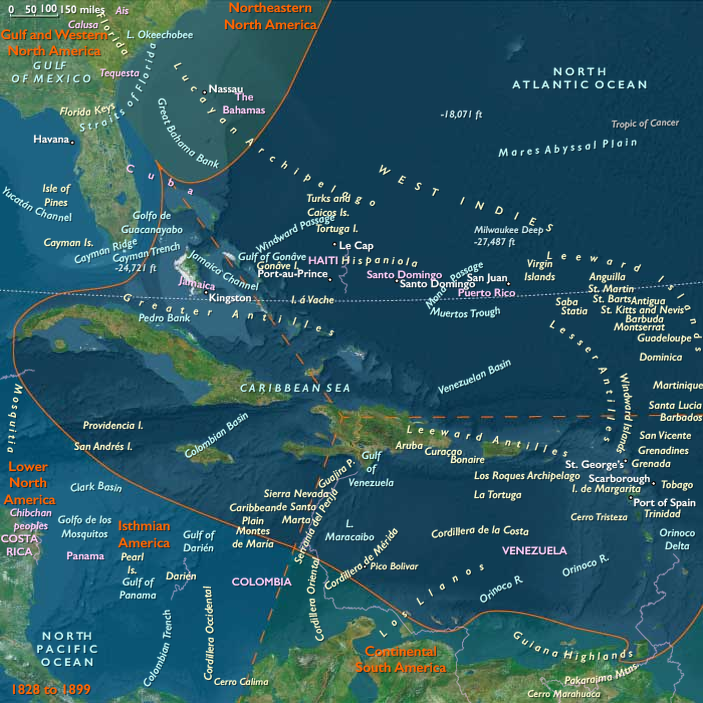
Correctly diagnosing the patriots' cause as hopeless because of their continuing dissensions, Bolivar decamps to the West Indies, to prepare for a better day.
During August-December, Morillo's forces besiege Cartagena, starving it into submission, then advance into the interior, where they will restore Spanish rule in Santa Fe in May 1816.
Nearly two years later, in June 1821, Bolivar's troops fought the decisive Battle of Carabobo that liberates Caracas from Spanish rule.
In August delegates from Venezuela and Colombia meet at the border town of Cucuta to formally sign the Constitution of the Republic of Gran Colombia, with its capital in Bogota.
Bolivar is named president, and Francisco de Paula Santander, a Colombian, is named vice president.
Bolivar, however, continues the fight for the liberation of Spanish America, leading his forces against the royalist troops remaining in Ecuador, Bolivia, and Peru.
In the meantime, the Bolivarian dream of Gran Colombia is proving to be politically unworkable.
Bolivar's fellow Venezuelans become his enemies.
King Ferdinand, after an 1820 revolt by liberals in Spain, has lost the political will to recover the rebellious American colonies, but the Venezuelans themselves express resentment at being governed once again from far-off Bogota.
Venezuelan nationalism, politically and economically centered in Caracas, has been an ever-increasing force for over a century.
During the 1820s, Venezuelan nationalism is embodied in the figure of José Antonio Páez.
Even the tremendous prestige of Bolivar cannot overcome the historical reality of nationalism, and in 1829 Páez will lead Venezuela in its separation from Gran Colombia, and order the ailing and friendless Bolivar into exile.
Shortly before his death in December 1830, the liberator of northern South America will liken his efforts at Latin American unity to having "plowed the sea."
Bolivar, as a committed freethinker, does not oppose the objectives of these first anticlerical measures, and as one who supports total abolition of slavery, he definitely opposes the campaign of slaveholders to water down the free-birth law passed by the Congress of Cucuta in 1821, but he feels that many of the reforms adopted are premature, thus needlessly promoting unrest, and he assigns part of the blame to Vice President Santander, a man who had dropped out of law study to fight for independence but as chief executive surrounds himself with ardent young lawyers as helpers and advisers.
What the country needs, in Bolivar's view, is a stronger executive, a less assertive legislature, and a partial rollback of overhasty reforms.
He also hopes to see some form of a new constitution that he has drafted for Bolivia adopted in the Republic of Colombia.
Its central feature is a president serving for life and appointing his successor.
Some other features are highly liberal, but what attracts attention is the call for a life-term president, who in the Colombian case will obviously be himself.
Bolivar journeys back from Peru to Colombia in September-November 1826.
He finds little real support for introducing his constitutional panacea, but he solves the Venezuelan rebellion by meeting with General Paéz in Venezuela in January 1827 and pardoning him, as well as by promising to call a convention to reform the existing constitution in some way.
This September Bolivar returns to Bogota and resumes the presidency of Colombia.
In 1824 Colombia even raises a foreign loan on the London market for the extraordinary sum of thirty million pesos (at this time equivalent to dollars).
This consists in part of mere refinancing of earlier obligations incurred during the independence struggle.
It will prove impossible to maintain debt service, but the fact that the loan is even granted, on what for the time are quite favorable terms, attests to the prestige of Bolivar's creation.
Another sign of the Republic of Colombia's international prestige is the fact that it plays host to Bolivar's Congress of Panama of 1826, which in the end accomplishes little but is the first in a long line of Pan-American gatherings.
Yet even before this meeting begins, the fragility of the republic's unity is becoming apparent.
The first serious crack comes in Venezuela, where many people have been unhappy from the start with formal subjection to authorities in Bogota, particularly when the head of government turns out to be the New Granadan, Vice President Santander, who becomes acting chief executive when Bolivar continues personally leading his armies against Spain.
Indeed, Bolivar carries the struggle into Peru and stays there even after the Battle of Ayacucho, won by Sucre in December 1824, puts an end to serious royalist resistance.
Venezuelans do have some real grievances, but equally important is the feeling that their present status is a step down from that of the colonial captaincy general, which for most purposes took orders (not necessarily obeyed) directly from Madrid.
Thus, when General José Antonio Páez, the leading military figure in Venezuela, is summoned to Bogota early in 1826 to answer charges against him in the Congress of the Republic (Congreso de la Republica), he refuses to go, and most of Venezuela joins him in defiance.
Both Páez and Santander look for support to Bolivar, still absent in Peru, but he proves less interested in the immediate dispute than in the opportunity that the crisis seems to offer to revamp Colombian institutions in a form more to his liking.
Bolivar knows that Venezuelan regionalism is not the only problem to be faced.
There is similar, if less critical, unrest in Ecuador.
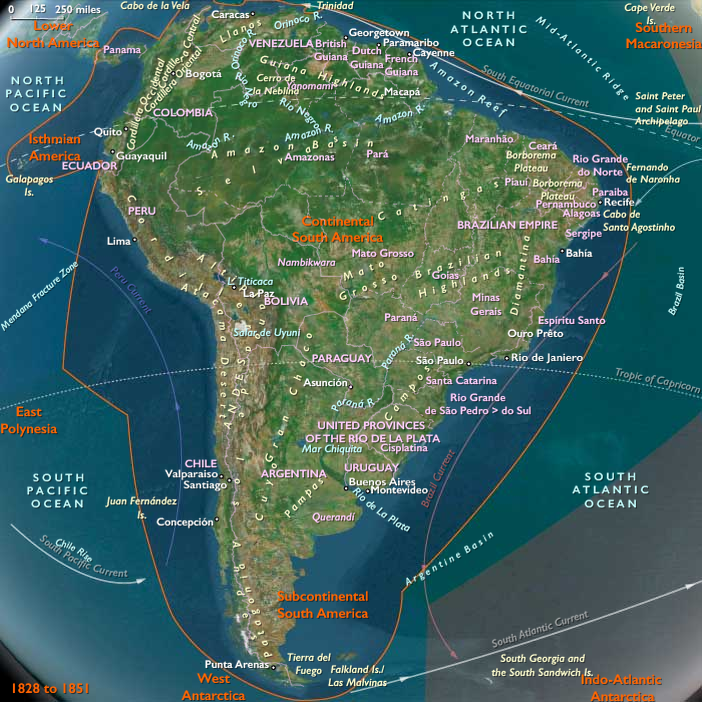
This unity results in large measure from the particular way in which independence is achieved in northern South America—by forces moving back and forth without regard to former colonial boundaries, under the supreme leadership of a single commander, Bolivar.
It also reflects the conviction of Bolívar himself that the union brings together peoples whose sense of common destiny has been heightened in the recent struggle, plus a wealth of resources—the gold of New Granada, the agricultural economy of Venezuela, and the textile workshops of highland Ecuador—that are basically complementary.
He likewise feels that only a large nation can gain respect on the world stage.
However, he does not adequately weigh certain problems, of which perhaps most obvious is the lack of an integrated transportation and communication network: it is easier to travel from Caracas to Philadelphia or from Quito to Lima than from either one to Bogota, which, by its central location, is the inevitable capital of the new nation.
Although economies may have been complementary to some extent, interests are not necessarily compatible; the insistent demand of Ecuadorian textile makers for high protective tariffs is not what suits Venezuelan agricultural exporters.
Neither does the common experience of Spanish rule and the fight against it offset the stark social and cultural differences between, for example, the lawyers of Bogota, the Quechua-speaking natives of highland Ecuador, the pardo and mestizo vaqueros of the Orinoco basin, and the planters of Andean Venezuela.
Nevertheless, in 1821 the young republic holds a constituent assembly, known as the Congress of Cúcuta, which duly reaffirms the union and goes on to adopt a highly centralized system of government, under which the entire country is divided into provinces and departments whose heads are named from Bogotá.
There are elected provincial assemblies, but with no meaningful power in local affairs.
Gran Colombia's constitution of 1821, while eschewing federalism, in some other respects reveals the clear influence of the U.S. model and is for the most part a conventionally republican document.
It provides for strict separation of powers—too strict, in Bolívar's view, despite the fact that, like other early Latin American constitutions, it authorizes sweeping "extraordinary" prerogatives for the executive to use in cases of emergency.
Socioeconomic restrictions limit the right to vote to at most ten percent of free adult males, but this is fairly standard procedure at this time.
Citizens are guaranteed a list of basic rights that do not include freedom of worship, but neither are non-Roman Catholic faiths expressly forbidden, so that the question of religious toleration is left open to be dealt with later.
At the same time, the Congress of Cúcuta itself equips the new nation with a number of enlightened reforms: slavery is not immediately abolished, but provision is made for its gradual extinction by adopting nationwide the free-birth principle enacted earlier in Antioquia; likewise, natives are relieved of the obligation to pay tribute or perform any kind of involuntary labor.
Finally, the same Congress of Cúcuta elects Bolívar president and, because he is Venezuelan, provides regional balance by making the New Granadan Santander vice president.
The Republic of Colombia founded by Bolívar is referred to retrospectively as "Gran Colombia," or "Great Colombia," to distinguish it from the smaller present-day Republic of Colombia, and it takes almost four years for all the far-flung lands theoretically included to come under the Colombian flag.
Bolívar's victory at the Battle of Carabobo, on June 24, 1821, delivers Caracas and virtually all the rest of Venezuela into his hands, except for the coastal fortress of Puerto Cabello, which will hold out another two years.
The liberation of New Granada's Caribbean coast is completed when Cartagena falls to General Mariano Montilla's army in October 1821.
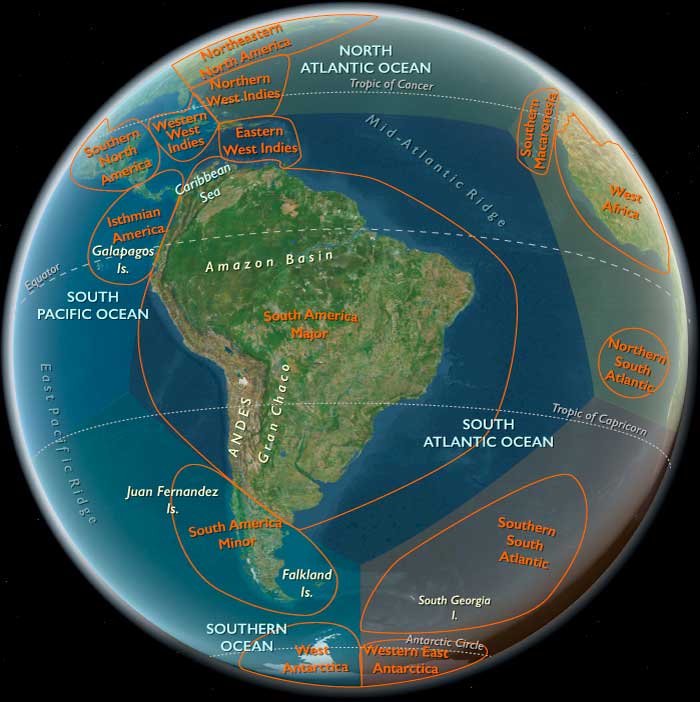
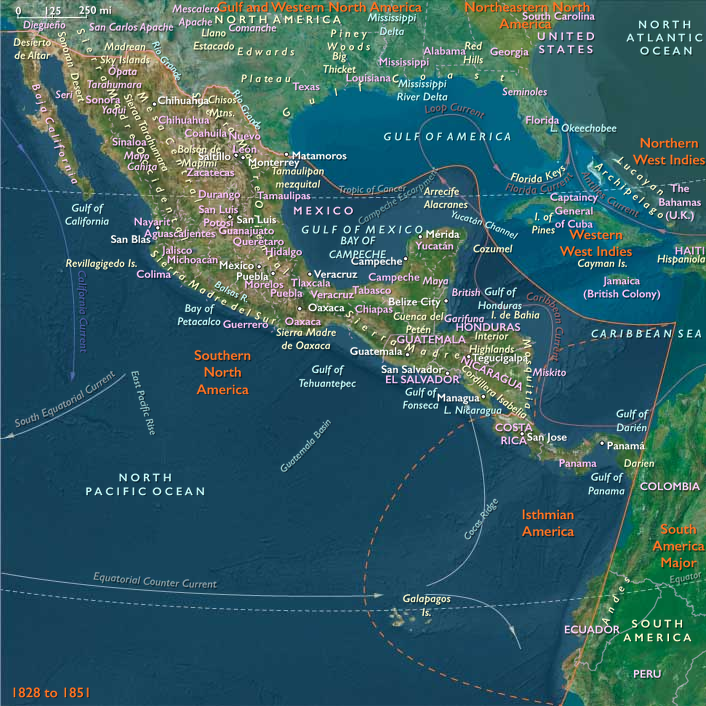
In the following month, the Isthmus of Panama overthrows Spanish authority in a bloodless coup, then joins Colombia, ostensibly of its own volition, although Bolivar is prepared to take it by force if necessary.
However, Bolivar has little success against Spanish units entrenched in Caracas and the Venezuelan Andes.
In mid-1819, he therefore turns west toward New Granada, joins forces with Santander and other New Granadans who have taken refuge on the plains, and invades the central highlands over one of the most difficult of Andean paths.
On August 7, he defeats the Spanish in the Battle of Boyacá, which frees central New Granada, and three days later he enters Santa Fe, soon renamed Santa Fe de Bogotá.
The battle had involved little more than two thousand men on either side and was of short duration, but it had destroyed the main Spanish force in New Granada and sorely damaged royalist morale.
By the end of the year, patriot columns fan out and occupy most of the rest of New Granada except the Caribbean coast and far southwest.
Bolivar organizes a provisional patriot government at Bogota, naming Santander to head it.
Then, in December 1819, he is in Angostura (present-day Ciudad Bolivar), temporary capital of patriot Venezuela, where at his behest the Venezuelan Congress (with the addition of a few New Granadan members) proclaims the creation of the Republic of Great Colombia, comprising all the former Viceroyalty of New Granada.
Moreover, the pro-independence leadership, mainly drawn from criollo upper sectors of society, has generally failed to convince the popular majority that it has a real stake in the outcome.
Although one patriot faction at Cartagena has succeeded in rallying artisans and people of color to participate actively on its side, more aristocratic rivals win local control, not only in Cartagena but also in all of the more populated regions of New Granada by July 1816.
Yet restoration of the old regime is never complete.
Some patriot fighters follow Bolivar into Caribbean exile to continue plotting, and others—including the man destined to become Bolivar's closest New Granadan collaborator and ultimate rival, General Francisco de Paula Santander y Omana—retreat to the eastern plains (llanos), which become a republican sanctuary.
Moreover, the financial exactions of the Spanish authorities together with revulsion against their tactics of repression, which include systematic execution of most top figures of the Patria Boba, turn feeling increasingly against them.
Patriot guerrillas spring up in many parts of the highlands.
Simón Bolívar is victorious over the Royalist Army in Colombia on August 7, 1819, in the Battle of Boyaca, in which the guerilla leader Santander distinguishes himself.
Colombia thus acquires its definitive independence from Spanish rule.
Bolívar becomes president of the newly-independent Republic of Gran Colombia (a federation covering much of present-day Venezuela, Colombia, Panama, and Ecuador) on September 7, 1821; Francisco de Paula Santander becomes vice-president.