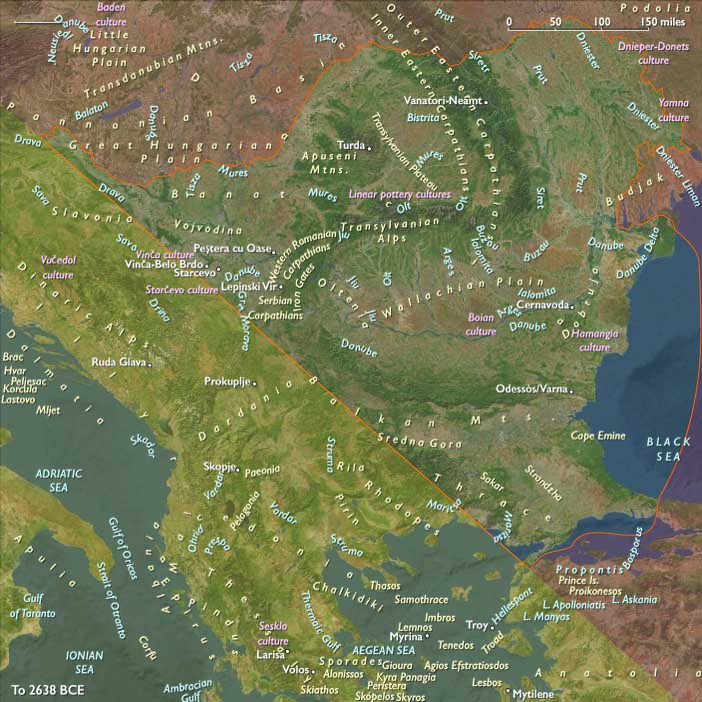
Eastern Southeast Europe (6,093 – 4,366 BCE)…
6093 BCE to 4366 BCE
Eastern Southeast Europe (6,093 – 4,366 BCE) Middle Holocene — Neolithic Farming Arrives: Starčevo–Körös–Criș and Karanovo
Geographic and Environmental Context
Eastern Southeast Europe includes Turkey-in-Europe (Thrace); Greece’s Thrace; Bulgaria (except its southwest); Romania & Moldova; northeastern Serbia; northeastern Croatia; extreme northeastern Bosnia & Herzegovina.
-
Anchors: Lower Danube–Wallachia, Transylvanian depressions, Banat–Timiș (just upstream), Thracian Plain (Karanovo sequence), Moldavian forelands, Dobruja coast.
Climate & Environmental Shifts
-
Hypsithermal warmth; deep alluvium and loess supported early farming.
Subsistence & Settlement
-
Starčevo–Körös–Criș farmers (from the Balkans/Central Europe) established tell villages along the Danube and its fans (c. 6200–5600 BCE).
-
In Thrace, the Karanovo sequence (Karanovo I–III) anchored continuous Neolithic habitation.
-
Crops/stock: emmer/einkorn, barley, pulses; cattle, sheep/goats, pigs; continued riverine fishing.
Technology & Material Culture
-
Impressed/painted pottery, polished stone adzes, loom weights; timber–wattle houses on tells; ground querns.
Movement & Interaction Corridors
-
Danube moved farmers into Moesia, Wallachia, Transylvania; coastal nodes in Dobruja linked to Aegean/Anatolia.
Cultural & Symbolic Expressions
-
Figurines and house altars; ancestor veneration in courtyard shrines; communal ovens.
Environmental Adaptation & Resilience
-
Mixed farming + fishing buffered flood/drought; tell accumulation raised settlements above flood levels.
Images

Eastern Southeast Europe in the Middle Holocene
Topics
Commodities
Subjects
Regions
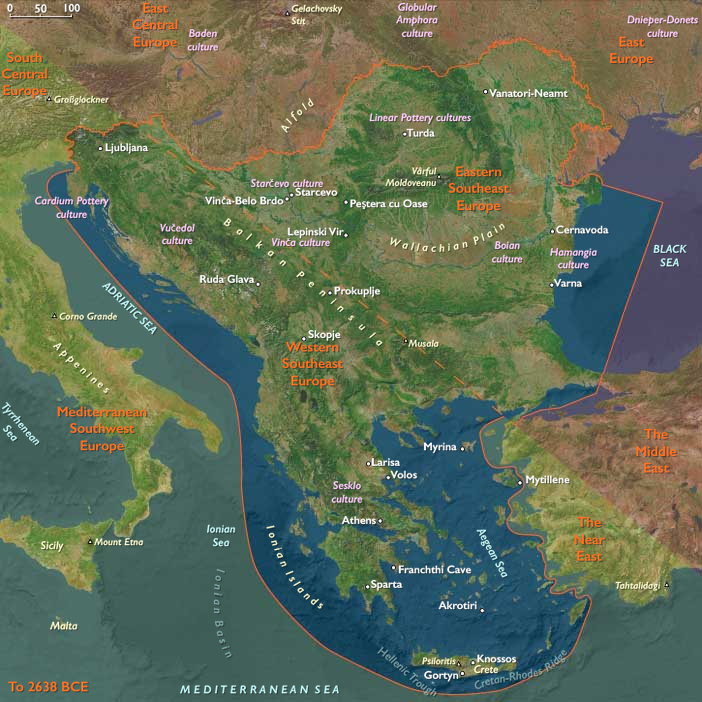
Southeast Europe
View →Subregions