
The Umayyad caliphs govern their vast territories …
Years: 676 - 819
The Umayyad caliphs govern their vast territories in a personal and authoritarian manner.
The caliph, assisted by a few ministers, holds absolute and final authority but delegates extensive executive powers to provincial governors.
Religious judges (qadis) administer Islamic law (sharia) to which all other considerations, including tribal loyalties, are theoretically subordinated.
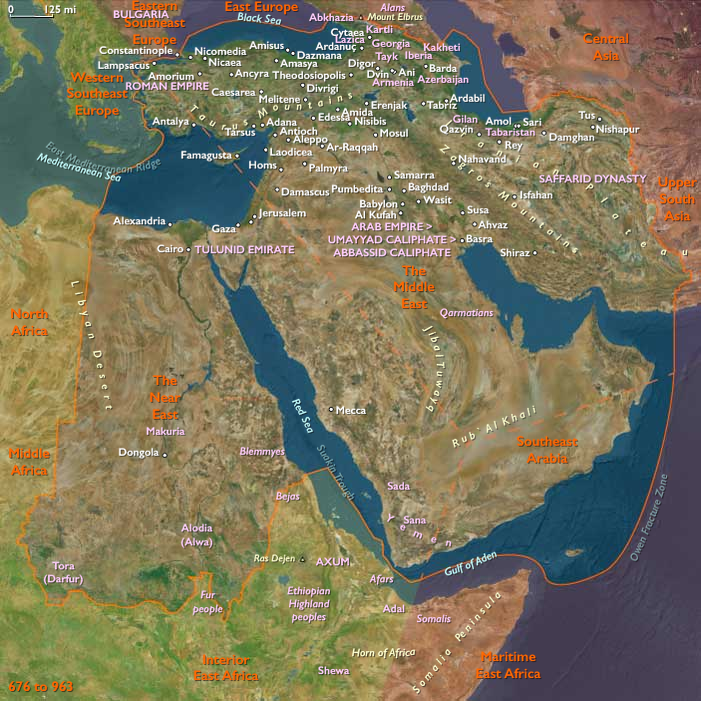
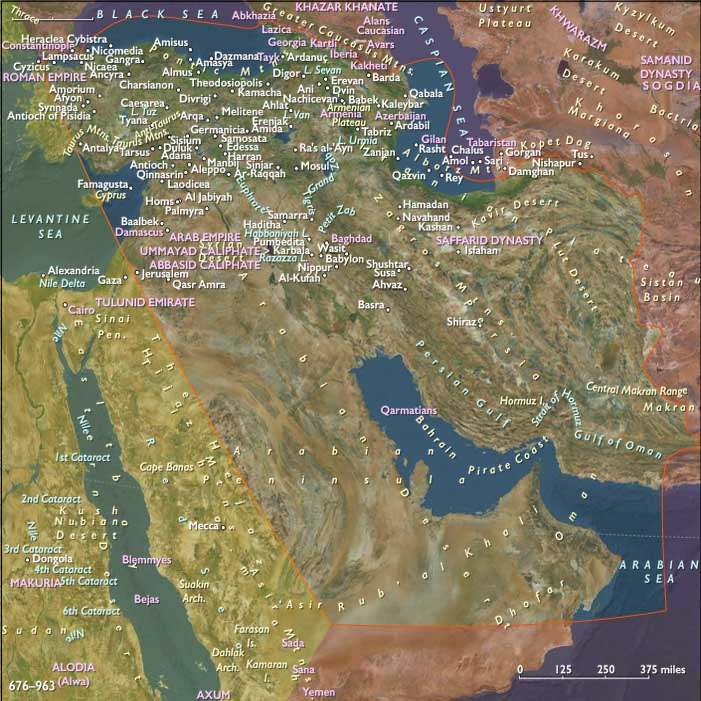
The Umayyad Dynasty is overthrown in 750 by a rival Sunni faction, the Abbasids, who move the capital of the caliphate to Baghdad.
The Jordan region becomes even more of a backwater, remote from the center of power.
Its economy declines as trade shifts from traditional caravan routes to seaborne commerce, although the pilgrim caravans to Mecca become an important source of income.
Depopulation of the towns and the decay of sedentary agricultural communities, already discernible in the late Byzantine period, accelerate in districts where pastoral Arab Bedouin, constantly moving into the area from the south, pursue their nomadic way of life.
Locations
Groups
- Semites
- Arab people
- Jews
- Bedouin
- Christians, Miaphysite (Oriental Orthodox)
- Greeks, Medieval (Byzantines)
- Islam
- Muslims, Sunni
- Umayyad Caliphate (Damascus)
- Muslims, Shi'a
- Umayyad Caliphate (Harran)
- Abbasid Caliphate (Kufa)
- Abbasid Caliphate (Baghdad)
Topics
Subjects
Regions
Subregions
Years: 676 - 819
Locations
Groups
- Semites
- Arab people
- Jews
- Bedouin
- Christians, Miaphysite (Oriental Orthodox)
- Greeks, Medieval (Byzantines)
- Islam
- Muslims, Sunni
- Umayyad Caliphate (Damascus)
- Muslims, Shi'a
- Umayyad Caliphate (Harran)
- Abbasid Caliphate (Kufa)
- Abbasid Caliphate (Baghdad)
Topics
Subjects
Regions
Subregions