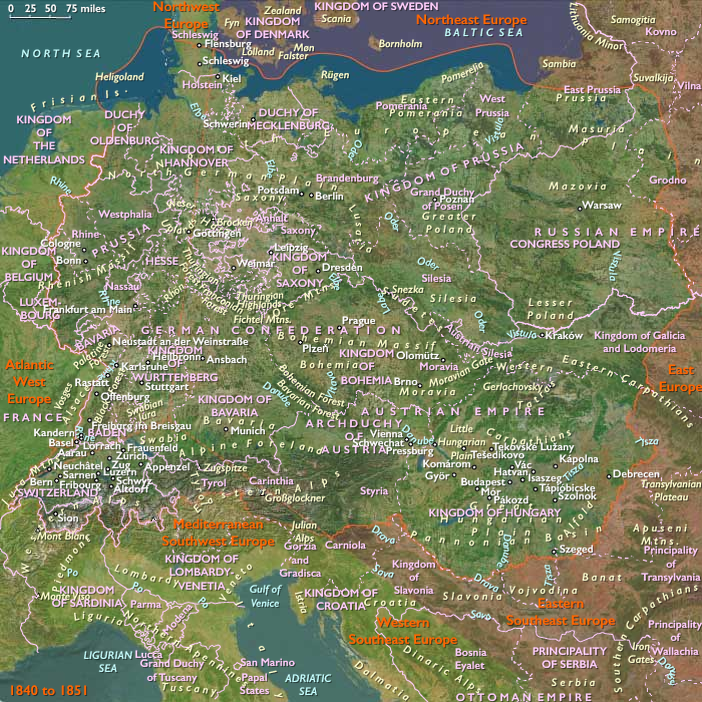
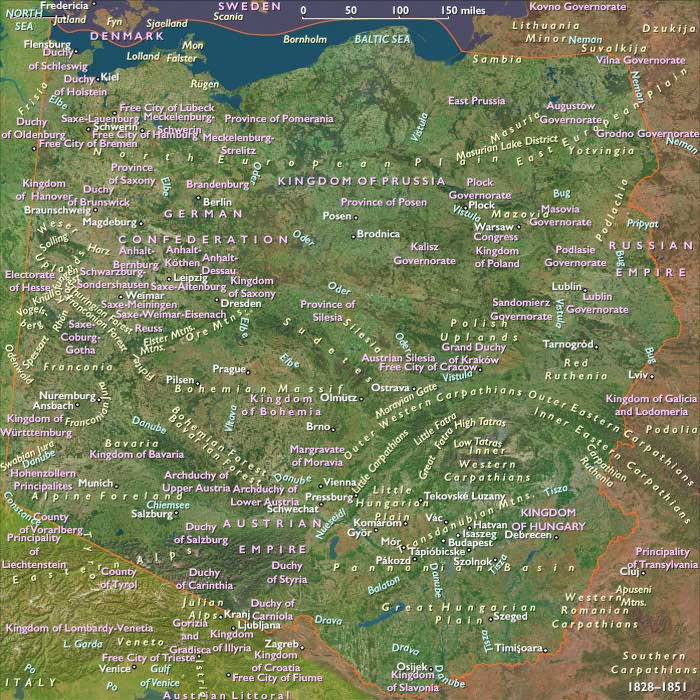
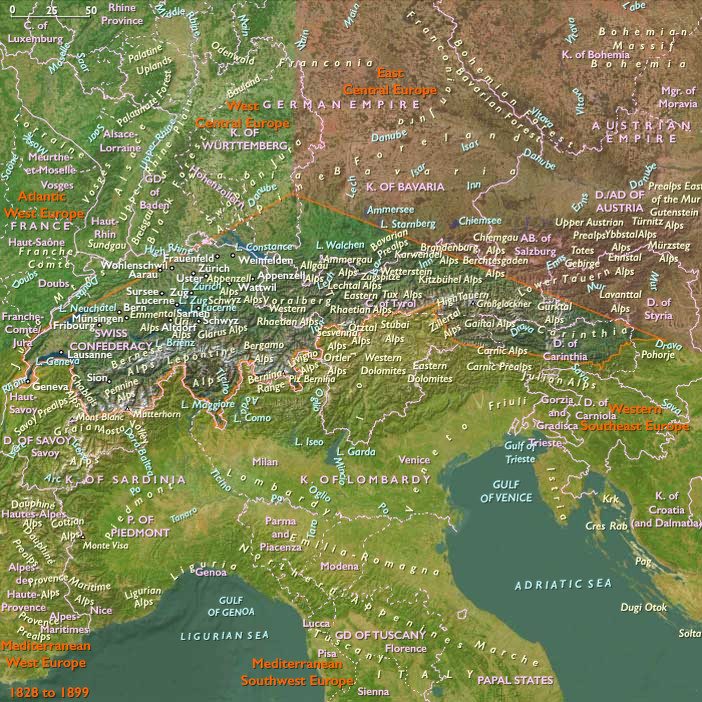
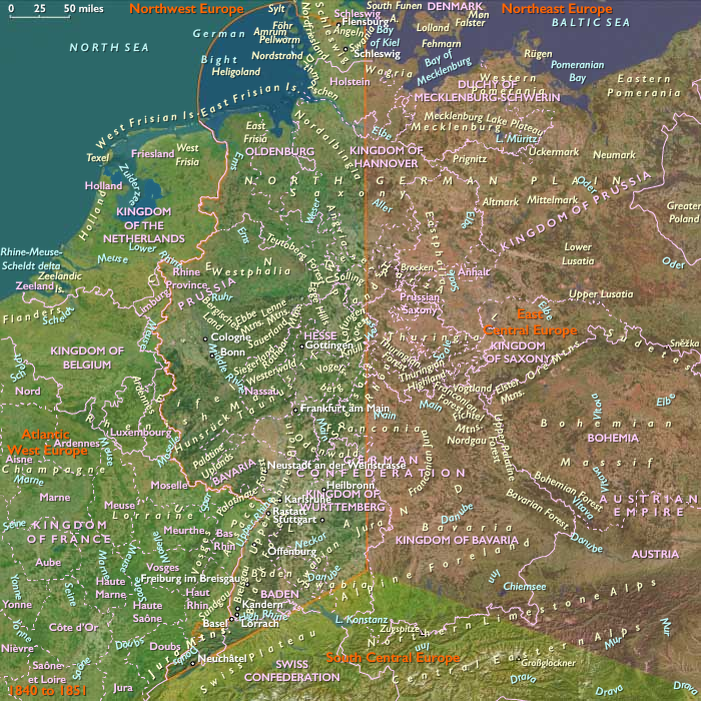
The German Confederation is reestablished, and conservatives…
1840 CE to 1851 CE
In the Treaty of Olmütz (1851), Prussia agrees to relinquish plans for a German union founded on liberalism under its leadership.
The failure of the 1848 revolutions also means that Germany is not united as many had hoped.
However, some of the liberals' more practical proposals will come to fruition later in the 1850s and 1860s, when it will be realized that they are essential to economic efficiency.
Many commercial restrictions are abolished.
The guilds, with their desire to turn back the clock and restore pre-industrial conditions, are defeated, and impediments to the free use of capital are reduced.
The "hungry forties" give way to the prosperity of the 1850s as the German economy modernizes and lays the foundations for spectacular growth later in the century.
Groups
Topics
Concert of Europe
View →
Austrian Revolution & Reaction: 1840-51
View →
German Revolutions: 1840-1851
View →
German Revolution of 1848
View →
1848, Revolutions of
View →
Berlin Revolt in Prussia
View →
Austrian Revolution & Reaction: 1848-51
View →
Austrian Revolution of 1848-49
View →
German Revolutions: 1864-1875
View →
Regions