On the next day, the British come…
December 1845 CE
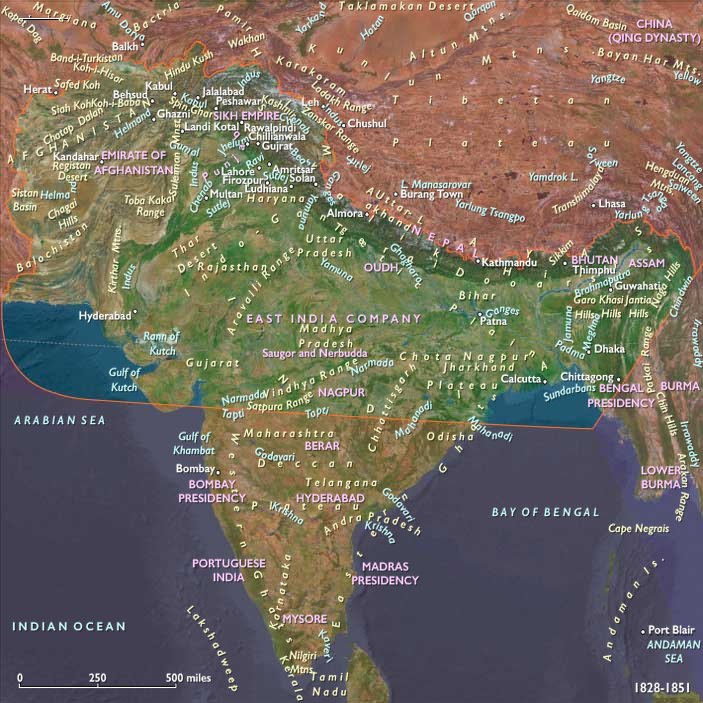
On the next day, the British come in sight of the large Sikh entrenchment at Ferozeshah.
Gough wishes to attack at once, but Hardinge uses his position as Governor General to overrule him and order him to wait for the division from Ferozepur.
When they appear late on December 21, Gough attacks in the few hours of daylight left.
The well served Sikh artillery causes heavy casualties among the British, and their infantry fights desperately.
On the other hand, the elite of the Sikh army, the irregular cavalry or Gorchurras, are comparatively ineffective against Gough's infantry and cavalry as they have been kept from the battlefield by Lal Singh.
By nightfall, some of Gough's army have fought their way into the Sikh positions, but other units have been driven back in disorder.
Hardinge, expecting a defeat on the following day, orders the state papers at Mudki to be burned in this event.
However, on the following morning, the British and Bengal Army units rally and drive Lal Singh's troops from the rest of their fortifications.
At this point, Tej Singh's army appears.
Once again, Gough's exhausted army faces defeat and disaster, but Tej Singh inexplicably withdraws.
Operations temporarily halt, mainly because Gough's army is exhausted and requires rest and reinforcements.
Although the Sikhs do not themselves attack, they remain on the British side of the Sutlej.
Groups
Regions
South Asia
View →Subregions