
Andrew Jackson, in his First Annual Address…
December 1834 CE
Andrew Jackson, in his First Annual Address to Congress, had declared foreign affairs to be his "settled purpose to ask nothing that is not clearly right and to submit to nothing that is wrong."
When Jackson took office, spoliation claims, or compensation demands for the capture of American ships and sailors, dating from the Napoleonic era, had caused strained relations between the U.S. and French governments.
The French Navy had captured and sent American ships to Spanish ports while holding their crews captive, forcing them to labor without any charges or judicial rules.
According to Secretary of State Martin Van Buren, relations between the U.S. and France were "hopeless."
Jackson's Minister to France, William C. Rives, had been able to persuade the French government to sign a reparations treaty on July 4, 1831, awarding the U.S. twenty-five million francs (five million dollars) in damages.
The French government has become delinquent in payment due to internal financial and political difficulties.
The French king Louis Philippe I and his ministers blame the French Chamber of Deputies.
By 1834, the non-payment of reparations by the French government has drawn Jackson's ire and he has become impatient.
In his December 1834 State of the Union address, Jackson sternly reprimands the French government for non-payment, stating the federal government is "wholly disappointed" by the French, and demands Congress authorize trade reprisals against France.
Groups
Commodities
Regions
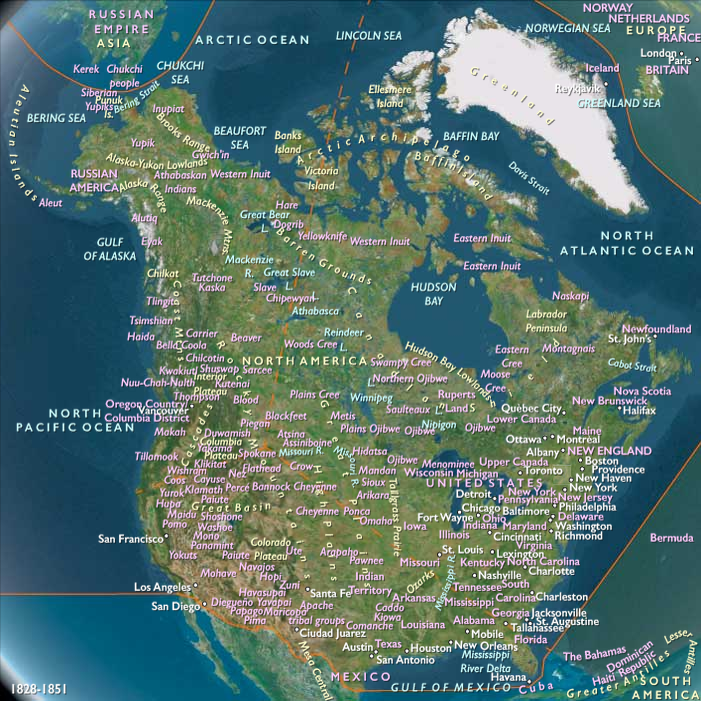
Northern North America
View →Subregions
