
Filters:
Further riots occur after the first march …
Years: 1780 - 1780
June
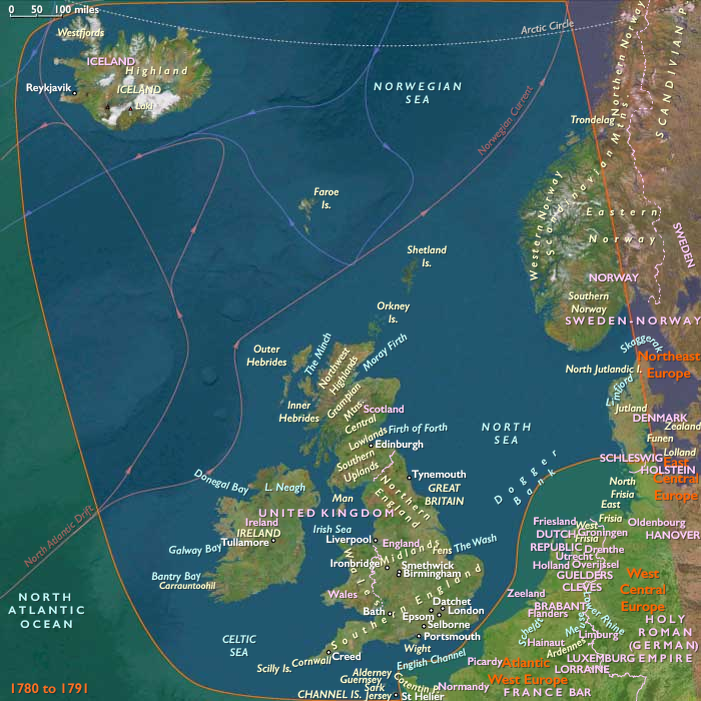
Further riots occur after the first march to Parliament, involving groups whose grievances are nationalistic, economic, or political, rather than religious.
Aside from the issue of Catholic emancipation, it has also been suggested that the driving force of the riots is Britain's poor economic situation: the loss of trade during the war has led to falling wages, rising prices, and periodic unemployment.
Voting in parliamentary elections is restricted by a property threshold, so most Londoners are unable to vote and many hope for reforms to make Parliament more representative of the people.
Aside from the issue of Catholic emancipation, it has also been suggested that the driving force of the riots is Britain's poor economic situation: the loss of trade during the war has led to falling wages, rising prices, and periodic unemployment.
Voting in parliamentary elections is restricted by a property threshold, so most Londoners are unable to vote and many hope for reforms to make Parliament more representative of the people.
Locations
People
Groups
- Irish people
- Christians, Roman Catholic
- English people
- Protestantism
- Anglicans (Episcopal Church of England)
- Calvinists
- Bavaria, Electorate of
- Britain, Kingdom of Great
- British people
- Sardinia, Kingdom of (Savoy)
Topics
Subjects
Regions
Subregions
Years: 1780 - 1780
June
Locations
People
Groups
- Irish people
- Christians, Roman Catholic
- English people
- Protestantism
- Anglicans (Episcopal Church of England)
- Calvinists
- Bavaria, Electorate of
- Britain, Kingdom of Great
- British people
- Sardinia, Kingdom of (Savoy)
Topics
Subjects
Regions
Subregions