
A new Western-style feudal socioeconomic system has …
Years: 1290 - 1290
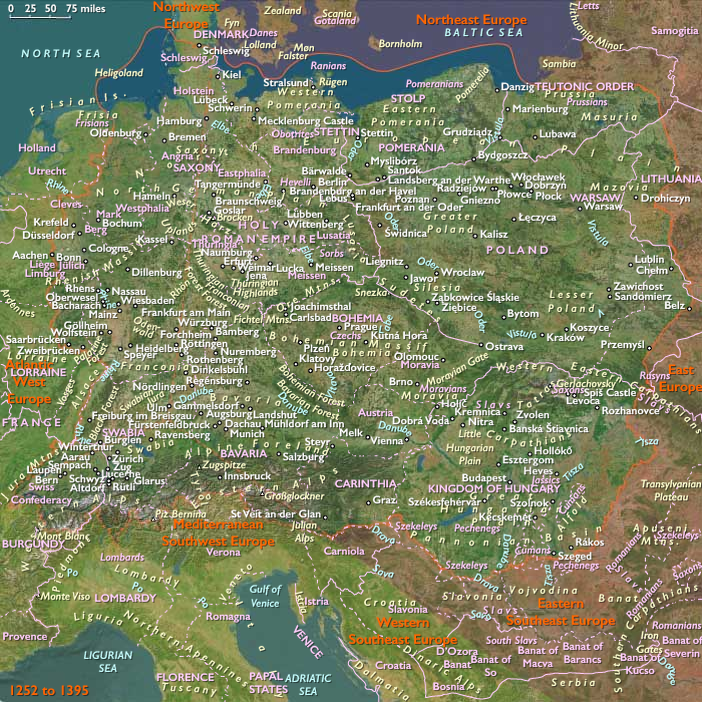
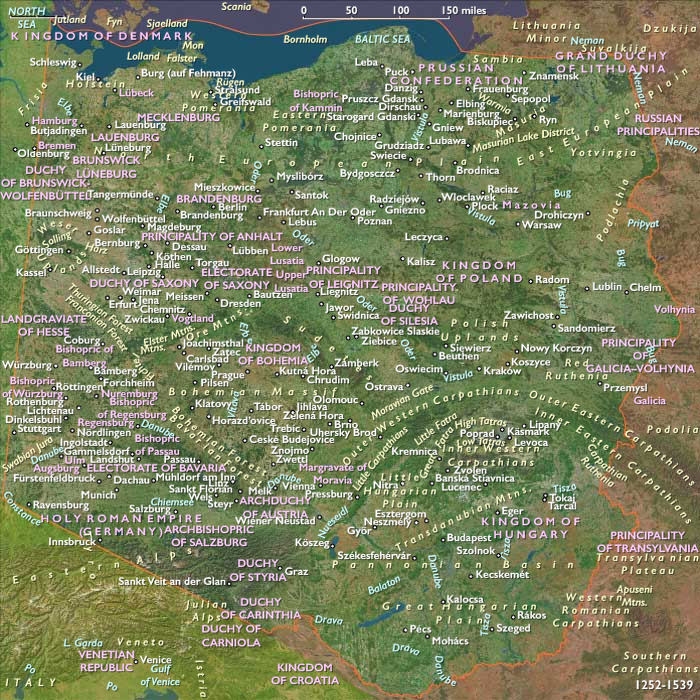
A new Western-style feudal socioeconomic system has emerged in Hungary but it has yet to take root.
During the last third of the thirteenth century, Hungarian assimilation into Europe is threatened by the ongoing conflicts between various baronial factions.
Moreover, Hungary is still the destination of migrating pagan tribes and the focus of barbarian attacks, and it continues to exhibit the features of a country on the borders of Christian feudal Europe.
The already shaky prestige of the royal house of Hungary had declined further under Ladislas IV the Cuman, who is assassinated in 1290 with no legitimate heir; claims to the throne are made through the female line of the Árpáds.
A male heir is found in Italy: a grandson of Andrew II of Hungary (reigned 1205-35), being the only son of that monarch’s youngest and posthumous son (possibly illegitimate) who was born of the old king's third marriage with Beatriz D'Este.
Although his claim to the throne is impugned, he succeeds Ladislas IV as Andrew III and is married hastily with a Polish princess, Fenenna of Kujavia.
Pope Nicholas IV, in league with Hungary’s ecclesiastical party, had set another prince, Andrew's cousin's grandson Charles Martel d'Anjou, as candidate for the throne; the eighteen-year-old Charles is the eldest son of King Charles II of Naples and Maria of Hungary, the daughter of King Stephen V of Hungary.
His partisans attempt, without success, to oust Andrew.
Locations
People
- Andrew III of Hungary
- Charles I of Hungary
- Charles II of Naples
- Ladislaus IV of Hungary
- Pope Nicholas IV
Groups
- Polytheism (“paganism”)
- Hungarian people
- Papal States (Republic of St. Peter)
- Anjou, County of
- Christians, Roman Catholic
- Hungary, Kingdom of
- Naples, Angevin Kingdom of
Subjects
Regions
Subregions
Related Events
Showing 3 events out of 3 total
Years: 1290 - 1290
Locations
People
- Andrew III of Hungary
- Charles I of Hungary
- Charles II of Naples
- Ladislaus IV of Hungary
- Pope Nicholas IV
Groups
- Polytheism (“paganism”)
- Hungarian people
- Papal States (Republic of St. Peter)
- Anjou, County of
- Christians, Roman Catholic
- Hungary, Kingdom of
- Naples, Angevin Kingdom of
Subjects
Regions
Subregions