
Filters:
Simón Bolívar now quickly marches his troops …
Years: 1816 - 1827
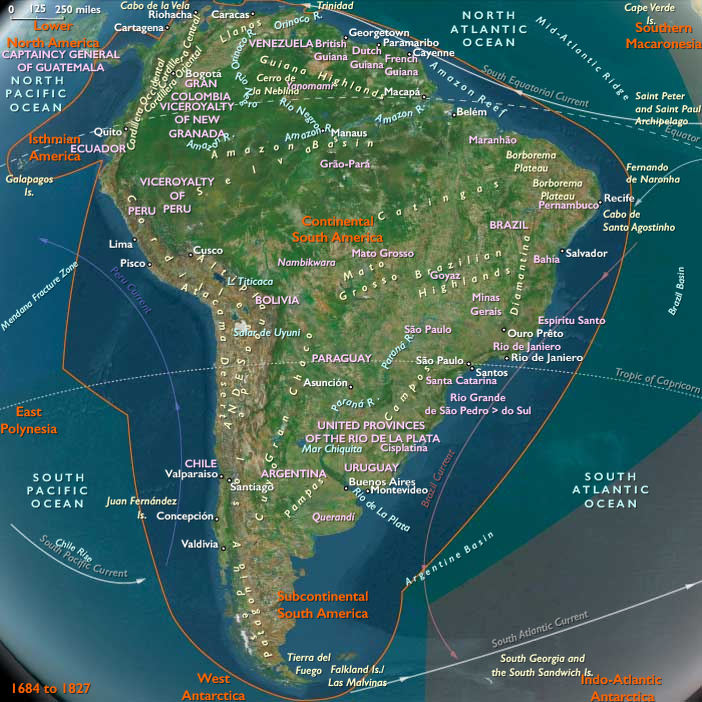
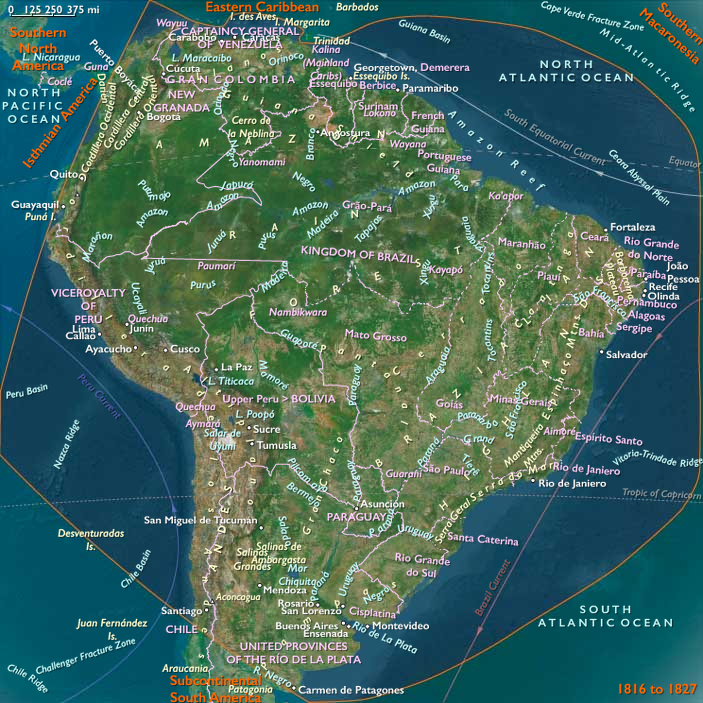
Simón Bolívar now quickly marches his troops across the llanos and into the Andes, where a surprise attack on the Spanish garrison at Boyaca, near Bogota, routs the royalist forces and liberates New Granada.
Nearly two years later, in June 1821, Bolivar's troops fought the decisive Battle of Carabobo that liberates Caracas from Spanish rule.
In August delegates from Venezuela and Colombia meet at the border town of Cucuta to formally sign the Constitution of the Republic of Gran Colombia, with its capital in Bogota.
Bolivar is named president, and Francisco de Paula Santander, a Colombian, is named vice president.
Bolivar, however, continues the fight for the liberation of Spanish America, leading his forces against the royalist troops remaining in Ecuador, Bolivia, and Peru.
In the meantime, the Bolivarian dream of Gran Colombia is proving to be politically unworkable.
Bolivar's fellow Venezuelans become his enemies.
King Ferdinand, after an 1820 revolt by liberals in Spain, has lost the political will to recover the rebellious American colonies, but the Venezuelans themselves express resentment at being governed once again from far-off Bogota.
Venezuelan nationalism, politically and economically centered in Caracas, has been an ever-increasing force for over a century.
During the 1820s, Venezuelan nationalism is embodied in the figure of José Antonio Páez.
Even the tremendous prestige of Bolivar cannot overcome the historical reality of nationalism, and in 1829 Páez will lead Venezuela in its separation from Gran Colombia, and order the ailing and friendless Bolivar into exile.
Shortly before his death in December 1830, the liberator of northern South America will liken his efforts at Latin American unity to having "plowed the sea."
Nearly two years later, in June 1821, Bolivar's troops fought the decisive Battle of Carabobo that liberates Caracas from Spanish rule.
In August delegates from Venezuela and Colombia meet at the border town of Cucuta to formally sign the Constitution of the Republic of Gran Colombia, with its capital in Bogota.
Bolivar is named president, and Francisco de Paula Santander, a Colombian, is named vice president.
Bolivar, however, continues the fight for the liberation of Spanish America, leading his forces against the royalist troops remaining in Ecuador, Bolivia, and Peru.
In the meantime, the Bolivarian dream of Gran Colombia is proving to be politically unworkable.
Bolivar's fellow Venezuelans become his enemies.
King Ferdinand, after an 1820 revolt by liberals in Spain, has lost the political will to recover the rebellious American colonies, but the Venezuelans themselves express resentment at being governed once again from far-off Bogota.
Venezuelan nationalism, politically and economically centered in Caracas, has been an ever-increasing force for over a century.
During the 1820s, Venezuelan nationalism is embodied in the figure of José Antonio Páez.
Even the tremendous prestige of Bolivar cannot overcome the historical reality of nationalism, and in 1829 Páez will lead Venezuela in its separation from Gran Colombia, and order the ailing and friendless Bolivar into exile.
Shortly before his death in December 1830, the liberator of northern South America will liken his efforts at Latin American unity to having "plowed the sea."
Locations
People
- Ferdinand VII of Spain
- Francisco de Paula Santander
- José Antonio Páez
- José Tomás Boves
- Juan Domingo de Monteverde
- Manuel Piar
- Simón Bolívar
Groups
- Basque people
- Spaniards (Latins)
- Canary Islanders
- Britain, Kingdom of Great
- New Granada, Viceroyalty of
- Venezuela, Captaincy General of
- Spain, Bourbon Kingdom (first restoration) of
- Colombia, Republic of (Gran Colombia)
Topics
- Colonization of the Americas, Spanish
- Columbian Exchange
- Enlightenment, Age of
- Spanish American wars of independence
- Venezuelan War of Independence
- Bolivar's War
- Bolivar in Venezuela
- Bolívar's campaign to liberate New Granada
- Trienio Liberal (Spanish Civil War of 1820-23)
- Carabobo, Battle of
Commodoties
- Hides and feathers
- Domestic animals
- Grains and produce
- Slaves
- Fuels, lubricants and sealants
- Stimulants
- Tobacco
Subjects
Regions
Subregions
Years: 1816 - 1827
Locations
People
- Ferdinand VII of Spain
- Francisco de Paula Santander
- José Antonio Páez
- José Tomás Boves
- Juan Domingo de Monteverde
- Manuel Piar
- Simón Bolívar
Groups
- Basque people
- Spaniards (Latins)
- Canary Islanders
- Britain, Kingdom of Great
- New Granada, Viceroyalty of
- Venezuela, Captaincy General of
- Spain, Bourbon Kingdom (first restoration) of
- Colombia, Republic of (Gran Colombia)
Topics
- Colonization of the Americas, Spanish
- Columbian Exchange
- Enlightenment, Age of
- Spanish American wars of independence
- Venezuelan War of Independence
- Bolivar's War
- Bolivar in Venezuela
- Bolívar's campaign to liberate New Granada
- Trienio Liberal (Spanish Civil War of 1820-23)
- Carabobo, Battle of
Commodoties
- Hides and feathers
- Domestic animals
- Grains and produce
- Slaves
- Fuels, lubricants and sealants
- Stimulants
- Tobacco
Subjects
Regions
Subregions