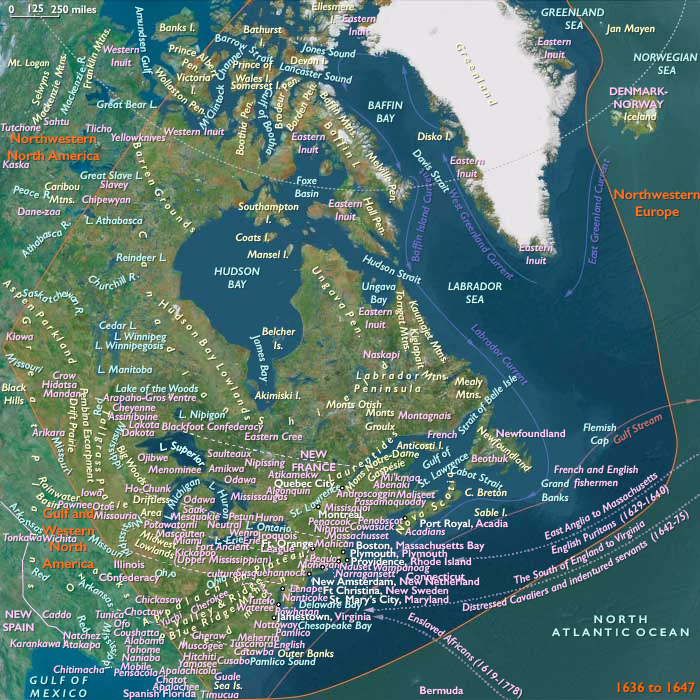
A patent for the west bank of…
August 1639 CE
A patent for the west bank of the Hudson River had been given to Michael Pauw, a burgermeester of Amsterdam and a director of the Dutch West India Company.
Pavonia is the Latinized form of Pauw's surname, which means "peacock".
As was required, Pauw had purchased the land from the indigenous population, though the concept of ownership differed significantly for the parties involved.
Three Lenape "sold" the land for eighty fathoms (one hundred and forty six meters) of wampum, twenty fathoms (thirty-seven meters) of cloth, twelve kettles, six guns, two blankets, one double kettle and half a barrel of beer.
These transactions, dated July 12, 1630 and November 22, 1630, represent the earliest known conveyance for the area.
It is said that the three were part of the same band who had sold Manhattan Island to Peter Minuit then "sold" this land, to which they had retired after that sale in 1626.
The area encompassed by Pauw's holdings on Bergen Neck likely includes the eight miles (thirteen kilometers) of shore line on each of the Hudson and Hackensack Rivers from Bergen Point to today's Bergen County line.
His agent had set up a small factorij and ferry slip at Arresick on the tidal island that stills bears his name, Paulus Hook.
A plantation worked by fifty enslaved Africans had been set up by 1630.
A homestead had been built at Gemoenepaen in 1633 for his representative Jan Evertsen Bout.
Pauw, however, had failed to fulfill the condition of establishing a community of at least fifty permanent settlers and was required to resell his speculative acquisition back to the company.
A homestead had been built at Ahasimus in 1634 for Cornelis Hendriksen Van Vorst (Voorst), whose later descendants will play a prominent role in the development of Jersey City.
Abraham Isaac Planck (aka Verplank) has received a land patent for Paulus Hook on May 1, 1638.
A small farm goes up at Kewan Punt.
Groups
Commodities
Subjects
Regions
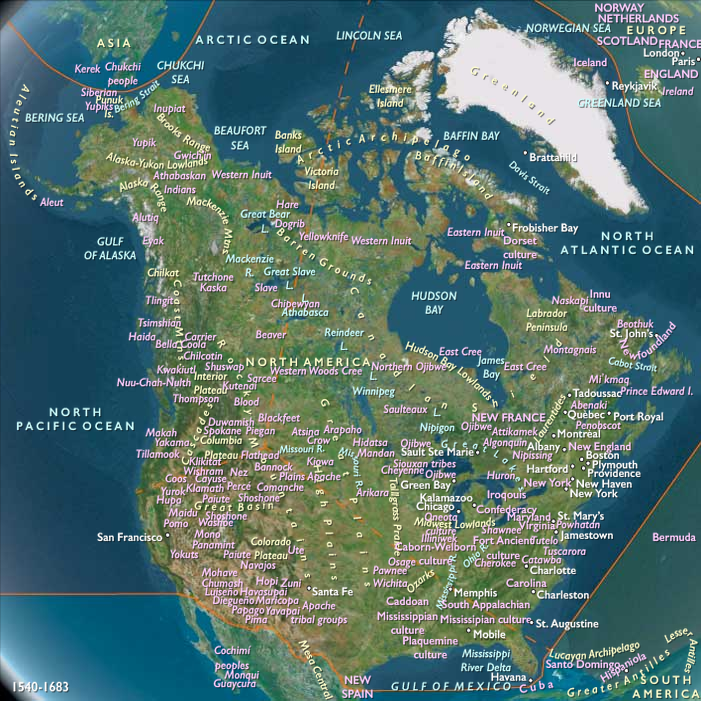
Northern North America
View →Subregions