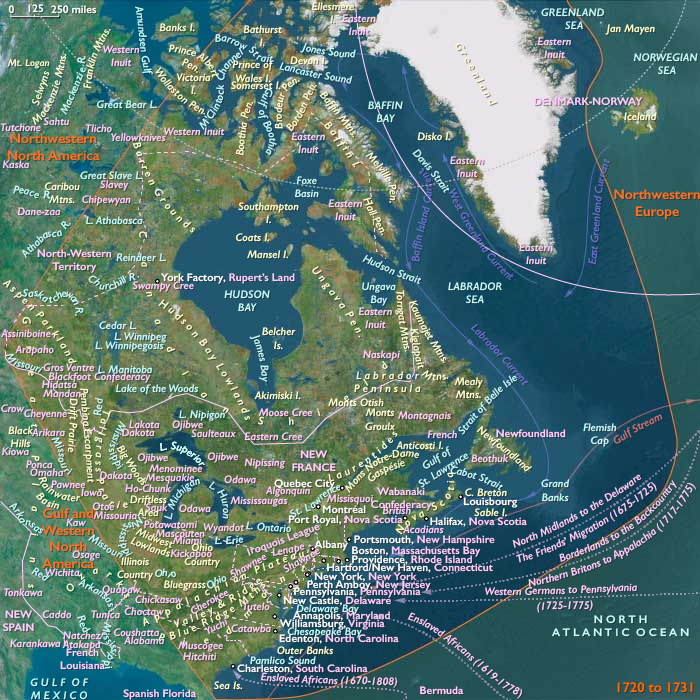
Cotton Mather, having learned of the use…
1721 CE
Cotton Mather, having learned of the use in Africa of variolation, a method of immunizing patients against smallpox by infecting them with substance from the pustules of patients with a mild form of the disease (variola minor) from his slave, Onesimus, who himself had been inoculated, and having heard reports from Europe of its use in Turkey,urges the physician Zabdiel Boylston to begin inoculations of the virus.
Mather, a Congregational minister and author who is to become the most celebrated of all New England Puritans, combines a mystical strain (he believes in the existence of witchcraft) with a modern scientific interest.
Boylston responds enthusiastically, beginning with his own family and eventually inoculating about two hundred and fifty people.
In patients subjected to variolation, the disease then usually occurs in a less-dangerous form than when contracted naturally.
The practice is so bitterly opposed by other physicians, the clergy, and much of the populace that Boylston's life is threatened and he is forced to perform his work in great secrecy.
Of those inoculated by Boylston, only six die of smallpox—a much lower mortality rate than expected during an epidemic.
Boylston's success is all the more striking in light of his having used a virus taken from human cases of smallpox, which produced a mild, but contagious, form of the disease.
Mather is severely criticized for recommending the practice.
When Mather inoculates his own son, who almost dies from it, the whole community is wrathful, and a bomb is thrown through his chamber window.
Satan seems on the side of his enemies; various members of his family become ill, and some die.
Worst of all, his son Increase is arrested for rioting.
Mather's interest in science and particularly in various American phenomena—published in his Curiosa Americana (1712–24)—has won him membership in the Royal Society of London.
His account of the inoculation episode is published in the society's transactions.
He corresponds extensively with notable scientists, such as Robert Boyle.
Subjects
Regions

Northern North America
View →Subregions