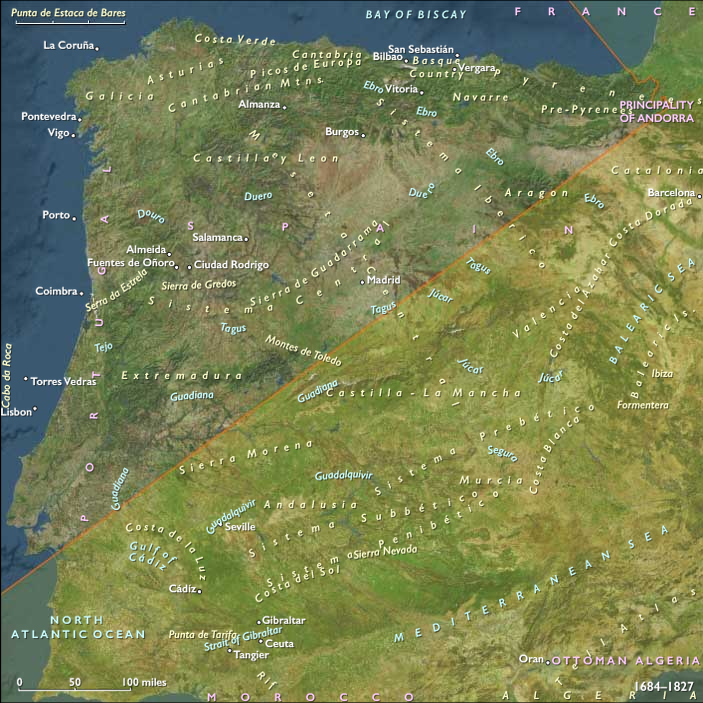
The Cádiz Cortes and the Spanish Counteroffensive…
October 1809 CE
The Cádiz Cortes and the Spanish Counteroffensive (1809)
By the summer of 1809, the Spanish Supreme Central Junta, under pressure from the public and military leaders, was forced to establish the Cádiz Cortes, a representative assembly that would eventually draft the Spanish Constitution of 1812.
At the same time, the Junta devised an ambitious war strategy aimed at recapturing Madrid from the French, launching a two-pronged offensive involving over 100,000 Spanish troops across three armies:
- The Army of the Left, commanded by the Duke del Parque.
- The Army of the Center, under General Juan Carlos de Aréizaga.
- The Army of the Right, led by the Duke of Albuquerque.
The Battle of Tamames (October 18, 1809) – A Spanish Victory
- Duke del Parque’s army engaged the French VI Corps under General Jean Gabriel Marchand at Tamameson October 18, 1809.
- In a rare Spanish battlefield success, Del Parque’s troops decisively defeated the French, inflicting heavy casualties.
- Following this victory, Del Parque occupied Salamanca on October 25, dealing a blow to French control in western Spain.
French Response – Kellermann Takes Command
- Marchand was dismissed after his defeat, and Marshal François Étienne de Kellermann took over command of VI Corps.
- Kellermann quickly brought up reinforcements, including his own troops and a force under General of Brigade Nicolas Godinot.
- As Kellermann advanced on Salamanca, Del Parque abandoned the city and retreated south, avoiding battle with a stronger French force.
Guerrilla Warfare in León – French Struggles Against Insurgents
- Meanwhile, Spanish guerrilla forces intensified their attacks in the Province of León, forcing the French to divert troops.
- Kellermann left VI Corps to hold Salamanca while he marched back north to León to suppress the growing insurgency.
Strategic Impact – A Failed Spanish Offensive
- The Spanish plan to recapture Madrid ultimately failed, as the French counteroffensive and Spanish disorganization prevented a coordinated advance.
- However, the Battle of Tamames showed that Spanish armies could defeat the French in open battle, boosting morale and resistance efforts.
- The continuing guerrilla warfare in León forced the French to stretch their resources thin, weakening their ability to maintain control over Spain.
Despite setbacks, Spanish resistance was far from broken, and the Peninsular War continued as a grueling struggle that drained Napoleon’s forces and contributed to his eventual downfall.
Locations
People
Groups
Topics
Commodities
Subjects
Regions
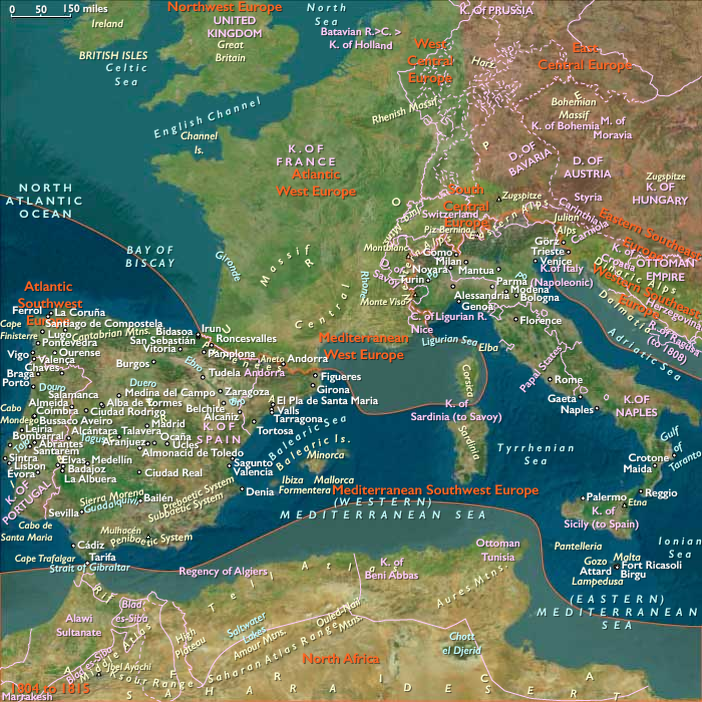
Southwest Europe
View →Subregions