A National Rebellion and the Collapse of the Spanish Invasion (June 1762)
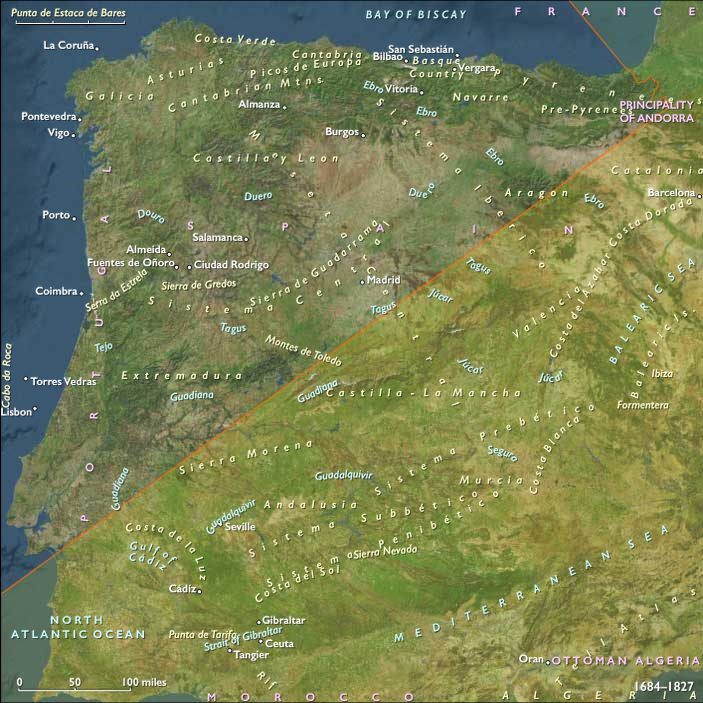
By mid-1762, Madrid remained confident that Oporto would soon fall, and Spanish officials expected an imminent victory in Portugal. However, rather than submission, the invading forces were suddenly confronted with an escalating national rebellion—a popular uprising that would prove far more devastating than the Portuguese regular army.
Portuguese Resistance Turns into National Revolt
The spread of the rebellion throughout Trás-os-Montes and Minho changed the character of the war:
- Francisco Sarmento, the governor of Trás-os-Montes, issued a declaration ordering the population to resist the Spanish invasion or be branded as traitors.
- Entire villages were abandoned, leaving the Spanish troops with no food, guides, or laborers to help build roads and supply routes.
- Portuguese militias and Ordenanças, along with bands of armed civilians, ambushed the invaders, taking advantage of the rugged terrain.
- The Spanish army faced high casualties, suffering from disease, starvation, and relentless guerrilla attacks.
Eyewitness Accounts of Spanish Struggles
British newspapers published reports detailing the Spanish difficulties in the field. According to a British source from Almeida, dated June 12, 1762:
“The Enemy [Spaniards], to the number of eight thousand, has entered the frontier… several parties had rallied forth from the camp and had pillaged the villages upon that frontier, and had not even spared the churches; but these parties had been driven back by the Portuguese militia, who had killed and taken prisoners upwards of two hundred Spaniards.”
Similarly, from Minho, June 20, 1762:
“Those [Spaniards] who retired from Villa Real and Mirandela towards Miranda were attacked upon their march by the militia… who killed some of the Spaniards and took twenty odd prisoners… We have advice of the 22nd [June] that a convoy of sixty mules, laden with provisions, had been taken from the enemy about two leagues from Chaves.”
(Martin, Benjamin – Miscellaneous Correspondence, vol. IV, London, 1764, p. 904.)
A Crisis of Attrition: Disease, Starvation, and Guerrilla Warfare
As Spanish forces struggled to maintain control, the rebellion intensified, with severe consequences for the invading army:
- According to a French contemporary source, more than 4,000 Spanish soldiers perished in the hospitals of Braganza—killed by wounds, disease, and starvation.
- Convoys transporting food from Spain were intercepted and destroyed by the Portuguese militia, cutting off critical supplies.
- Small Spanish detachments, assigned to protect food foraging missions, were frequently ambushed and annihilated by local fighters.
Even King Charles III of Spain, in his formal declaration of war against Portugal on June 15, 1762, complained about the "treacherous" Portuguese peasants, who, according to his government, had been conducted by undercover officers to kill Spanish detachments in surprise attacks.
The Spanish Army Falls Apart
Facing a growing national rebellion, the Spanish army was forced to split its forces to:
- Defend occupied towns from guerrilla attacks.
- Find food, since Portuguese peasants refused to supply them.
- Escort convoys bringing provisions from Spain, which made them vulnerable to Portuguese ambushes.
Without a quick victory at Oporto, starvation and attrition would render the Spanish position untenable. The invasion was no longer a military operation—it had become a desperate fight for survival.
Conclusion: The Invasion on the Brink of Collapse
By June 1762, Spain and France realized that their strategy had failed. Rather than welcoming them as liberators, the Portuguese people had turned the countryside into a battlefield.
With food shortages, heavy losses, disease, and an escalating rebellion, the Spanish invasion of Portugal was unraveling—and unless they could secure a decisive victory soon, they would be forced into a humiliating withdrawal.