Abraham Bosse works mainly as a printmaker…
1635 CE
Abraham Bosse works mainly as a printmaker in etching, but also in watercolor.
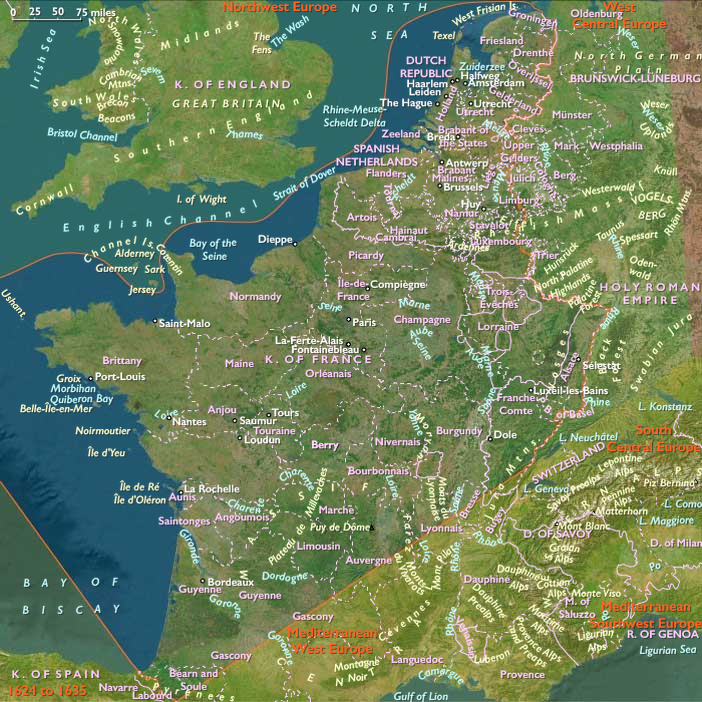
Born to Huguenot parents in Tours, France, where his father, a tailor, had moved from Germany, Bosse's work will always depict clothes in loving detail.
Apprenticed in Paris about 1620 to the Antwerp-born engraver Melchior Tavernier (1564–1641), who was also an important publisher, Bosse’s first etchings date to 1622, and are influenced by Jacques Bellange.
Following a meeting in Paris about 1630, he had become a follower of Jacques Callot, whose technical innovations in etching he will eventually popularize in a famous and much translated Manual of Etching (1645), the first to be published.
He takes Callot's highly detailed small images to a larger size, and a wider range of subject matter.
Unlike Callot, his declared aim, in which he largely succeeds, is to make etchings look like engravings, to which end he sacrifices willingly the freedom of the etched line, whilst certainly exploiting to the full the speed of the technique.
Like most etchers, he frequently uses engraving on a plate in addition to etching, but produces no pure engravings.
He remains a lifelong Huguenot, but is happy to illustrate religious subjects to Catholic taste.
His style derives from Dutch and Flemish art, but he has given it a strongly French flavor.
Many of his images give fascinating and informative detail about middle and upper-class daily life in the period, although they must be treated with care as historical evidence.
His combination of very carefully depicted grand interiors with relatively trivial domestic subjects is original and highly influential on French art, and also abroa —William Hogarth's engravings are, among other things, a parody of the style.
Most of his images are perhaps best regarded as illustrations rather than art.
Images

Abraham Bosse, The Ball (1635) Watercolor on paper, 10.4 × 15 cm,Kupferstichkabinett, Berlin
Locations
Subjects
Regions
West Europe
View →Subregions