
The Phocaeans according to Herodotus were the …
Years: 549BCE - 538BCE
The Phocaeans according to Herodotus were the first Greeks to make long sea-voyages, having discovered the coasts of the Adriatic, Tyrrhenia and Spain.
Herodotus relates that they so impressed Arganthonios, king of Tartessus in Spain, that he invited them to settle there, and, when they declined, gave them a great sum of money to build a wall around their city.
Phocaean sea travel is extensive.
To the south, they probably conduct trade with the Greek colony of Naucratis in Egypt, which is the colony of their fellow Ionian city Miletus.
To the north, they probably had helped settle Amisos (Samsun) on the Black Sea, and Lampsacus at the north end of the Hellespont (now the Dardanelles).
However Phocaea's major colonies are to the west.
These include Alalia in Corsica, Emporiae and Rhoda in Spain, and especially Massalia (Marseille) in France.
Phocaea remains independent until the reign of the Lydian king Croesus (circa 560–545 BCE), when they, along with the rest of mainland Ionia, first, fall under Lydian control and then, along with Lydia (who had allied itself with Sparta) are conquered by Cyrus the Great of Persia in 546 BCE, in one of the opening skirmishes of the great Greco-Persian conflict.
When in about 545 BCE the Persians besiege Phocaea, most of the citizens choose emigration rather than submission.
Abandoning their city, some may have fled to Chios, others to their colonies on Corsica and elsewhere in the Mediterranean, with some eventually returning to Phocaea.
Many, however, in around 540 BCE become the founders of Elea in Magna Graecia.
Locations
People
Groups
- Ionians
- Lydia, Kingdom of
- Miletus (Ionian Greek) city-state of
- Greece, classical
- Persian people
- Tartessos
- Chios, City-State of
- Sparta, Kingdom of
- Phocaea (Ionian Greek) city-state of
- Magna Graecia
- Egypt (Ancient), Late Period of
- Massalia (Ionian Greek) city-state of
- Achaemenid Empire
Topics
- Younger Subboreal Period
- Iron Age, Near and Middle East
- Greek colonization
- Iron Age Cold Epoch
- Classical antiquity
- Persian Conquests of 559-509 BCE
- Persian-Lydian War of 547-546 BCE
Commodoties
Subjects
Regions
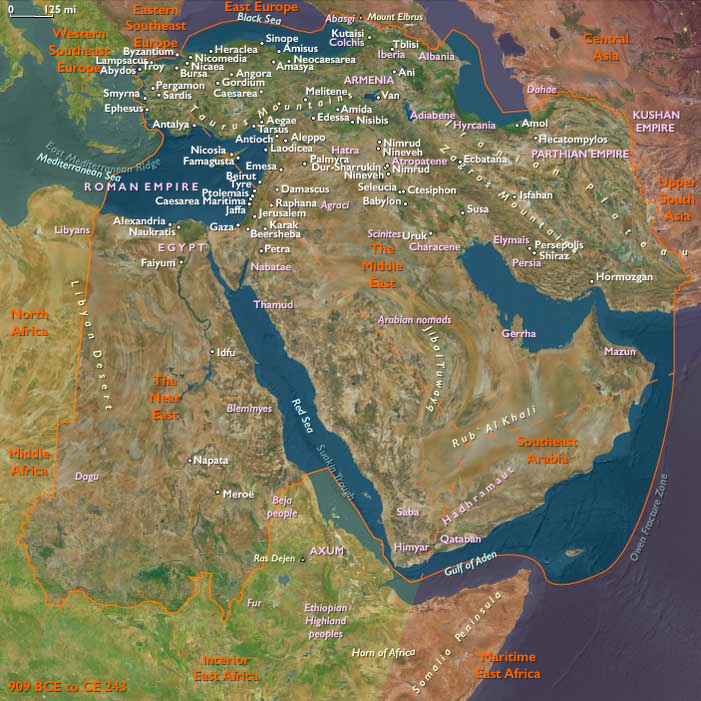
Subregions
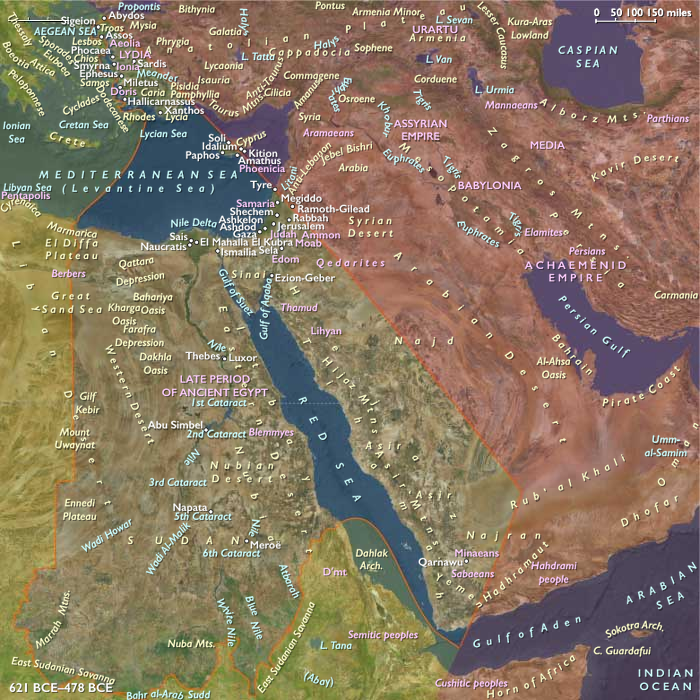
Years: 549BCE - 538BCE
Locations
People
Groups
- Ionians
- Lydia, Kingdom of
- Miletus (Ionian Greek) city-state of
- Greece, classical
- Persian people
- Tartessos
- Chios, City-State of
- Sparta, Kingdom of
- Phocaea (Ionian Greek) city-state of
- Magna Graecia
- Egypt (Ancient), Late Period of
- Massalia (Ionian Greek) city-state of
- Achaemenid Empire
Topics
- Younger Subboreal Period
- Iron Age, Near and Middle East
- Greek colonization
- Iron Age Cold Epoch
- Classical antiquity
- Persian Conquests of 559-509 BCE
- Persian-Lydian War of 547-546 BCE
Commodoties
Subjects
Regions
Subregions