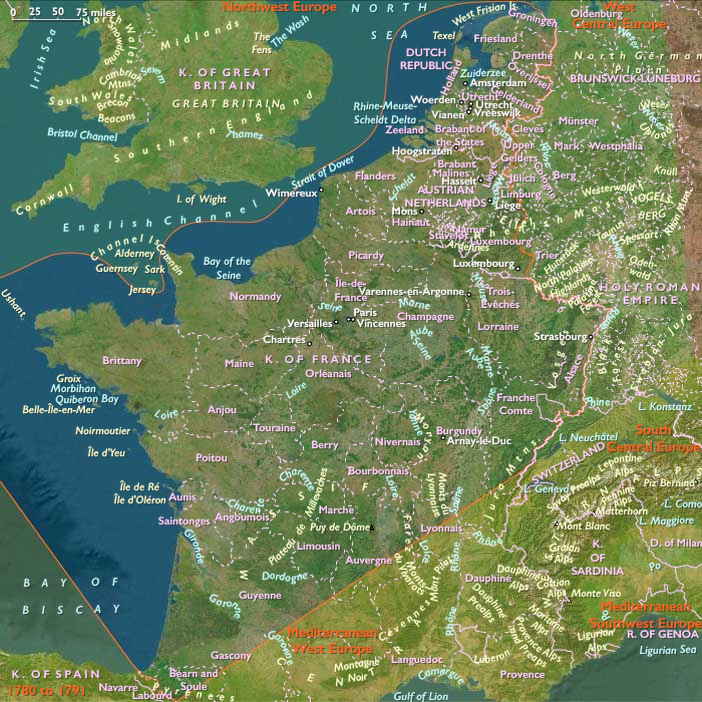
A French convoy had sailed from Brest…
December 1781 CE
A squadron of thirteen British ships of the line, commanded by Rear Admiral Richard Kempenfelt in HMS Victory, had been ordered to sea to intercept the expected convoy.
On December 12, the squadron sights the French convoy, discovering that its protective escort has been strengthened.
Initially, Comte De Guichen's fleet is situated downwind of the convoy, allowing the British ships to sweep down and capture fifteen ships carrying troops and supplies before the French ships can intervene.
Rear Admiral Kempenfelt's force is not strong enough to attack the nineteen French escorts, but the French convoy, having deliberately risked setting sail in the North Atlantic storm season in an unsuccessful attempt to avoid British forces, is dispersed in a gale shortly afterwards, and most of the ships forced to return to port.
Only two of the ships of the line intended for the West Indies will arrive with a few transport vessels in time for the Battle of the Saintes in April.
When news of the battle at Ushant reaches Britain, the Opposition in Parliament will question the decision to send such a small force against the convoy, and will force an official inquiry into the administration of the Royal Navy.
This will be the first of a succession of Opposition challenges that will ultimately bring about the fall of the government of Lord North on March 20, 1782 and pave the way for the Peace of Paris (1783), which will end the American Revolutionary War.
Locations
Groups
Topics
Regions

West Europe
View →Subregions