
Naum, after Clement was ordained bishop of…
905 CE
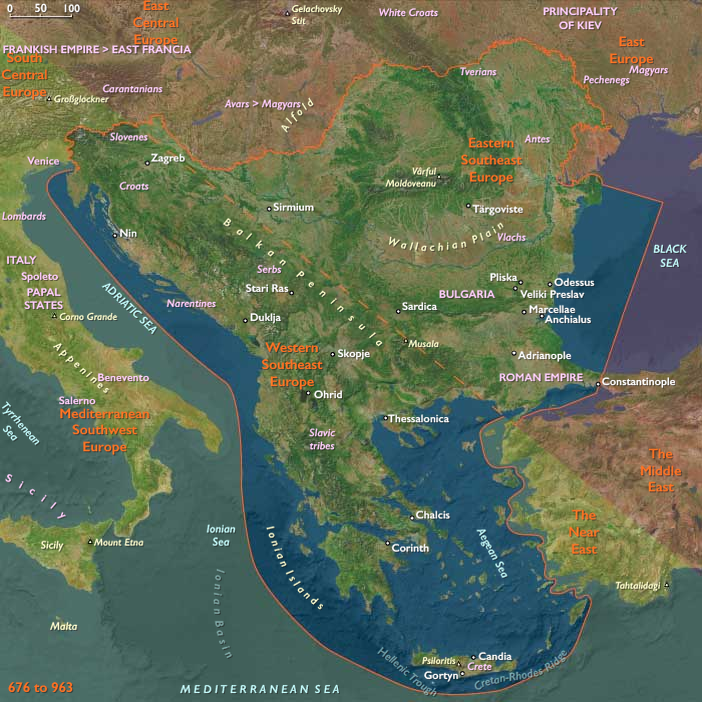
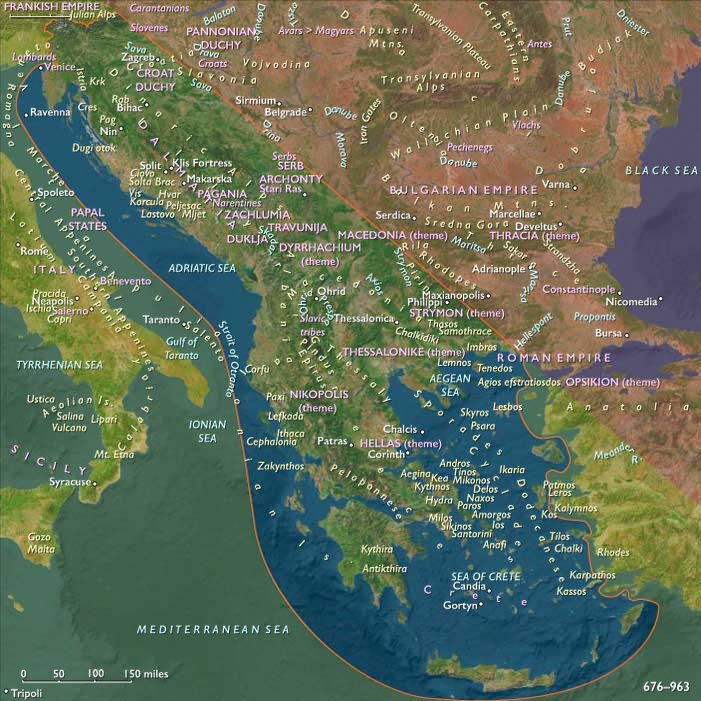
Naum, after Clement was ordained bishop of Drembica and Velika in 893, had continued Clement's work at Ohrid, another important center of Slavic learning.
In 905, Naum founds a monastery on the shores of Lake Ohrid, which later receives his name.
Locations
Regions
Southeast Europe
View →Subregions
Western Southeast Europe
View →Related Events
No active filters.
Showing 10 events out of 53500 total
Four poets are selected to compile the Kokin Wakashū, an anthology of poetry in the classical thirty-one-syllable “waka” form, under the imperial order of Emperor Daigo.
Patriarch Nicholas, who was born in the Italian Peninsula, had become a friend of the Patriarch Photios.
He had fallen into disfavor after Photios' dismissal in 886 and retired to a monastery.
Emperor Leo VI the Wise had retrieved him from the monastery and made him mystikos, a dignity designating either the imperial secretary or a judicial official.
Nicholas had been appointed patriarch on March 1, 901.
Emperor Leo, because of his anxiety for a male heir, has married three times, thus incurring the censure of the Greek church, which normally forbids a widower to remarry more than once.
When his mistress, Zoë Carbonopsina, presents the emperor with a son, Constantine, in 905, he makes her his fourth wife after Constantine's birth, against the bitter opposition of the patriarch Nicholas Mysticus.
Although he reluctantly baptizes the fruit of this relationship, the future Constantine VII, Nicholas forbids the emperor from entering the church.
Hamdan ibn Hamdun had brought his family, already well established in Al-Jazirah (northern Iraq) to political prominence by taking part in uprisings against the 'Abbasid caliph late in the ninth century.
His sons, however, become 'Abbasid officials, al-Husayn serving as a military commander and Abu al-Hayja' 'Abd Allah initiating the Hamdanid dynasty by assuming the post of governor of Mosul in 905.
Harun's successor, his uncle Shayban ibn Ahmad ibn Tulun, is unable to resist an Abbasid invasion under the command of Muhammad ibn Sulayman, with naval support from frontier forces based in Tarsus.
This brings an end to his reign and that of the Tulunids.
Bergamo had been subjected in 904 to a long siege by the Magyars.
After the siege, Berengar grants the bishop of the city walls and the right to rebuild them with the help of the citizens and the refugees fleeing the Magyars.
The bishop attains all the rights of a count in the city.
The Theophylacti family, which originates from Theophylactus, will throughout the Saeculum obscurum hold positions of increased importance in the Roman nobility such as Judex, vestararius, gloriosissimus dux, consul and senator, and magister militum.
Theophylact's wife Theodora and daughter Marozia will come to hold a great influence over the papal selection and religious affairs in Rome through conspiracies, affairs, and marriages.
Marozia when she is fifteen becomes the concubine of Pope Sergius III; she will later take other lovers and husbands.
A coalition of enemies of the king of Pamplona, Fortún Garcés, consisting of Lubb ibn Muhammed of the Banu Qasi, King Alfonso III of Asturias, Galindo Aznar II of Aragon and Sancho's uncle, Raymond I of Pallars and Ribagorza, deposes Fortún in 905, and puts Sancho on the throne in his place.
Zhu also has all of the deceased emperor's sons (except Emperor Ai) killed shortly after Emperor Zhaozong's death, leaving, among the imperial household, only Emperor Ai and his mother (Emperor Zhaozong's wife) Empress Dowager He.
Further, …
…under the advice of his ally, the chancellor Liu Can, and Li Zhen, he carries out a slaughter of senior Tang officials from aristocratic families, including forcing some thirty of them to commit suicide at Baima (in modern Anyang) and then throwing their bodies into the Yellow River.
Louis of Provence, after again listening to the Italian nobles who are tired of Berengar’s rule, this time led by Adalbert I of Ivrea, launches another attempt to invade Italy in 905.
Once again throwing Berengar out of Pavia, he marches against and also succeeds in taking Verona with only a small following, after receiving the promise of support from the bishop, Adalard.
Partisans of Berengar in the town soon get word to Berengar of Louis’s exposed position at Verona, and his somewhat limited support.
Berengar returns, accompanied by Bavarian troops, and enters Verona in the dead of night.
Louis seeks sanctuary at the church of St. Peter but he is captured, and on July 21, 905, he has his eyes put out (for breaking his oath) and is forced to relinquish his royal Italian and imperial crowns.
Later, Berengar will become Emperor.