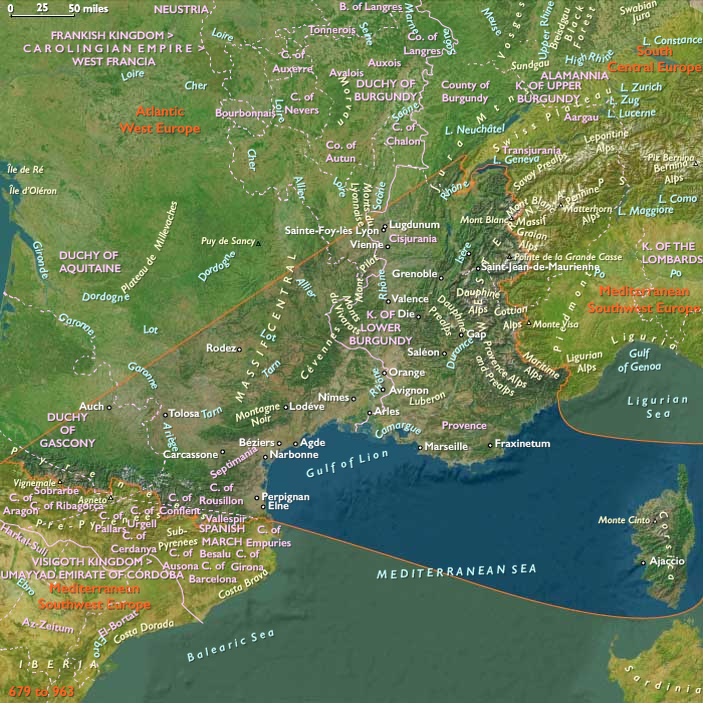
Narbonne had been renamed Arbunah by Al-Samh…
737 CE
Narbonne had been renamed Arbunah by Al-Samh ibn Malik al-Khawlani, governor of Al-Andalus, after the capture of the city in 719 or 720, and turned into a military base for future operations.
Charles Martel besieges Narbonne following his success at the Battle of Avignon, but his forces are unable to take the city.
However, when the Arabs send reinforcements from Spain, the Franks intercept them at the mouth of the River Berre, in the present-day département of Aude, and score a significant victory, after which they march on Nîmes.
Charles may have been able to take Narbonne had he been willing to commit his army and full resources for an indefinite siege, but he was not willing or able to do so.
Probably he found that the duke of Aquitaine Hunald was threatening his line of communication with the north.
Furthermore, Maurontius, patrician of Provence, from his unconquered city of Marseille, has raised a revolt against him from the rear.
The Frankish leader may have considered accomplished his primary goals by destroying the Arab armies, and leaving the remaining Arabs confined to Narbonne.
On his way back out of the region of Septimania, his army destroys a string of cities and strongholds (Avignon, etc.)
that had failed to support him against the Muslims.
People
Groups
Commodities
Subjects
Regions
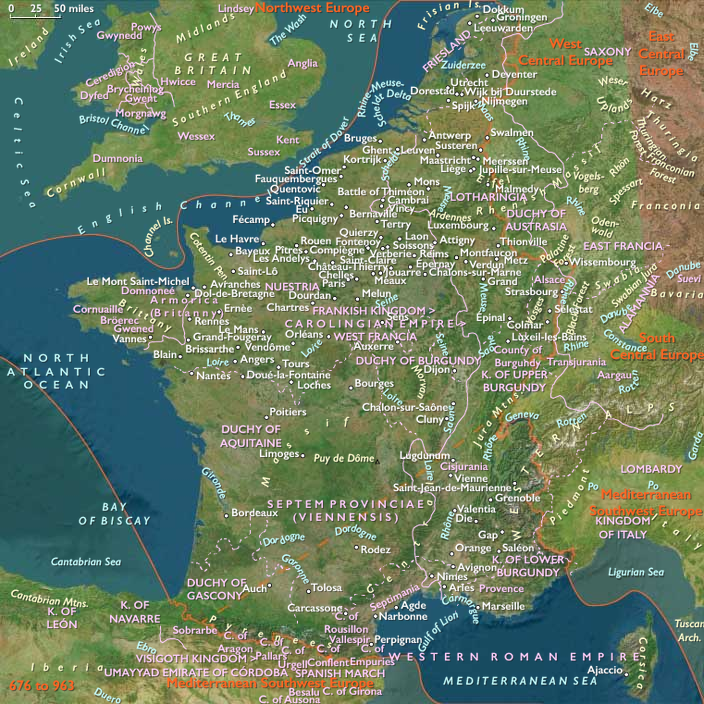
West Europe
View →Subregions