The victorious English government of Ireland, under…
February 1604 CE
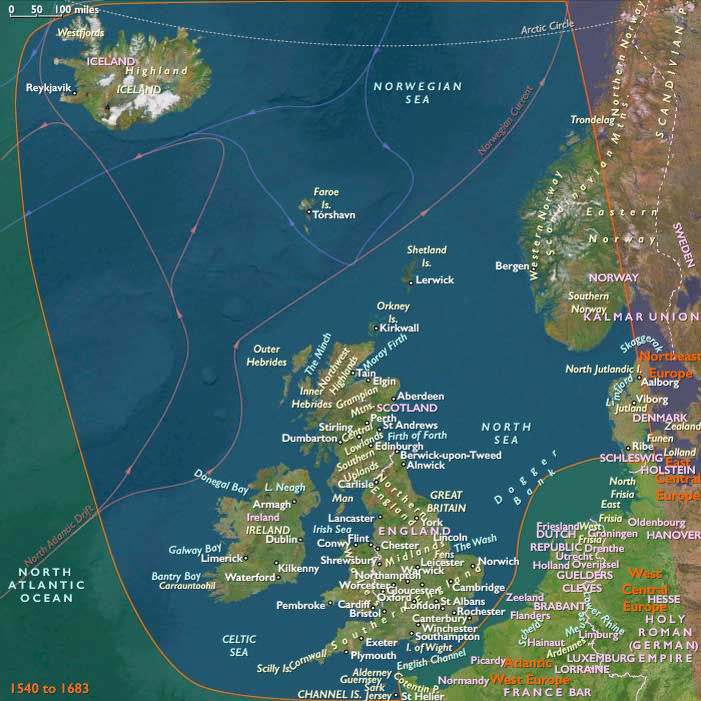
The victorious English government of Ireland, under the leadership of the Lord Mountjoy, had in January 1602 forced into exile Hugh Ó Neill, Earl of Tyrone, and Rory O’ Donnel, Hugh O’ Donnell's elder brother and predecessor, after their defeat the Battle of Kinsale in 1601, and the suppression of the Nine Years' War in Ulster.
They had retained their lands and titles, although with much diminished extent and authority.
However, the countryside in 1602 had been laid bare in the campaign of destruction, and in 1603 ravaged by induced famine, in the same way that O'Neill in 1600 had devastated Munster.
O'Neill had surrendered on favorable terms at Mellifont just as Queen Elizabeth was dying, and submitted to the crown.
When King James I took the throne in 1603 he had quickly proceeded to issue pardons for the Irish lords and their rebel forces.
As king of Scotland, he has a better understanding of the advantages of working with local chiefs in the Scottish Highlands.
However, as in other Irish lordships, the 1603 peace had involved O'Neill losing substantial areas of land to his cousins and neighbors, who would be granted freeholds under the English system, instead of the looser arrangements under the former Brehon law system.
This is not a new policy but is a well-understood and longstanding practice in the Tudor Reconquest of Ireland.
Hugh O’ Donnell', the Prince of Tyrconnell, had already died on 10 September 1602, allegedly assassinated, in Spain, and his brother had succeeded him as 25th Chieftain of the O'Donnell clan.
He had later been granted the Earldom of Tyrconnell by King James on September 4, 1603, and on on February 10, 1604, is restored to a somewhat diminished scale of territories in Tyrconnell.
Locations
Topics
Subjects
Regions
North Europe
View →Subregions