Ahmed’s authority has been weakened by wars,…
November 1617 CE
Ahmed’s authority has been weakened by wars, rebellions, and misrule.
The rebellions he has been able to suppress; he has executed some of the viziers and exiled many palace dignitaries for bribery and intrigue; and he has introduced a new regulation for the improvement of land administration.
A pious ruler, Ahmed has made many donations, especially to the holy places of Mecca and Medina.
After the humiliating Peace of Zsitvatorok and the unfavorable result of the wars with Persia, Ahmed had decided to build a large mosque in Constantinople—the first imperial mosque in more than forty years—to placate Allah.
Whereas his predecessors had paid for their mosques with their war booty, Ahmed had had to withdraw the funds from the treasury, because he had not won any notable victories.
This had provoked the anger of the ulema, the Muslim legal scholars.
The mosque was to be built on the site of the palace of the Byzantine emperors, facing the Hagia Sophia (at that time the most venerated mosque in Istanbul) and the hippodrome, a site of great symbolic significance.
Large parts of the southern side of the mosque rest on the foundations, the vaults and the undercrofts of the Great Palace.
Several palaces, already built on the same spot, had to be bought (at considerable price) and pulled down, especially the palace of Sokollu Mehmet Paşa, and large parts of the Sphendone (curved tribune with U-shaped structure of the hippodrome).
Construction of the mosque had commenced in August 1609 when the sultan himself came to break the first sod.
It was his intention that this would become the first mosque of his empire.
He had appointed his royal architect Sedefhar Mehmet Ağa, a pupil and senior assistant of the famous architect Sinan as the architect in charge of the construction.
The organization of the work is described in meticulous detail in eight volumes, now in the library of the Topkapı Palace.
The opening ceremonies are held in 1617 (although the gate of the mosque records 1616) and the sultan is able to pray in the royal box (hünkâr mahfil), but the building is not yet finished in this last year of his reign, as the last accounts are signed by his successor Mustafa I.
Known as the Blue Mosque for the blue tiles adorning the walls of its interior, Sultan Ahmet Mosque is one of the most impressive monuments in the world and is today one of the greatest tourist attractions of Istanbul.
Ahmed, only twenty-seven when he dies of typhus on November 22, 1617, is succeeded by his younger brother Mustafa, a man of weak mental faculties.
Images
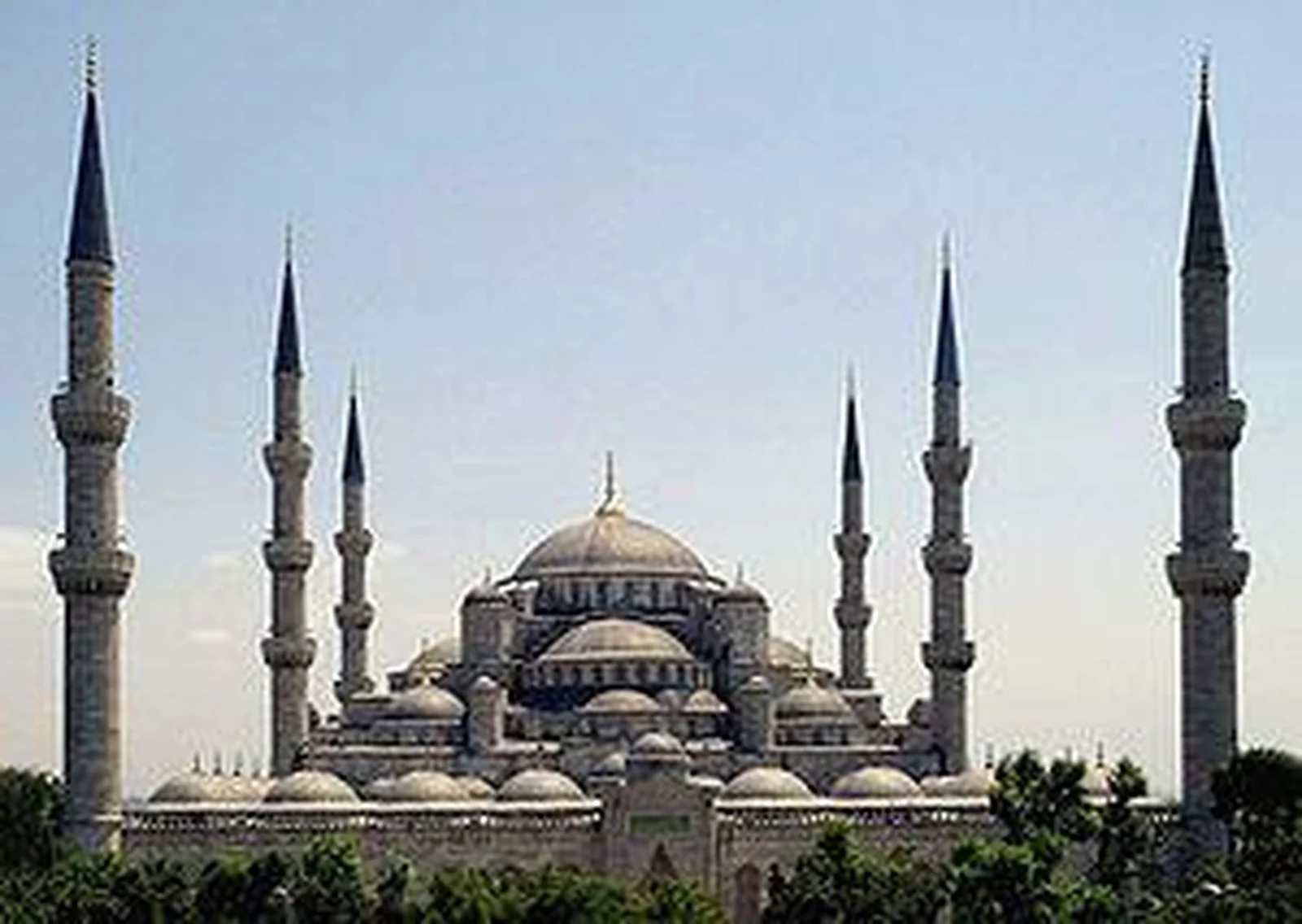
Sultan Ahmed Mosque (Photo by Dersaadet, 2002)
People
Subjects
Regions

Southeast Europe
View →Subregions