The Fragmentation of the Caliphate and the…
964 CE to 1107 CE
The Fragmentation of the Caliphate and the Beginning of the Christian Reconquista
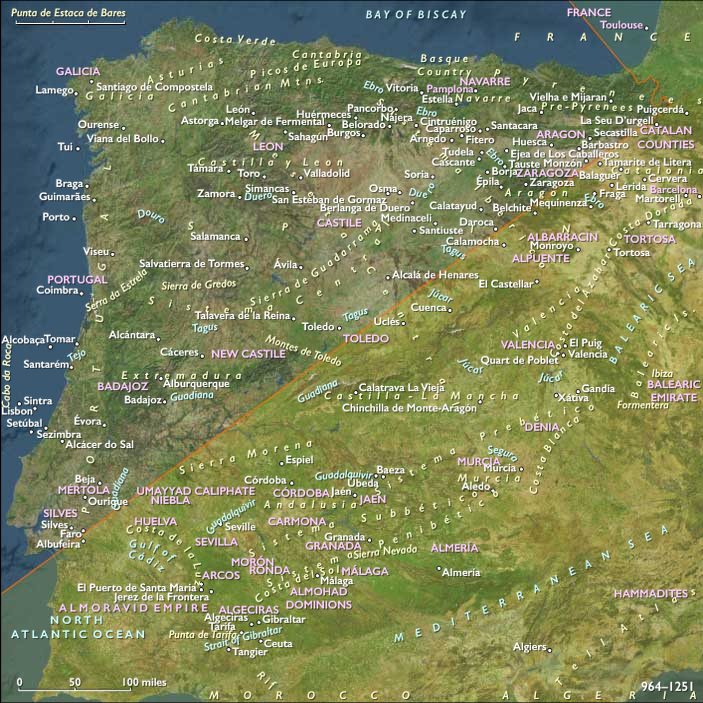
The Golden Age of Muslim rule in Iberia comes to an end in the 11th century, as local nobles and military leaders, having grown rich and powerful, begin carving up the caliphate into independent city-states, known as taifas.
In what is now Portugal, the most significant taifas include the emirates of Badajoz, Mérida, Lisbon, and Évora. These internal rivalries and power struggles weaken Muslim rule, creating opportunities for Christian forces to begin their counteroffensive.
Taking advantage of this division, small groups of Visigothic Christian warriors, who had long taken refuge in the mountainous northwest of Iberia, begin launching raids and campaigns against the Muslims. This marks the early stages of the Christian Reconquista, a process that will eventually lead to the gradual retaking of the Iberian Peninsula from Muslim control.
Groups
Regions
Southwest Europe
View →Subregions