
The first public demonstration of the telegraph,…
January 1838 CE
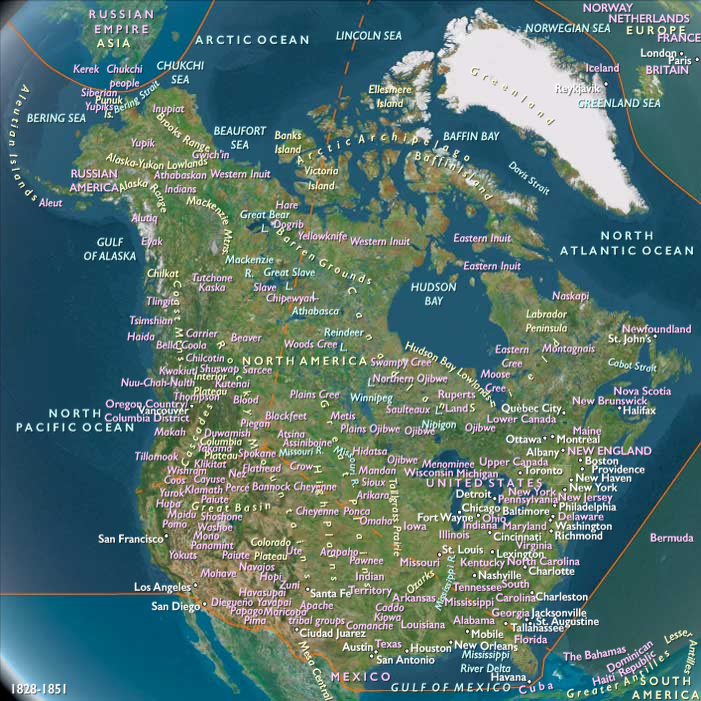
The first public demonstration of the telegraph, Samuel Morse's new invention, is given at Morristown, New Jersey, by Morse, Alfred Vail and Leonard D. Gale.
Morse, had encountered the problem of getting a telegraphic signal to carry over more than a few hundred yards of wire.
His breakthrough had come from the insights of Professor Gale, who teaches chemistry at New York University (a personal friend of Joseph Henry).
With Gale's help, Morse had achieved the breakthrough he has been seeking: he soon was able to send a message through ten miles (sixteen kilometers) of wire.
Alfred Vail, a young enthusiastic man with excellent skills, insights, and money, had soon joined Morse and Gale.
Morse's telegraph now begins to be developed very rapidly.
The technology available at the time makes it impossible to print characters in a readable form, so the inventors must devise an alternate means of communication, which will soon be known as Morse Code.
Morse had traveled in Italy, Switzerland, and France for three years improving his painting skills, from 1830-1832.
The project he had eventually selected was to paint miniature copies of some thirty-eight of the Louvre's famous paintings on a single canvas (six feet by nine feet), which he entitled The Gallery of the Louvre.
He planned to complete The Gallery of the Louvre when he returned home to Massachusetts and to earn an income by exhibiting his work and charging admission.
On the sea voyage home in 1832 Morse had encountered Charles Thomas Jackson of Boston, who was well schooled in electromagnetism.
Witnessing various experiments with Jackson's electromagnet, Morse had developed the concept of a single wire telegraph, and The Gallery of the Louvre was set aside.
People
Regions
Northern North America
View →Subregions
