The Swiss Invasion of the Sundgau (1499)…
May 1499 CE
The Swiss Invasion of the Sundgau (1499)
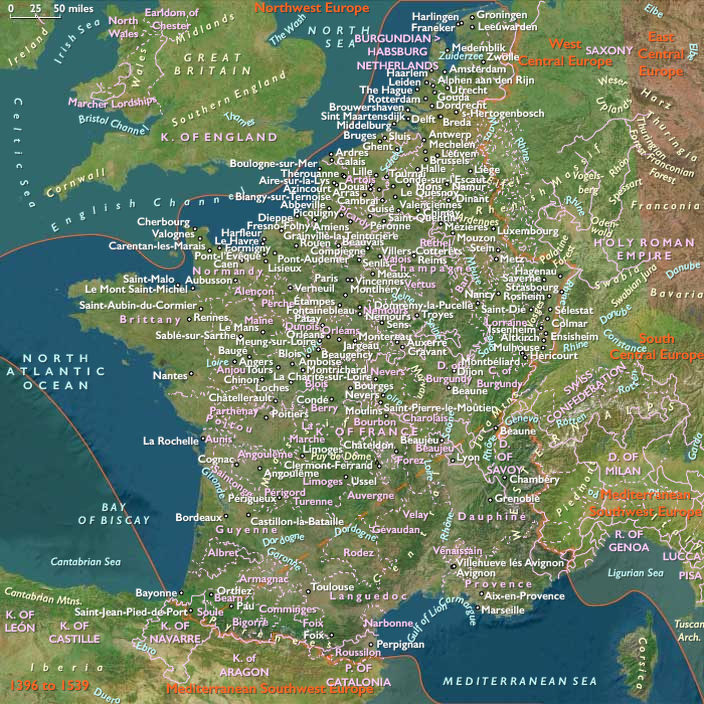
In early 1499, amid the broader context of escalating Franco-Italian tensions, attention briefly shifted northward with military developments involving Atlantic West Europe. Following the political turmoil surrounding the French crown, an abandoned campaign and subsequent redirection of military forces led Swiss mercenaries and regional powers into strategic uncertainty.
In particular, the cancellation of King Charles VIII's planned return to Italy—due to his unexpected death in 1498—resulted in dispersed and idle military contingents, especially Swiss mercenary troops initially recruited for Italian campaigns. With political and military alliances shifting rapidly, these forces were drawn toward opportunities elsewhere, notably an incursion into the strategically significant region surrounding Beauvais and subsequently impacting broader military maneuvers across France.
Simultaneously, the evolving power dynamics and uncertainty following Louis XII's accession to the French throne prompted the redirection of attention towards securing regional defenses in northern France and the Low Countries, notably culminating in intensified military preparedness around border regions.
Consequences and Legacy:
These military movements emphasized the volatility and interconnectedness of regional conflicts and the delicate balance of power in late medieval Atlantic West Europe. The redeployment and reassessment of regional military resources demonstrated the shifting geopolitical priorities of European powers during this period. Moreover, these maneuvers highlighted the vulnerabilities of local principalities to sudden geopolitical shifts, further shaping diplomatic and military strategies in the subsequent decades of Franco-European engagements.
Locations
People
Groups
Topics
Commodities
Subjects
Regions
West Europe
View →Subregions