Mughal rule under Jahangir (1605-27) and Shah…
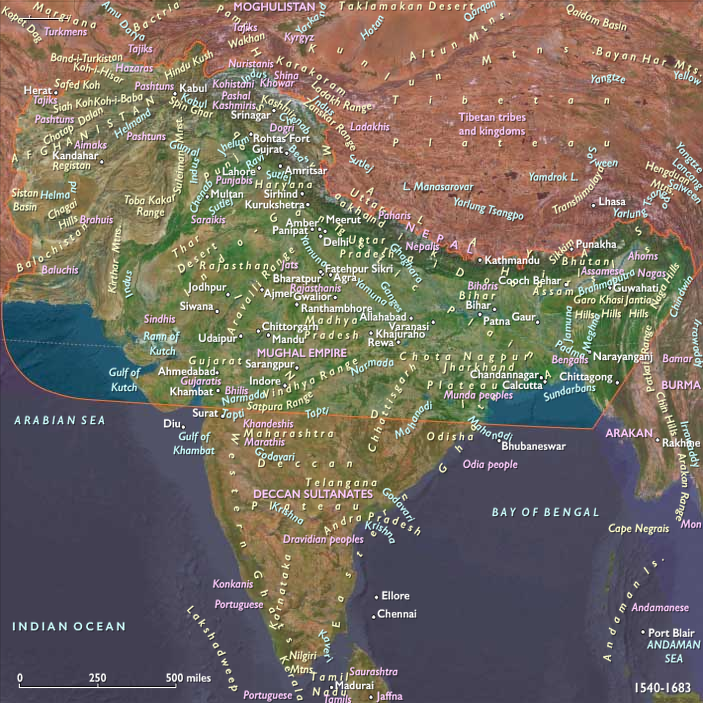
1540 CE to 1683 CE
Mughal rule under Jahangir (1605-27) and Shah Jahan (1628-58) is noted for political stability, brisk economic activity, beautiful paintings, and monumental buildings.
Jahangir marries the Persian princess whom he renames Nur Jahan (Light of the World), who emerges as the most powerful individual in the court besides the emperor.
As a result, Persian poets, artists, scholars, and officers—including her own family members—lured by the Mughal court's brilliance and luxury, find asylum in India.
The number of unproductive, time-serving officers mushrooms, as does corruption, while the excessive Persian representation upsets the delicate balance of impartiality at the court.
Jahangir likes Hindu festivals but promotes mass conversion to Islam; he persecutes the followers of Jainism and even executes Guru Arjan Das, the fifth saint-teacher of the Sikhs.
Nur jahan's abortive schemes to secure the throne for the prince of her choice lead Shah Jahan to rebel in 1622.
In this same year, the Persians take over Kandahar in southern Afghanistan, an event that strikes a serious blow to Mughal prestige.
Locations
Groups
Topics
Subjects
Regions
South Asia
View →Subregions