
The Kaw are a member of the…
1673 CE
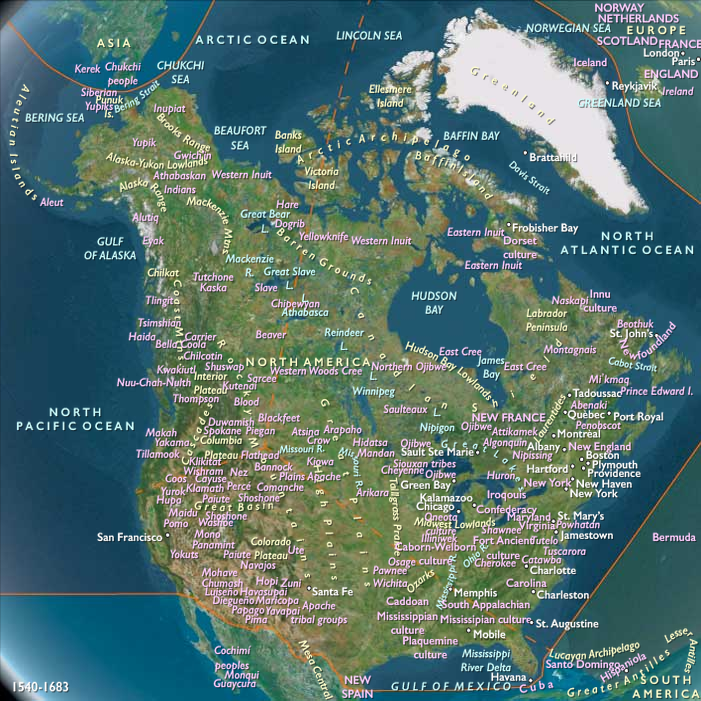
The first certain knowledge we have of the Dhegiha is 1673 when the French explorer of the Mississippi River, Pere Marquette, draws a crude map that shows the Dhegiha tribes near their historic locations.
Oral history indicates that the ancestors of the five Dhegiha tribes migrated west from the Ohio Valley.
The Quapaw separated from the other Dhegiha at the mouth of the Ohio, going down the Mississippi River to live in what is today the state of Arkansas.
The other Dhegiha proceeded up the Mississippi and Missouri Rivers.
The Osage left the main group in central Missouri; the Kaw halted upstream on the Missouri River in northeastern Kansas; the Omaha and Ponca continued north to settle in Nebraska and South Dakota.
This tradition is reinforced by the fact that the Illinois and Miami tribes call the lower Ohio and Wabash Rivers the Akansea River, because, as they tell French explorers, the Akansea (Quapaw) formerly dwelt there.
The Dhegiha probably migrated westward in the early to mid-seventeenth century.
Their reason for leaving their traditional home may have been due to the displacement westward of native tribes caused by European settlement on the Atlantic Coast of the United States.
Displacement and Western migration is the fate of many tribes.
People
Groups
Osage Nation (Amerind tribe)
View →
Miami (Amerind tribe)
View →
Illinois confederacy, or Illiniwek
View →
Ponca (Amerind tribe)
View →
Omaha (Amerind tribe)
View →
Kaw, or Kanza, people (Amerind tribe)
View →
Quapaw, or Arkansas (Amerind tribe)
View →
New France (French Colony)
View →
France, (Bourbon) Kingdom of
View →
Subjects
Regions
Northern North America
View →Subregions
