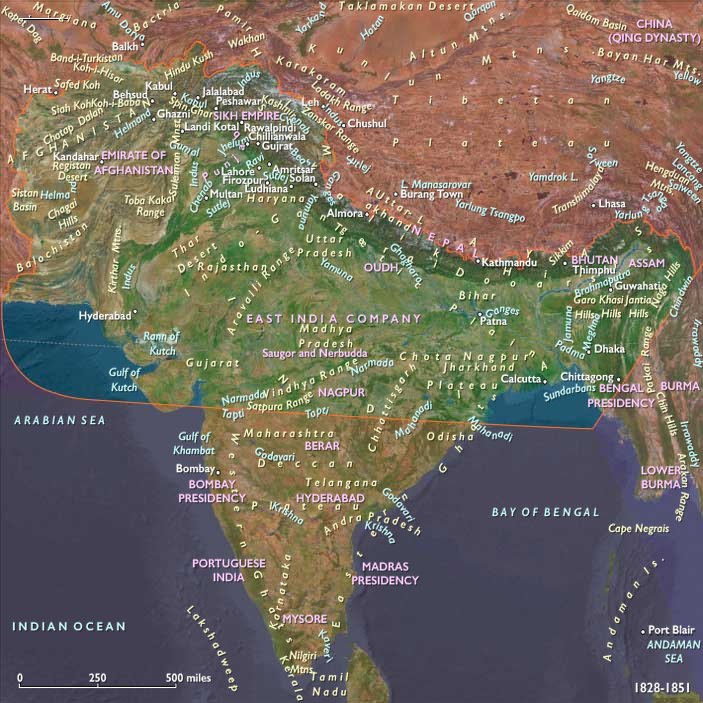
An East India Company army commanded by…
December 1845 CE
An East India Company army commanded by Sir Hugh Gough, the commander in chief of the Bengal Army, begins marching towards Ferozepur, where a division is already stationed.
Sir Henry Hardinge, the British Governor General of Bengal, who placed himself beneath Gough in the military chain of command, accompanies this "British" army consisting of formations of the Bengal Army, with usually one British unit to every three or four Bengal infantry or cavalry units.
Most of the British artillery consists of light guns from the elite Bengal Horse Artillery.
In response to the British move, the Sikh army begins crossing the Sutlej River on December 11, 1845.
Although the leaders and principal units of the army are Sikhs, there are also Punjabi, Pakhtun and Kashmiri infantry units.
The artillery consists mainly of units of heavy guns, which had been organized and trained by European mercenaries.
The Sikhs claim they are only moving into Sikh possessions (specifically the village of Moran) on the east side of the river, but the move is regarded by the British as clearly hostile and they declare war.
The Sikh army makes no effort to surround or attack the exposed division at Ferozepur.
Groups
Regions
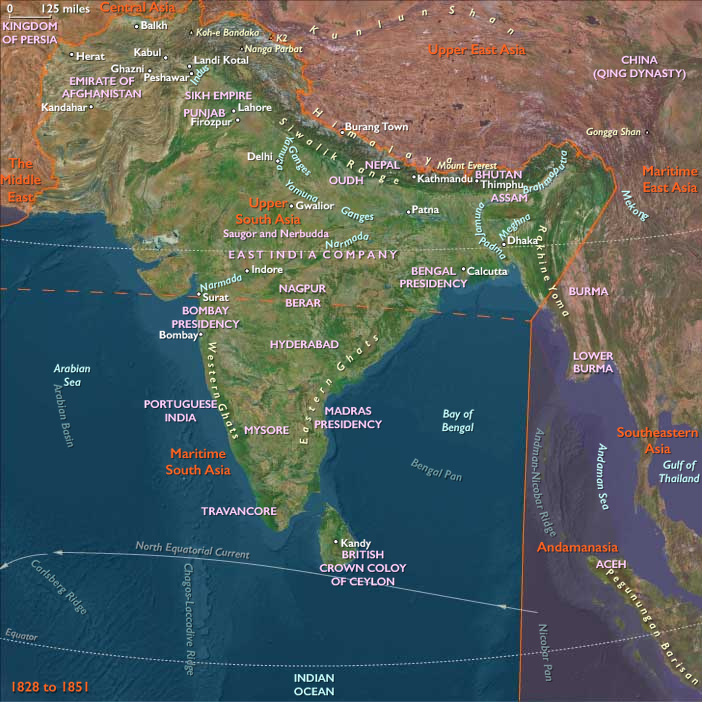
South Asia
View →Subregions