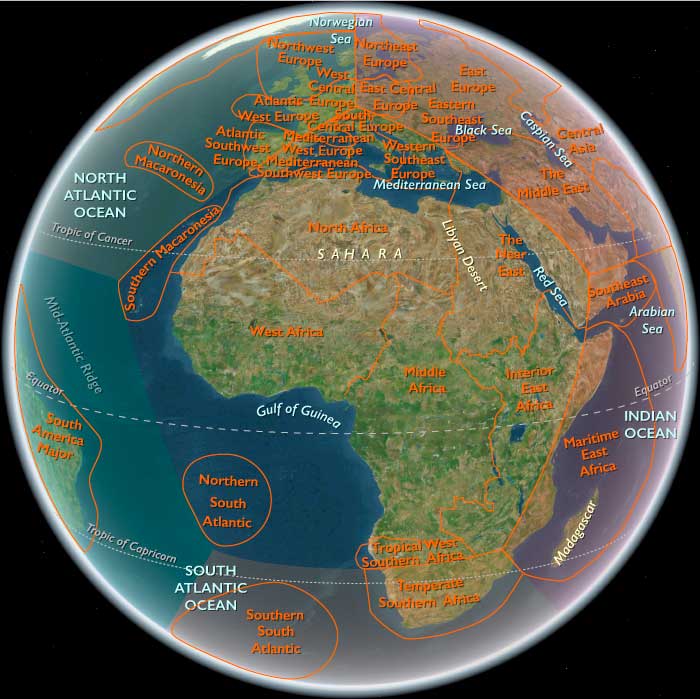
Event
Another wave of Greek settlement on Cyprus…
Another wave of Greek settlement on Cyprus is believed to have taken place in the LCIIIB period (1100-1050), indicated, among other things, by a new type of graves (long dromoi) and Mycenaean influences in pottery decoration.
Foundation myths documented by classical authors connect the foundation of numerous Cypriot towns with immigrant Greek heroes in the wake of the Trojan War.
For example, Teucer, brother of Aias (Ajax), was supposed to have founded Salamis, and the Arcadian Agapenor of Tegea was supposed to have replaced the native ruler Kinyras and to have founded Paphos.
Some scholars see this a memory of a Greek colonization already in the eleventh century.
In the eleventh century, tomb 49 from Palaepaphos-Skales three bronze obeloi with inscriptions in Cypriot syllabic script have been found, one of which bears the name of Opheltas.
This is first indication of the use of Greek language on the island.
The immigration to Cyprus of settlers from Greece, which began at least by 1200, leads to the foundation of Greek kingdoms covering most of the island. (Since the start of the first millennium BCE, the Greek language has been predominant in Cyprus; the fact that the dialectal form in which it first appears is known as Arcado-Cypriot confirms traditions of the Peloponnesian origin—and specifically of the Arcadian origin—of the immigrants.)
Cremation as a burial rite is seen as a Greek introduction as well.
The first cremation burial in Bronze vessels has been found at Kourion-Kaloriziki, tomb 40, dated to the first half of the eleventh century (LCIIIB).
The shaft grave contained two bronze rod tripod stands, the remains of a shield and a golden scepter as well.
Formerly seen as the Royal grave of first Argive founders of Kourion, it is now interpreted as the tomb of a native Cypriote or a Phoenician prince.
The cloisonné enameling of the scepter head with the two falcons surmounting it has no parallels in the Aegean, but shows a strong Egyptian influence.
Most authors claim that the Cypriot city kingdoms, first described in written sources in the eighth century BCE, were already founded in the eleventh century BCE.
Other scholars see a slow process of increasing social complexity between the twelfth and the eighth centuries, based on a network of chiefdoms.
The new cities, which will become the capitals of six Greek kingdoms on Cyprus, are Curium (Greek: Kourion), Paphos, Marion, Lapithos, Salamis, and Soli (founded, by tradition, after the Trojan War, but according to another legend, named for the sixth century BCE Athenian lawgiver Solon, who supposedly visited Cyprus).
-
{# Image navigates to the detail page; the magnifying-glass chip is the only Fancybox lightbox trigger (kept a separate sibling — anchors can't nest). #}
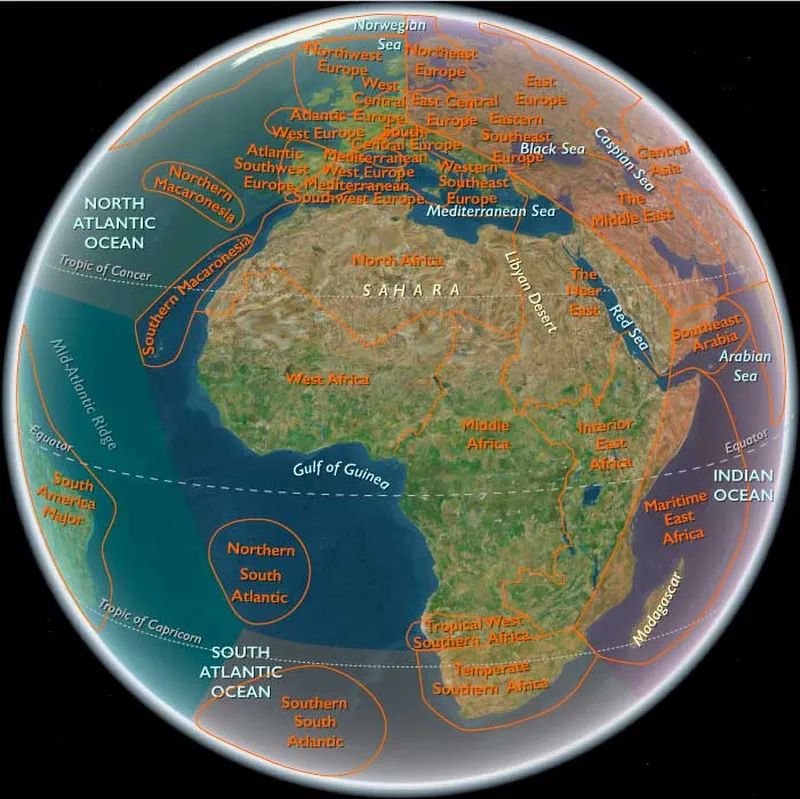 The Middle of The Earth
World
-
{# Image navigates to the detail page; the magnifying-glass chip is the only Fancybox lightbox trigger (kept a separate sibling — anchors can't nest). #}
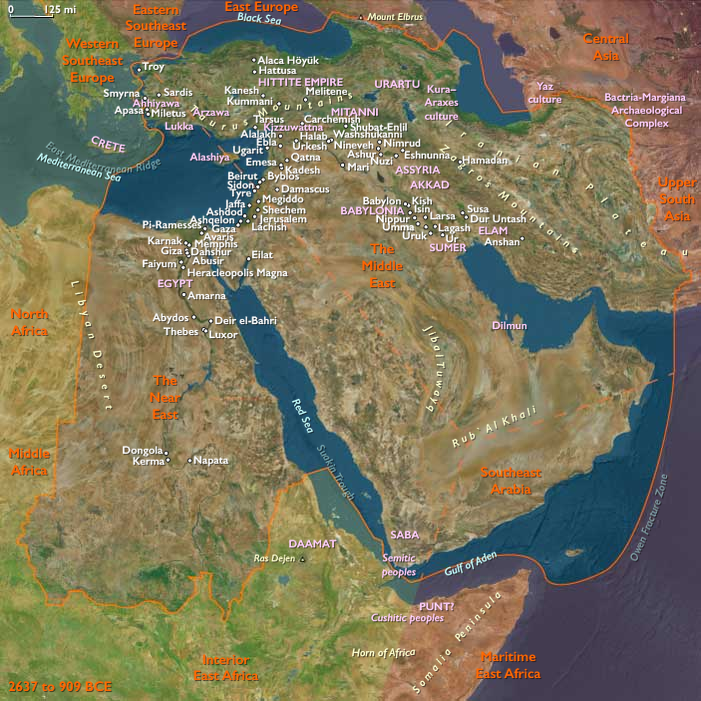 The Near and Middle East
Region
-
{# Image navigates to the detail page; the magnifying-glass chip is the only Fancybox lightbox trigger (kept a separate sibling — anchors can't nest). #}
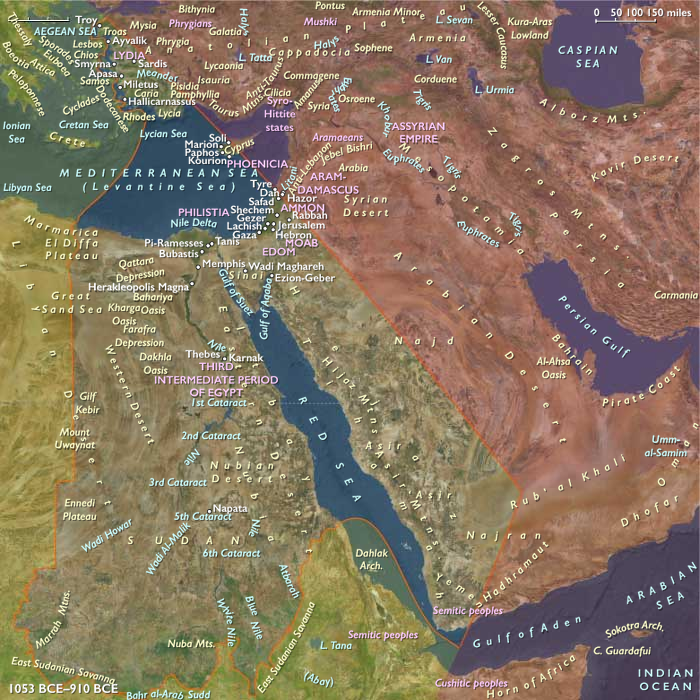 Near East
Subregion